
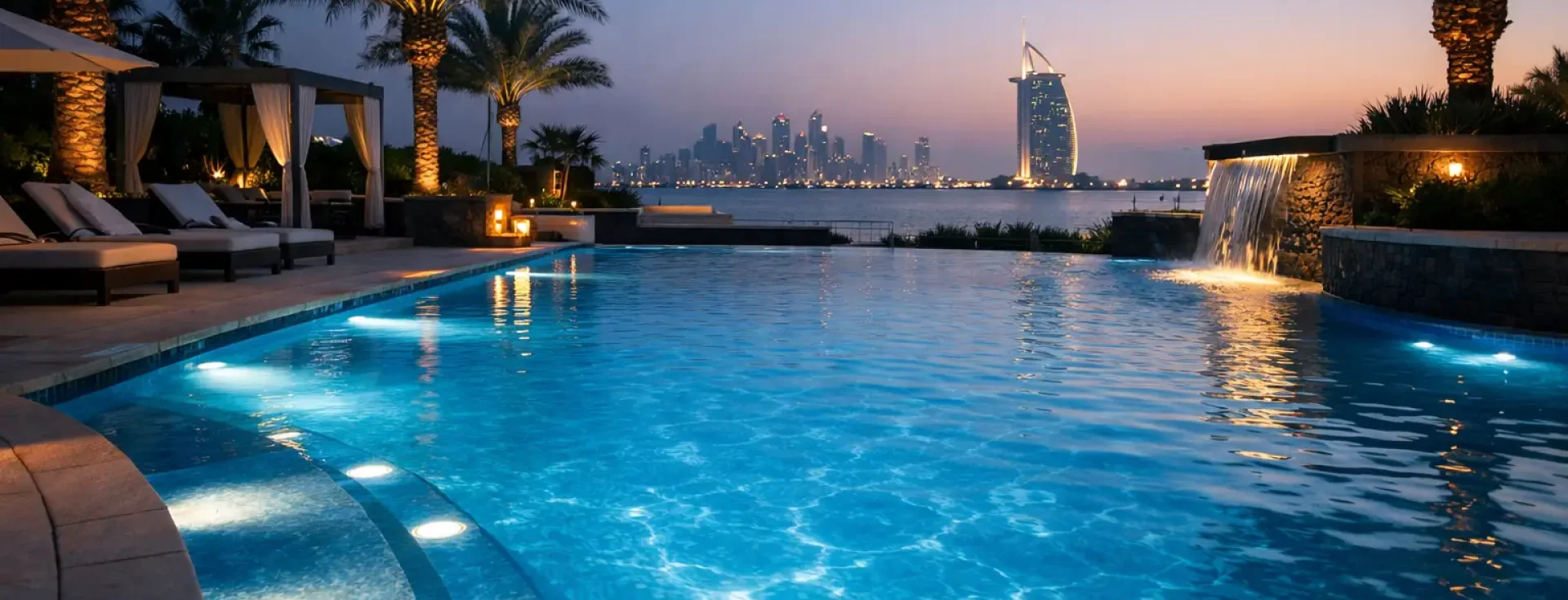
A pool can look exceptional in daylight and disappear completely after sunset. The right swimming pool lights change that. They define the waterline, reveal architectural finishes, improve visibility for evening use, and give a villa, hotel, or residential development a more polished presence after dark.
For premium properties in the UAE, lighting is not simply a decorative extra. It is a technical component of the pool system, expected to perform reliably through heat, humidity, chemical exposure, and frequent use. Selecting the right fixtures, controls, placement, and installation method from the beginning protects both the visual result and the long-term value of the investment.
Why swimming pool lights deserve careful planning
Pool lighting influences how people experience the entire outdoor or indoor space. A warm white glow can make a stone-lined villa pool feel calm and elegant. Tunable RGB or RGBW lighting can support a more dynamic hospitality setting, an event terrace, or a family entertainment area. In a commercial pool, clear and consistent underwater illumination also helps facility teams monitor swimmers, steps, ledges, and changes in depth.
The quality difference becomes apparent at night. Poorly positioned fixtures can create glare from a seating area, leave dark patches across the pool floor, or show uneven color through the water. Low-grade products may fade, leak, or suffer premature driver and cable failures. A premium lighting specification accounts for beam angle, fixture housing, electrical protection, service access, and compatibility with the rest of the pool equipment.
For developers and property managers, this planning also helps prevent expensive corrective work. Replacing an accessible lamp is straightforward. Reworking fittings, conduits, electrical connections, or finishes after handover is a different matter.
LED is the standard for modern pool lighting
LED technology is the preferred choice for most new residential and commercial installations. Compared with older halogen systems, LED fixtures use less energy, produce less heat, and generally offer a much longer service life. They also provide stronger control options, from simple white illumination to programmable color scenes.
White LED lighting remains the most timeless choice for many luxury pools. It presents water clearly, complements natural stone and mosaic finishes, and does not rely on changing colors to make an impression. The selected color temperature matters. Warm white can soften a relaxed residential setting, while neutral or cool white often suits contemporary architecture and pools with crisp blue tile finishes.
RGB fixtures produce a wide range of colors, while RGBW fixtures include a dedicated white LED for a cleaner everyday white mode. This distinction is valuable. An RGB fitting can create white by mixing colors, but the result may not have the clarity or refinement of a dedicated white channel. For hotels, high-visibility fountains, and statement pools, RGBW often provides the better balance between dramatic effects and practical daily lighting.
The ideal choice depends on how the pool will be used. A private villa may prioritize a refined fixed white light with occasional color settings. A hotel pool deck or commercial leisure facility may benefit from scene control that can adapt to events, holidays, and different operating hours.
Selecting the right fixture type
Swimming pool lighting systems are available in several formats, and the pool construction method will guide the decision. The fixture must be suitable for its exact application, whether it is installed in concrete, tiled pools, fiberglass shells, or stainless-steel structures.
Recessed niche lights
Recessed lights are installed within a purpose-made niche in the pool wall. This is a clean, traditional solution for new-build concrete pools and is widely used in premium projects. The light sits neatly within the wall finish, while the niche supports proper cable routing and allows service access when correctly specified.
Niche systems need careful coordination before concrete work and waterproofing begin. The niche location, conduit route, bonding requirements, and final tile thickness all affect the finished result. This is not an area for late-stage improvisation.
Surface-mounted lights
Surface-mounted LED lights are fixed directly to the pool wall and are often suitable for renovation projects where creating a recessed niche is impractical. Modern low-profile units can offer a discreet appearance with excellent light output. They are particularly useful when upgrading older pools from halogen to LED.
Their main advantage is installation flexibility. However, the visible fixture profile and cable routing must be considered carefully so the finished pool maintains a premium appearance.
Compact lights for steps, spas, and water features
Large pool lights alone do not always deliver a complete design. Compact LED fittings can illuminate entry steps, tanning ledges, spas, overflow channels, and decorative water features. These details improve safety while creating layered visual interest.
A spa, for example, may need softer and more localized lighting than the main pool. A fountain may require fixtures selected specifically for its water depth, nozzle pattern, and viewing distance. Matching every fixture to the same controller can create a coordinated scene across the wider landscape.
Light placement affects safety and appearance
The number of fixtures required is not determined by pool length alone. Width, depth, surface finish, water clarity, surrounding architecture, and intended use all matter. Dark tile absorbs more light than pale mosaic. Deep pools, freeform designs, and pools with multiple levels may need a more detailed lighting layout than a simple rectangular pool.
In most cases, lights should be aimed away from the primary viewing area. If the main terrace, villa façade, or restaurant seating faces one side of the pool, placing fixtures on that side can send glare directly toward guests. Positioning lights to shine across the pool instead generally produces a more comfortable view and emphasizes the water surface.
Steps, ledges, and transitions deserve particular attention. These areas are where swimmers enter, stand, and change direction. Dedicated low-level lighting can make them more visible without overpowering the overall design. For commercial properties, good visibility supports safer operation and a more professional guest experience.
Controls should match the property
A basic lighting system may use a wall switch or a simple remote control. This can be sufficient for a small private pool with white LED fixtures. Larger villas, hotels, residential towers, and mixed-use developments often benefit from centralized control.
Smart controllers can schedule lights around operating hours, manage color scenes, synchronize pool and fountain lighting, and provide convenient control from a dedicated interface. The practical value is substantial for facility managers: lighting can be standardized across multiple areas without relying on manual switching every evening.
Control systems should be chosen with realistic expectations. More features mean more components, programming, and potential service requirements. A high-end system is worthwhile when the property will use its scenes and automation. If the pool only needs reliable white lighting from sunset until closing, a simpler control arrangement may be the stronger long-term choice.
Electrical safety is non-negotiable
Underwater lighting requires professional electrical design and installation. Pool lights are typically low-voltage fixtures supplied through a correctly rated transformer and protected electrical circuit. The transformer, junction connections, conduits, cable lengths, and control equipment must be selected as a coordinated system.
A fixture’s waterproof rating is only one part of the equation. The quality of the cable entry, seals, niche installation, junction box placement, and connections determines how well the system performs over time. In UAE conditions, heat, high chlorine exposure, saltwater systems, and intensive operating schedules can expose weaknesses quickly.
For commercial properties, compliance, documentation, and maintainable access should be considered from the project stage. Technicians need to be able to inspect and replace components without damaging finishes or interrupting pool operations unnecessarily.
Protecting lighting performance over time
Even premium LED fixtures require the right operating environment. Balanced pool water protects metal components, seals, lenses, tile finishes, and other equipment throughout the system. Poor chemical management can shorten the life of lighting hardware and leave visible staining or deterioration around fittings.
Routine maintenance should include checking fixture lenses for scale or discoloration, examining cable and connection points during scheduled service, testing control functions, and confirming that lights operate consistently. A light that flickers, changes color unexpectedly, or trips a circuit should be assessed promptly rather than left until it fails completely.
When replacing older lights, it is also wise to review the transformer and controls. Installing new LED fixtures on unsuitable legacy equipment can limit performance or create compatibility issues. A complete assessment often delivers a more reliable upgrade than replacing lamps alone.
Aquatic Pools and Fountains supports premium pool and fountain projects with lighting products, technical guidance, professional installation, and ongoing maintenance tailored to villas, hospitality facilities, and commercial assets across the UAE.
A well-lit pool should feel effortless: clear enough for safe use, refined enough for a luxury setting, and engineered well enough that its performance is dependable long after the first evening it is switched on.