
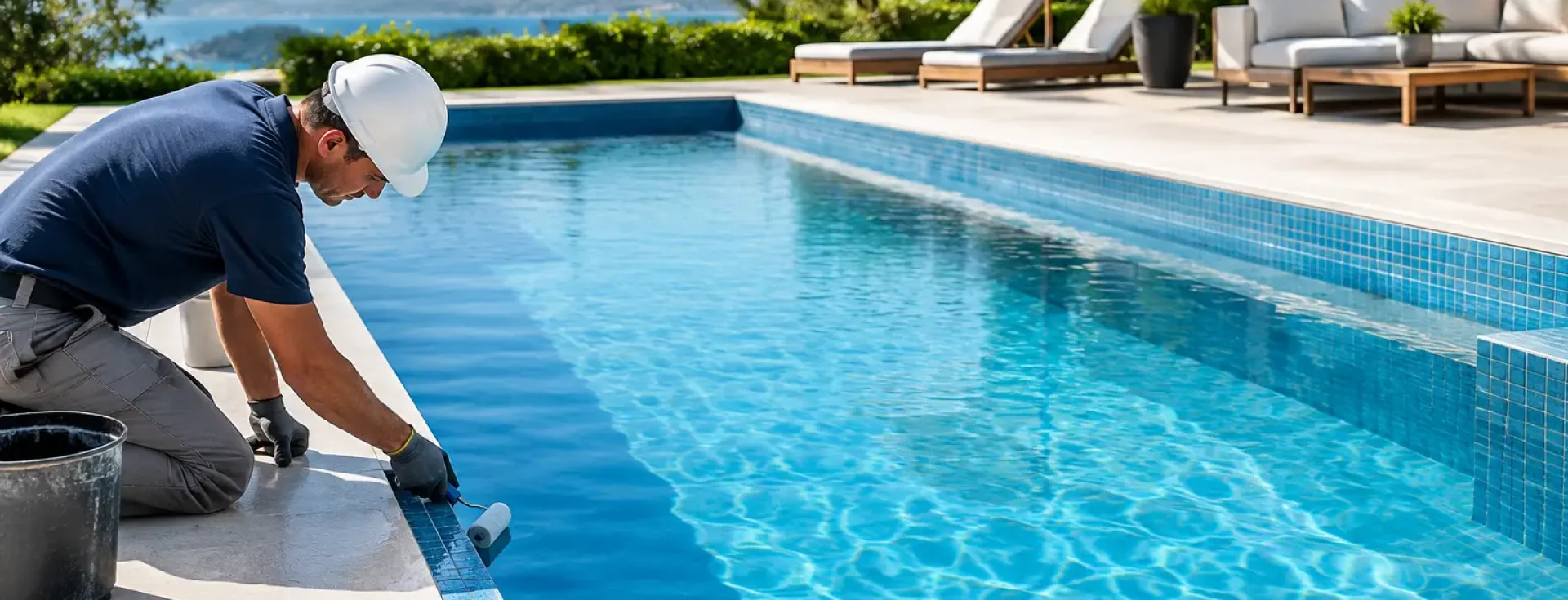
A pool can look flawless at handover and still hide the early signs of a costly failure behind its tile finish. In Dubai and across the UAE, intense heat, ground movement, high water temperatures, and demanding usage place constant pressure on a pool shell. Pool waterproofing is the protective system that helps keep water where it belongs, preserving the structure, finishes, and surrounding property.
For villa owners, developers, hotel operators, and facility managers, this work should never be treated as a minor finishing item. A leak may first appear as falling water levels or damp patches near the pool, but the consequences can extend to damaged decks, corroded reinforcement, failed tiles, and disruption to high-value outdoor spaces. The right specification and professional execution protect both the visual standard of the pool and the investment behind it.
Why Pool Waterproofing Is Different From Tile Finishing
Tiles, grout, and pool plaster create the visible surface of a pool, but they are not a complete waterproofing solution. Cementitious grout can absorb moisture, hairline cracks can form at joints, and pool finishes naturally experience movement over time. Water can pass through these areas and reach the concrete substrate even when the surface appears intact.
A waterproofing membrane or coating is installed beneath the final finish to form a continuous barrier. Its job is to resist permanent water immersion, accommodate limited movement, and maintain adhesion under the conditions expected in a swimming pool. The waterproofing system must also work with the selected tile adhesive, grout, render, fittings, and expansion-joint treatment.
This distinction matters during new construction and renovation alike. Replacing loose tiles without finding the source of water intrusion may improve appearance temporarily, but it does not resolve the underlying risk. A premium pool requires a system-based approach rather than a cosmetic repair.
Where Leaks Usually Begin
Concrete itself is durable, but it is not automatically watertight. Cracks, construction joints, service penetrations, and transitions between different materials are common weak points. The areas around skimmers, main drains, return inlets, underwater lights, overflow channels, and pool steps require particular precision because each interrupts the continuity of the pool shell.
Movement joints deserve equal attention. A pool structure responds to thermal changes, settlement, and water pressure. If a joint is rigidly covered with incompatible materials, it may crack and create a direct route for water. Professional detailing uses suitable flexible joint systems and reinforcing treatments at corners, coves, penetrations, and changes of plane.
Overflow and deck-level pools demand an even higher standard. Their balance tanks, gutters, channels, and adjacent deck interfaces have multiple water-exposed transitions. In these designs, drainage and waterproofing must be coordinated carefully. A visually elegant infinity edge or overflow detail is only successful when its hidden layers are engineered and installed with the same care as its visible finish.
Choosing the Right Waterproofing System
There is no single material that suits every pool. The appropriate choice depends on the construction type, final finish, substrate condition, water chemistry, exposure, and whether the pool is new or undergoing rehabilitation. A high-quality system begins with a technical review, not a one-size-fits-all product selection.
Cementitious waterproofing systems are widely used for concrete pools because they bond well to mineral substrates and can provide a stable base under tile finishes. Flexible polymer-modified options may offer better crack-bridging performance where minor movement is anticipated. Sheet membranes, liquid-applied membranes, and specialized epoxy systems may also be considered in particular applications, especially where chemical resistance or complex detailing is required.
The product alone does not determine performance. Compatibility is essential. A membrane that performs well under a tiled finish may not be suitable under every coating or plaster system. Adhesives and grouts must be rated for submerged environments, while sealants must be selected to withstand pool chemicals and UV exposure where applicable. Mixing materials from different systems without confirmation can compromise warranties, adhesion, and long-term reliability.
For commercial properties, the decision also involves operational demands. A hotel pool, residential tower amenity deck, or health club pool may experience heavier bather loads, more frequent chemical treatment, and shorter shutdown windows for maintenance. These factors can justify a more specialized specification and stricter testing process.
The Installation Details That Protect the Investment
Successful pool waterproofing starts with substrate preparation. The concrete shell must be sound, clean, adequately cured, and free from loose material, laitance, oil, dust, and sharp protrusions. Honeycombs, cracks, and voids should be repaired using appropriate materials before the membrane is applied. Rushing this stage is one of the most common reasons a coating later loses adhesion.
Corners and wall-to-floor junctions are typically formed with a smooth cove to reduce stress concentration. Reinforcing fabric or sealing tapes may be incorporated at joints, cracks, and penetrations, depending on the system. These details are not decorative extras. They are the areas most likely to fail if the installation team relies only on broad membrane coverage.
Application thickness also matters. A membrane applied too thin may not provide the stated water resistance or crack-bridging capability. Applied too heavily in a single pass, it may cure unevenly or develop defects. Professional installers follow the manufacturer’s required coats, coverage rates, drying intervals, and curing conditions rather than judging the work by appearance alone.
Once the waterproofing layer has cured, it should be protected during subsequent trades. Heavy foot traffic, careless tile work, and unplanned penetrations can damage a membrane before the pool is ever filled. Clear coordination between waterproofing, tiling, plumbing, electrical, and commissioning teams keeps the system intact.
Testing Before Tile or Final Filling
Testing is where quality control becomes visible. Depending on the construction sequence and system used, a flood test or controlled water-retention test can verify the integrity of the waterproofed shell before finishes conceal it. The pool should be monitored carefully, accounting for evaporation and environmental conditions, rather than relying on a quick visual inspection.
Pressure testing pipework is equally important. A pool can be fully waterproofed yet still lose water through plumbing lines, fittings, valves, or light conduits. Separating structural waterproofing tests from hydraulic tests helps identify the true source if water loss occurs.
For large projects, documenting substrate preparation, material batches, application conditions, thickness checks, and test results adds meaningful protection. It provides facility teams with a clear record of the work and supports future maintenance decisions. This disciplined approach is particularly valuable for developers handing over premium assets and operators responsible for uninterrupted guest or resident experience.
Warning Signs That Should Not Be Ignored
Some water loss is normal through evaporation, especially during hot, dry conditions. However, repeated refilling, unexplained chemical imbalance, soft spots around the deck, cracked coping, or damp areas near equipment rooms deserve professional assessment. A sudden drop in water level below a skimmer or light fitting can also help indicate the approximate location of a leak.
Do not assume every problem requires complete demolition. Leak detection, pressure testing, and targeted inspection can determine whether the issue is in the shell, waterproofing layer, tile joints, fittings, or pipework. In some cases, a localized repair is appropriate. In others, particularly where widespread adhesion failure or substrate cracking is present, removing the finish and rebuilding the waterproofing system is the more dependable long-term choice.
A Better Standard for New Builds and Renovations
Waterproofing should be specified early, before the pool finish is selected and before site teams begin closing critical details. This gives the project team time to align the shell design, drainage, penetrations, joints, membrane, tile system, and testing requirements. It also avoids the expensive compromises that occur when waterproofing is treated as a late-stage correction.
At Aquatic Pools and Fountains, our technical approach considers the pool as a complete operating environment, from circulation equipment and fittings to the concealed layers that support lasting performance. Whether the project is a private villa pool, a luxury hospitality installation, or a high-use commercial facility, durable materials and precise workmanship are central to protecting its value.
A beautiful pool should be remembered for clear water, refined finishes, and dependable operation, not for recurring repairs beneath the surface. Choose pool waterproofing as a performance decision from the beginning, and give every visible detail the durable foundation it deserves.