
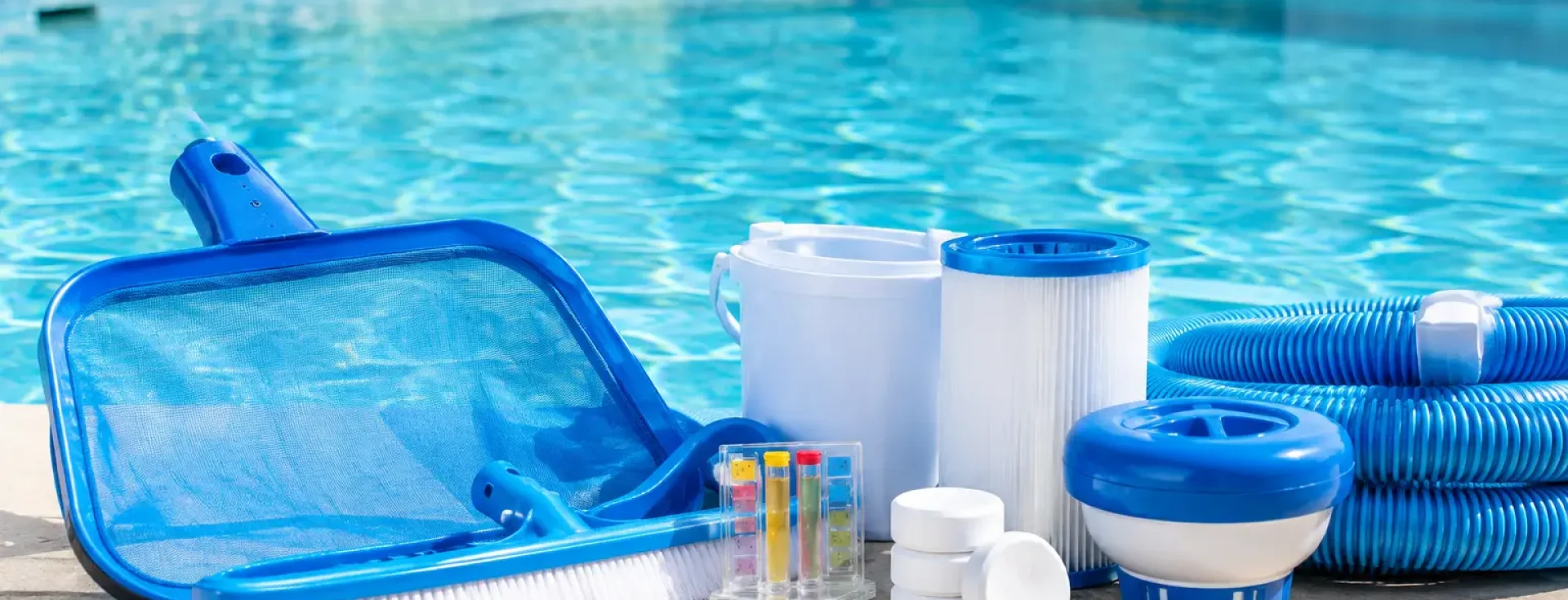
A pool can look immaculate at noon and collect a visible layer of dust, leaves, and fine sand by evening. In Dubai and across the UAE, intense sun, airborne debris, high bather loads, and heat place real demands on every system. This pool maintenance tools checklist helps property owners, facility teams, and hospitality operators specify the equipment needed to protect water quality, preserve finishes, and keep premium pools ready for use.
The right kit is not simply a collection of cleaning accessories. It is a coordinated maintenance setup built around the pool’s size, finish, circulation design, usage pattern, and treatment method. A villa plunge pool needs a different approach from a hotel pool or residential tower amenity, but both depend on dependable tools and consistent operating routines.
Pool Maintenance Tools Checklist: Core Equipment
Start with the tools that remove debris before it becomes a water-quality or filtration problem. A telescopic pole is the foundation because it accepts several interchangeable heads and allows staff to reach the floor, walls, steps, and waterline without entering the pool. Choose a corrosion-resistant model with secure locking sections. Lightweight poles are convenient, but a commercial environment may justify a stronger professional-grade option that tolerates daily use.
Your core cleaning equipment should include:
- A deep leaf net for heavier debris and a flat skimmer net for surface collection
- A pool brush suited to the finish, such as nylon for vinyl and fiberglass or stainless-steel bristles only where appropriate for plaster
- A manual vacuum head and vacuum hose sized for the pool dimensions
- A dedicated waterline brush or pad for oils, sunscreen residue, and mineral buildup
- A leaf rake for larger debris and a pole-mounted corner brush for steps and tight junctions
Avoid treating all brushes as interchangeable. An overly aggressive brush can scratch a delicate finish, while a brush that is too soft may leave algae attached to grout lines, steps, and textured surfaces. For tiled luxury pools, select tools that clean efficiently without damaging tiles, grout, mosaics, or fittings.
Reliable Circulation and Filtration Tools
Cleaning the visible surface is only one part of maintenance. The circulation system does the continuous work of moving water through filters and treatment equipment. A well-specified pump, filter, skimmer, main drain, return fittings, and valves form the operating core of the pool.
A pump basket cleaning tool or simple debris scoop makes routine basket servicing safer and faster. Keep spare pump lid O-rings, lubricant approved for pool equipment, and replacement baskets on hand for properties that cannot afford downtime. A cracked basket or flattened O-ring may seem minor, yet both can reduce flow, cause air to enter the system, and place unnecessary stress on the pump.
For sand, cartridge, or glass-media filters, include the tools required for the selected technology. Cartridge filters need spare elements so one set can be cleaned and dried while the other remains in service. Sand and glass-media systems need a functioning pressure gauge and clear guidance on backwashing. Backwashing too often wastes water and reduces filtration efficiency; waiting too long restricts flow. The correct timing depends on the filter’s clean operating pressure and the manufacturer’s specification.
An automatic pool cleaner, robotic cleaner, or suction cleaner can reduce labor substantially, especially for larger pools. The best choice depends on the pool shape, floor profile, debris load, and circulation capacity. Robotic cleaners offer independent cleaning and excellent coverage, while suction models can be economical when the filtration system is correctly sized. Neither replaces routine visual inspection of the waterline, skimmers, and equipment room.
Water Testing Equipment That Supports Better Decisions
Clear water is not always balanced water. A professional testing kit is one of the most valuable items in any maintenance room because it identifies developing problems before swimmers feel irritation or surfaces begin to scale.
Use a quality drop-test kit or photometer to measure free chlorine or bromine, pH, total alkalinity, calcium hardness, cyanuric acid where applicable, and total dissolved solids. Test strips are useful for quick checks, but they are less precise and should not be the only basis for chemical adjustments at high-use residential or commercial properties.
Digital meters can provide fast, repeatable readings when they are calibrated and stored correctly. That caveat matters. A poorly maintained meter can create more uncertainty than a fresh, properly used liquid test kit. Keep reagents away from direct sun and excessive heat, check expiration dates, and record results in a maintenance log. Trends in pH, sanitizer demand, and filter pressure often reveal issues that a single reading will not.
Chemical Handling and Dosing Essentials
Testing equipment must be paired with safe chemical handling tools. Use dedicated measuring cups or scoops for each product, chemical-resistant gloves, eye protection, labeled storage containers, and a clean mixing bucket where required by the chemical instructions. Never use household containers for pool chemicals, and never combine products in the same container.
For demanding sites, automated dosing systems improve consistency by monitoring and controlling sanitizer and pH levels. They are particularly valuable for hotels, apartment buildings, schools, and facilities with frequent bather turnover. Automation still requires professional oversight, calibration, and manual verification. It reduces routine variability; it does not eliminate responsibility.
Safety Tools Belong in the Equipment Plan
Maintenance tools should protect the people performing the work as well as the pool itself. An insulated rescue hook, life ring with rope, first-aid kit, clear depth markers, and compliant signage should be available and inspected regularly. Commercial and shared-use pools may have additional local requirements, so facility managers should confirm the applicable standards for their site.
For indoor pools, fountains, and equipment rooms, include non-slip footwear, waterproof lighting, and electrical safety checks. Any portable electrical device used near water must be designed for that environment and connected through appropriate protection. A premium installation deserves the same attention behind the scenes as it receives in visible design details.
Storage, Spares, and Seasonal Readiness
The best tools lose their value when they are left exposed to sun, chemicals, or moisture. Set aside a clean, ventilated storage area with wall hooks for poles and hoses, shelves for test kits, and separated bins for chemicals. Keep acids, chlorinating products, and other reactive materials segregated according to their safety requirements.
A practical spare-parts reserve prevents small failures from becoming service interruptions. Stocking common O-rings, pressure gauges, vacuum hose cuffs, skimmer baskets, test reagents, cleaner bags, and filter cartridges is sensible for high-value homes and commercial properties. The exact stock level should reflect equipment age, supplier lead times, and the cost of a closed pool.
Do not overlook covers and cover reels. A properly fitted pool cover limits debris, reduces evaporation, helps retain heat, and can lower the daily workload. In the UAE climate, the best cover depends on whether the priority is safety, temperature control, evaporation reduction, or protection during periods of low use.
When Professional Service Is the Better Tool
A thorough checklist gives on-site teams control over routine care, but it does not replace technical service. Persistent cloudiness, repeated algae growth, unusual pump noise, electrical faults, leaks, heater errors, or unstable chemical readings call for a trained technician. Continuing to adjust chemicals without diagnosing the cause can damage equipment and delay the correct repair.
For villas, a scheduled service plan keeps maintenance discreet and predictable. For hotels, developers, and facility managers, professional inspections support asset protection, guest confidence, and consistent compliance. Aquatic Pools and Fountains can help match cleaning tools, filtration components, water testing systems, treatment equipment, and maintenance support to the demands of each installation.
A well-equipped pool room creates confidence long before a guest enters the water. Choose durable tools, keep accurate records, replace worn items early, and give the circulation system the professional attention it deserves.