A pool pad can be the one detail that disrupts an otherwise polished outdoor space. Even high-end pumps, filters, and heaters can look exposed when they sit in full view beside a villa wall, garden edge, or service yard. If you are researching how to build a pool equipment cover, the goal is not simply to hide the system. It is to protect critical components from direct sun, blowing dust, and visual clutter without restricting airflow, service access, or equipment performance.
That balance matters more than many property owners expect. In Dubai and across the UAE, pool systems operate in demanding conditions. Heat, fine dust, moisture, and heavy seasonal use all put pressure on equipment. A poorly designed cover can trap heat, complicate maintenance, and shorten the life of premium components. A properly built cover does the opposite. It improves the look of the installation while supporting durability, safety, and serviceability.
What a pool equipment cover should actually do
Before selecting materials or dimensions, define the function. A quality cover should screen the equipment visually, reduce direct weather exposure, and still leave enough ventilation for pumps, filters, and electrical systems to operate safely. It should also open easily for inspection, cleaning, repairs, and future replacement of parts.
This is where many DIY builds go wrong. They are treated like decorative boxes, when in reality they are small technical enclosures. Pool pumps generate heat. Filters require access for backwashing, cartridge cleaning, or media servicing. Salt systems, chemical feeders, and automation panels all need clear working space. If the cover interferes with any of that, the finished result may look elegant for a month and become frustrating for years.
Start with measurements and service clearance
The first step in how to build a pool equipment cover is measuring more than the footprint of the equipment pad. You need the total operating envelope, not just the visible machine sizes. Measure the full width, depth, and height of every component, including exposed pipework, valves, unions, electrical conduits, and control boxes.
Then add service clearance. In most cases, at least 24 to 36 inches around key access points makes sense, though some systems may need more depending on the filter type and the way the pad was installed. A compact cover may look neat on paper, but if a technician cannot remove a pump lid or open a filter clamp comfortably, the design is too tight.
Also account for future upgrades. A property that uses a simple circulation setup today may add a heat pump, UV system, dosing unit, or automation panel later. Leaving room now is usually less expensive than rebuilding the enclosure later.
Choose a design that fits the property
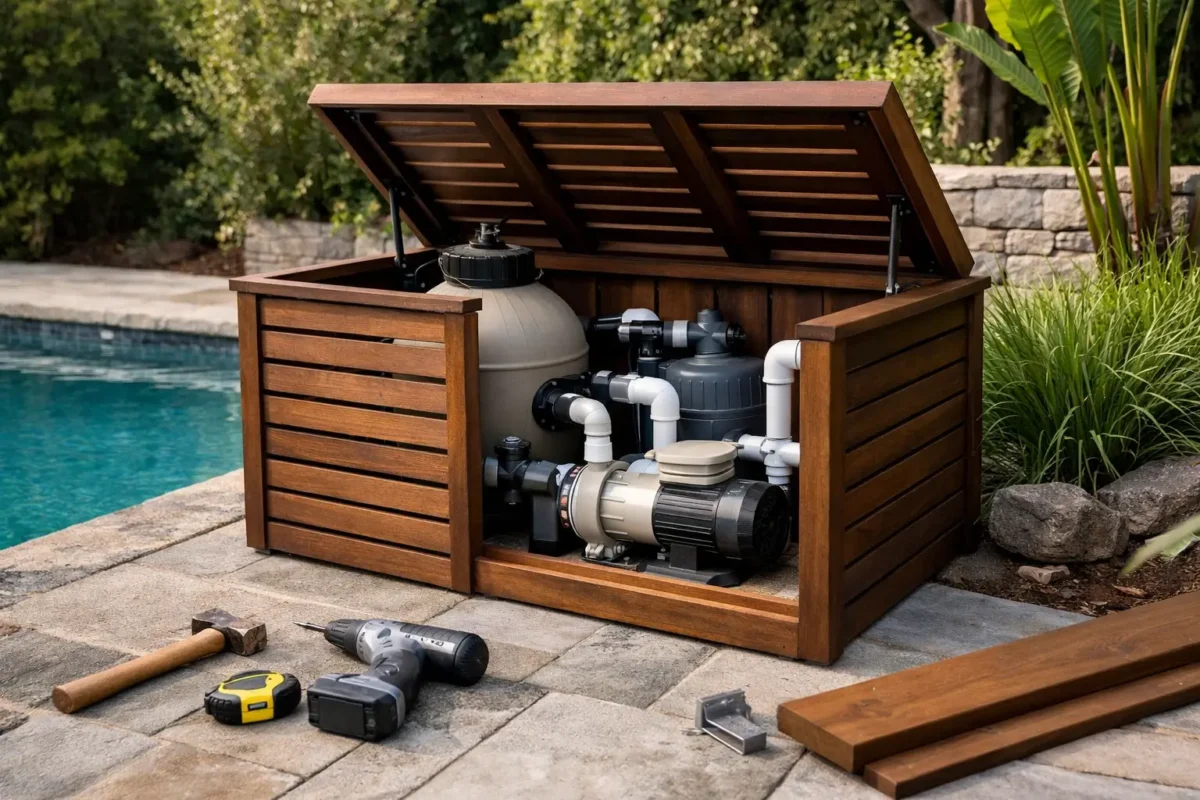
For most residential and commercial settings, three cover styles work best. A slatted screen enclosure is the most popular because it allows airflow naturally and suits modern architecture. A hinged cabinet-style surround offers a cleaner, more enclosed appearance, but it must be vented properly. A pergola-style structure can work well for larger equipment areas where appearance matters as much as function.
The right option depends on visibility, site conditions, and maintenance frequency. If the equipment sits near guest-facing areas, a more refined screen design may be worth the added cost. If the pad is in a service yard, a practical louvered structure may be the better investment. Premium properties usually benefit from matching the cover finish to nearby fencing, cladding, or landscape materials so it feels integrated rather than added on.
Best materials for a durable result
Material choice will determine whether the cover still looks sharp after a few summers. In demanding climates, moisture-resistant and UV-stable materials are essential. Powder-coated aluminum is one of the strongest choices because it resists rust, handles heat well, and gives a premium finish. Marine-grade composite boards are another smart option for projects that want the appearance of wood without the maintenance burden.
Treated timber can be used, but it requires more upkeep and careful sealing. If the installation is near chemical storage or splash zones, lower-grade wood may age quickly. PVC panels and low-cost plastic solutions are usually less suitable for premium settings because they can discolor, warp, or look lightweight over time.
Fasteners matter too. Use stainless steel hardware where possible, especially in humid or chemical-adjacent environments. A high-quality structure built with poor screws and brackets will not age like a premium installation.
How to build a pool equipment cover step by step
Once the layout and materials are defined, construction is straightforward if you stay disciplined about clearance and ventilation. Start by marking the perimeter around the equipment pad. Check that the enclosure line does not block walkways, drain paths, or access to valves and electrical isolation points.
Set your posts or frame supports on stable footing. In some projects that means anchoring directly to a concrete slab. In others, especially where aesthetics are a priority, a separate framed surround may sit just outside the pad. Keep the structure level and square from the start. Small framing errors can make doors bind and panels sit unevenly.
Build the frame with enough rigidity to support removable panels or hinged doors. Avoid making all sides fixed. At least one side should open fully, and on larger setups two-sided access is often the smarter choice. A service technician should be able to reach the pump basket, filter, control panel, and shut-off points without dismantling half the enclosure.
Install side panels with ventilation gaps or louvers. This is one of the most critical details. The cover should shield the equipment from direct sun and dust exposure, but trapped heat is a real risk. Slatted spacing, raised base gaps, and upper vent openings all help maintain airflow. If the enclosure includes a solid roof, ventilation becomes even more important.
For the top, choose either a slatted cover, a lightweight solid panel with ventilation allowance, or a partial overhead shade design. A full sealed roof is rarely the best answer around working pool equipment. In many cases, filtered shade is enough to reduce direct heat load without turning the enclosure into a hot box.
Finish the build with hinges, handles, and secure latches that resist corrosion. If children or unauthorized staff may be nearby, lockable access is worth considering. The enclosure should look refined, but it should also support site safety and controlled access.
Ventilation, drainage, and noise control
A premium cover performs best when it solves more than one problem. Ventilation is non-negotiable, but drainage deserves equal attention. Water should never collect under or around the enclosure. Leave the base open enough for runoff, and do not create a low point where leaks or washdown water can sit against equipment bases.
Noise control is another consideration, especially in villas, hotels, and shared residential developments. A cover can soften the visual impact of the pool pad, but it may also reflect sound if the materials are too hard and enclosed. Slatted or partially open designs typically perform better than tight box enclosures. If sound is a major concern, it is worth planning the panel orientation and spacing carefully rather than simply wrapping the equipment on all sides.
Common mistakes to avoid
The most expensive mistake is building the cover too small. The second is ignoring airflow. After that, most failures come from weak materials, poor hardware, and no maintenance access. A cover should never force technicians to remove panels every time they service the system.
Another common issue is designing purely for appearance and forgetting equipment replacement. Pumps, filters, and heaters do not last forever. If a future unit cannot be removed without cutting the structure apart, the enclosure has not been planned properly.
Electrical safety also matters. Keep the cover clear of any electrical requirements for panels, disconnects, and service space. If there is any uncertainty, a qualified technician should review the layout before construction begins.
When a custom solution is the better choice
Some pool pads are simple enough for a straightforward site-built cover. Others are not. Large filtration systems, multiple pumps, chemical dosing units, commercial-grade control panels, or narrow equipment yards often need a more technical approach. In those cases, custom fabrication is usually the better investment because it protects both the equipment and the long-term serviceability of the installation.
This is especially true for premium residential projects and commercial properties where appearance, durability, and operational reliability must align. A well-designed enclosure should feel like part of the property, not an afterthought built to hide a problem. For owners who want that standard, working with experienced pool equipment specialists can prevent costly compromises. Aquatic Pools and Fountains supports clients who need that level of technical and visual coordination across modern pool installations.
A good cover is not the one that disappears your equipment from view. It is the one that protects the system, preserves access, and still looks right five years from now.