
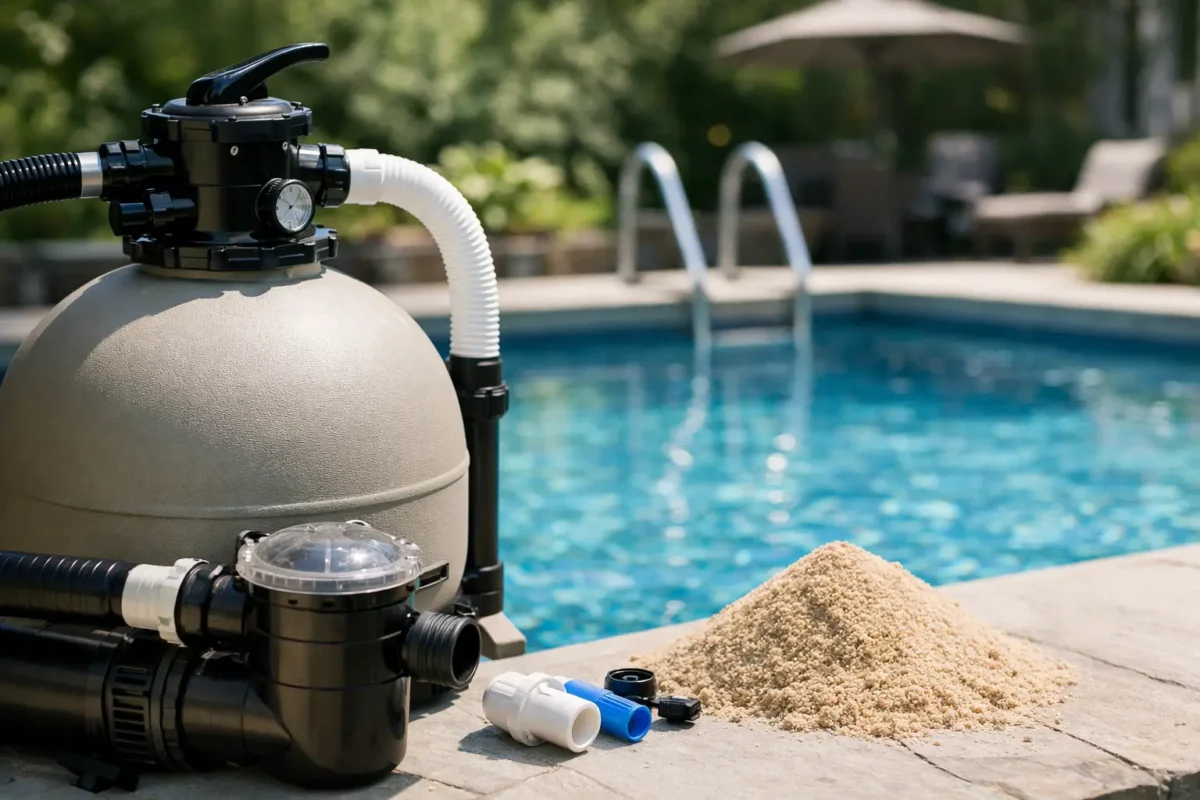
A cloudy pool usually does not start with bad water – it starts with poor filtration. A properly selected pool sand filter system keeps circulation efficient, traps fine debris, supports chemical balance, and protects the appearance and lifespan of the entire pool. For villa owners, hospitality operators, and commercial property managers, that makes filtration a performance decision, not a minor equipment choice.
Why a pool sand filter system remains a strong choice
Sand filtration continues to be one of the most practical and dependable solutions for residential and commercial pools. It is widely specified because it combines simple operation with solid long-term performance. When matched correctly to the pool volume, pump flow, and usage pattern, it delivers consistent water clarity without adding unnecessary complexity to daily operation.
A pool sand filter system works by pushing water through a bed of specially graded filter media. Suspended dirt, dust, oils, and debris are trapped as water passes through the sand, then clean water returns to the pool. Over time, the filter builds a natural layer that can improve capture efficiency, although that same buildup eventually increases pressure and signals the need for backwashing.
For many buyers, the appeal is clear. Sand filters are durable, familiar to maintenance teams, and well suited to demanding climates where pools operate for long seasons. They are also a strong fit for projects where dependable performance and manageable upkeep matter more than overcomplicated equipment specifications.
Where sand filtration performs best
In premium residential pools, sand filters are often chosen for their reliability and straightforward maintenance cycle. A villa owner typically wants stable water quality, clean visual presentation, and equipment that does not require constant intervention. In that setting, a quality sand filter delivers exactly what is needed – practical performance with a long service life when maintained correctly.
In hotels, residential towers, schools, and commercial facilities, the case is just as strong, but for different reasons. Commercial pools deal with heavier bather loads, more frequent contamination, and stricter expectations for water clarity. A properly engineered sand filtration setup can handle these conditions well, provided the vessel size, media grade, valve assembly, and pump are selected as part of a complete hydraulic system.
This is where many projects succeed or fail. The filter itself may be excellent, but if it is undersized, paired with the wrong pump, or installed without attention to flow rate and pipe sizing, performance suffers quickly.
How to choose the right pool sand filter system
The first question is not brand. It is capacity. Filter sizing should reflect the pool volume, expected turnover time, and real usage conditions. A small private plunge pool and a high-traffic hotel pool should never be treated as similar filtration applications, even if they look close in surface area.
A larger filter body generally offers better dirt-holding capacity and longer filtration cycles before backwashing becomes necessary. That can improve efficiency and reduce maintenance interruptions. At the same time, larger is not always automatically better if the pump flow is mismatched or the plant room has space limitations. Good system design is always about balance.
The filter tank material matters as well. High-quality fiberglass and corrosion-resistant constructions are popular because they handle pressure well and stand up to harsh operating conditions. In coastal or high-temperature environments, material durability becomes even more important. Premium installations should always prioritize vessels designed for long-term structural stability, not just entry-level cost.
Valve quality is another detail buyers often underestimate. The multiport valve controls filtration, backwash, rinse, waste, recirculate, and closed functions. If that valve is poorly made or badly fitted, the entire system becomes less reliable. In high-value residential and commercial projects, dependable valve operation is part of protecting the whole pool environment.
Media selection affects results
Not every sand-filled filter performs the same way because media quality varies. The filter media must be graded correctly and installed to the required depth. Poor media can channel, compact improperly, or reduce filtration efficiency. Some projects also consider glass media as an alternative, depending on water quality goals, maintenance strategy, and operator preference.
There is no single answer for every site. Standard silica media remains a proven solution, especially when the system is correctly sized and serviced. Media alternatives may offer advantages in certain cases, but they should be evaluated based on operating conditions, not trends.
Pump and filter must work together
A sand filter cannot compensate for a poorly selected pump. Excessive flow can reduce filtration quality and strain the vessel, while inadequate flow affects turnover and circulation. The right approach is to match the pump curve, filter area, and hydraulic design from the start.
For developers and facility teams, this is a critical point. Buying components separately without system-level review often leads to avoidable issues – short filter cycles, weak circulation, recurring turbidity, and unnecessary service calls. Premium pool performance comes from selecting equipment as a coordinated package.
What buyers should expect from installation
Installation quality directly affects filtration performance. The filter should be positioned for service access, installed on a stable base, connected with proper valve orientation, and commissioned with correct media loading and pressure testing. These details are not cosmetic. They determine whether the system operates cleanly and predictably over time.
In commercial projects, installation standards become even more important because the margin for error is smaller. Higher usage means small inefficiencies appear faster and cost more. A professional team will assess equipment room layout, drainage for backwashing, pipe routing, electrical coordination, and maintenance access before finalizing the setup.
For clients who expect a polished, long-lasting result, filtration should never be treated as an afterthought behind finishes or lighting. Water quality is what people notice first.
Maintenance requirements and real-world trade-offs
One reason the pool sand filter system remains popular is that maintenance is straightforward. Pressure rises as debris collects in the media bed, and backwashing removes that buildup. Periodic rinsing follows, and over longer intervals the media itself may need replacement depending on usage, water condition, and service quality.
That said, straightforward does not mean maintenance-free. If backwashing is ignored, flow drops and filtration suffers. If it is done too often, water is wasted unnecessarily and filtration can become less effective. The right frequency depends on actual pressure readings and operating conditions.
There are also performance trade-offs to understand. Sand filters are highly dependable, but they do not always capture the finest particles as aggressively as some alternative filtration methods. For many residential and commercial pools, that is not a problem when circulation, chemistry, and maintenance are all handled correctly. But in specialty applications with very high clarity demands, additional treatment measures may be worth considering.
This is why experienced technical guidance matters. The best filtration decision depends on the full pool environment, not a single product category.
Signs it is time to upgrade your filter system
Aging filtration equipment tends to show clear warnings. Persistent cloudy water, rising operating pressure, visible wear on the tank or valve, repeated maintenance issues, and inconsistent circulation are all signs that the system may no longer be performing to the required standard. In some properties, the original system was undersized from the beginning, and the problem only becomes obvious as usage increases.
Upgrading can improve more than water clarity. It can support better chemical efficiency, reduce strain on the pump, simplify maintenance, and present a cleaner, more professional pool environment overall. For hospitality and premium residential properties, that has a direct effect on user satisfaction and asset presentation.
Choosing a supplier, not just a product
For high-end pool projects, product quality is only part of the equation. Buyers also need stock availability, technical guidance, correct sizing, and ongoing service support. A filter is not a standalone purchase when the goal is long-term reliability. It is part of a larger operational system that should be selected with precision and backed by capable professionals.
This is especially relevant in markets where residential luxury and commercial performance standards are high. Aquatic Pools and Fountains supports clients with premium filtration equipment, expert specification, installation coordination, and maintenance insight suited to both private and large-scale aquatic environments.
The right filter should make the pool look effortless to own, even though the engineering behind it is anything but. If your water quality, maintenance costs, or equipment reliability are not where they should be, the smartest next step is to review the filtration system with the same standards you apply to every other premium feature on the property.