
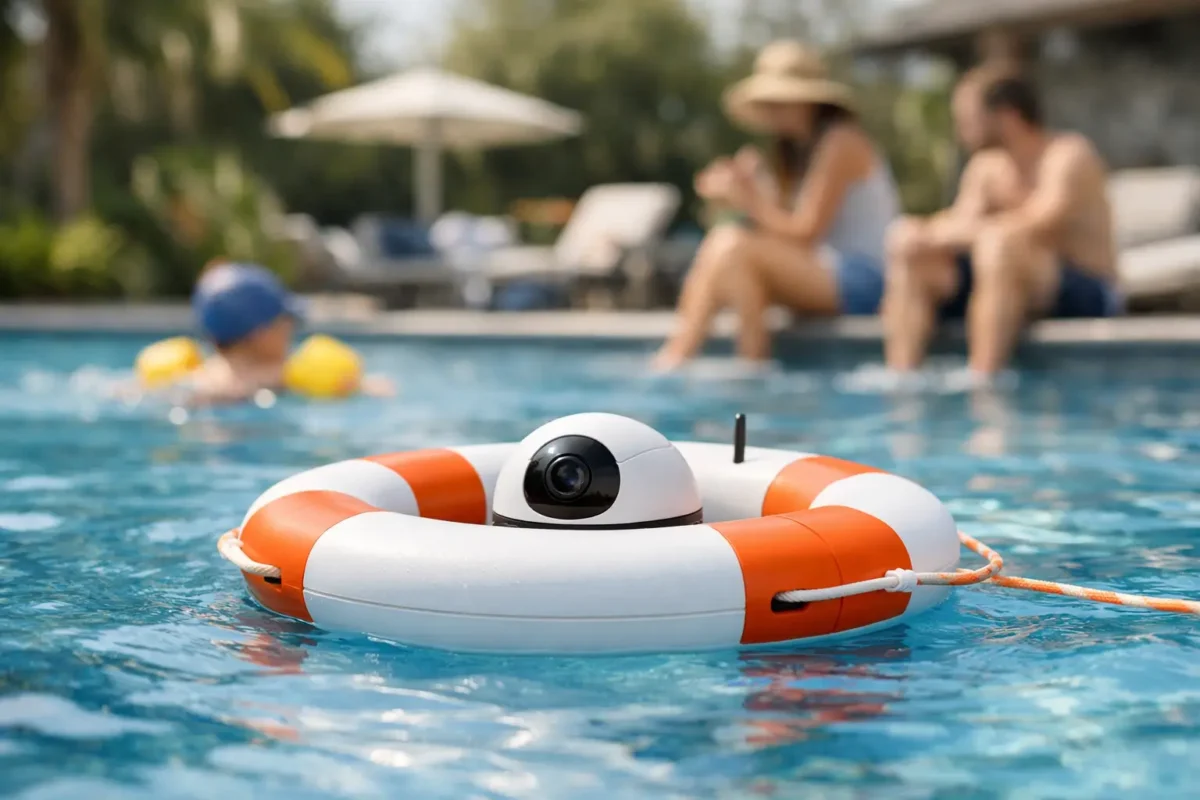
A pool incident rarely gives you time to think. When a swimmer is struggling, the difference between panic and control often comes down to whether the right rescue equipment is visible, accessible, and ready to use. A pool safety buoy ring is one of the simplest lifesaving tools on any deck, yet it is often treated as an afterthought until a safety inspection, handover, or emergency exposes the gap.
For premium residential pools, hospitality properties, residential towers, and commercial aquatic facilities, that is not a small oversight. Safety equipment needs to match the same standard as the rest of the installation – durable, compliant, easy to identify, and suitable for the environment it serves. A buoy ring that fades quickly, cracks under heat, or is mounted poorly does not support a serious pool safety strategy.
Why a pool safety buoy ring still matters
Modern pools may include advanced circulation systems, elegant finishes, underwater lighting, and automated treatment equipment, but emergency rescue basics remain essential. A buoy ring is not outdated equipment. It is a first-response tool designed to help someone in distress without forcing another person to enter the water immediately.
That matters in both residential and commercial settings. In a private villa, family members or household staff may be the first people on the scene. In a hotel or community facility, security staff, attendants, maintenance personnel, or trained responders may need immediate access before dedicated emergency services arrive. In either case, response speed matters, and equipment visibility matters just as much.
A properly selected pool safety buoy ring gives responders a flotation aid they can throw quickly to a struggling swimmer. It creates distance, reduces direct-contact risk, and can stabilize a person long enough for extraction. In facilities where children, elderly users, or non-swimmers may be present, that practical value is even higher.
What separates a premium pool safety buoy ring from a basic one
Not all buoy rings are built for the same environment. For high-end residential and commercial properties, the decision should not be based on appearance alone or on choosing the lowest-cost option available. Material quality, UV resistance, buoyancy performance, rope configuration, and mounting reliability all affect how useful the ring will be when it is actually needed.
A quality ring should maintain its structure under prolonged sun exposure and poolside heat. This is especially relevant in demanding climates, where intense UV and high temperatures can shorten the service life of poorly manufactured safety products. Color retention also matters. A faded rescue ring is less visible, and reduced visibility weakens its function.
The grab line or attached rope should be secure, strong, and easy to handle with wet hands. If the rope tangles too easily, is too short for the pool area, or shows early wear, the equipment becomes less dependable in a real emergency. Mounting hardware matters too. A ring hidden behind furniture, placed inside a locked room, or attached to weak brackets is not truly available.
Where to place a buoy ring for real emergency use
Placement is where many pool operators get it wrong. A pool safety buoy ring should be immediately visible and reachable from the main pool deck. It should not be installed where decorative features, landscaping, loungers, or service barriers block access. In an emergency, even a few extra seconds of confusion can be costly.
For villa pools, one clearly mounted ring near the primary access point may be sufficient depending on pool size and layout. For larger properties, rooftop pools, hospitality venues, school pools, or community facilities, multiple stations may be necessary. The right number depends on deck length, visibility lines, staffing, and how quickly someone can access rescue equipment from different points around the water.
Mounting height also deserves attention. The ring should be accessible to adults without requiring awkward lifting or bending, and it should be mounted in a way that allows immediate removal. If a site receives visitors unfamiliar with the space, the rescue station should be intuitive enough to identify without explanation.
Compliance, inspections, and operator responsibility
For commercial pools and shared-use residential assets, safety equipment is not just good practice. It is part of responsible facility management. Developers, operators, and facility managers need to think beyond installation day and consider inspection routines, replacement cycles, and readiness standards.
A buoy ring should be included in regular site checks along with ladders, drain covers, signage, lighting, and water treatment controls. Visual inspection is the minimum. Teams should check for cracks, chalking, rope damage, loose brackets, and any sign that the ring has become decorative rather than functional.
This is also where product sourcing matters. Working with a specialized supplier makes it easier to align equipment with the pool type, user profile, and compliance needs of the property. For commercial buyers, consistency across multiple sites can simplify training, procurement, and maintenance planning.
Matching the buoy ring to the pool environment
The right specification depends on the setting. A luxury villa pool may prioritize discreet but elegant mounting, provided visibility and performance are not compromised. A hotel or resort may require more prominent rescue equipment with high-visibility finishes that stand out clearly against the pool deck. A school, club, or residential tower may need equipment that is more tamper-resistant and positioned for broad public access.
Size can also vary. A ring intended for a compact plunge pool may not be ideal for a larger leisure or lap pool. The attached rope length should suit the dimensions of the water body and surrounding deck conditions. If the pool has unusual geometry, overflow edges, deep sections, or adjacent water features, rescue planning should account for those realities rather than relying on a generic setup.
For properties with a broader aquatic environment, including spas, water features, decorative basins, or linked recreational zones, it is worth reviewing whether one safety approach truly covers all use areas. In many cases, it does not.
Aesthetic integration without compromising safety
Premium projects often place a strong emphasis on visual finish, and rightly so. Safety equipment should not make a high-end pool environment look neglected or improvised. At the same time, safety products cannot be hidden to preserve aesthetics. The better approach is to specify equipment and mounting systems that complement the environment while remaining unmistakably functional.
That means using durable, professional-grade accessories, planning the rescue station during the overall layout stage, and avoiding last-minute placement decisions. When safety products are selected as part of the design and operations plan, they look intentional rather than intrusive.
This is especially relevant for luxury residences, hospitality venues, and branded developments where every visible detail contributes to the property’s standard. A well-chosen buoy ring station supports that standard. A cheap, poorly mounted alternative does the opposite.
Why maintenance teams should treat it as active equipment
A pool safety buoy ring is not a decorative compliance item. It is active emergency equipment, and it should be treated that way by maintenance staff and site operators. That includes routine checks, immediate replacement when damage appears, and making sure the ring is never removed from its station without being returned properly.
Teams should also confirm that surrounding access remains clear. Pool decks change over time. Furniture layouts shift, event setups interfere with visibility, and service items get stored where they should not be. A rescue ring that was perfectly positioned at handover may become obstructed months later if no one is reviewing the deck with safety in mind.
For commercial and multi-user sites, staff familiarity matters as much as product quality. People on site should know where the ring is, how to deploy it, and when to use it. The equipment itself is simple. The discipline around it is what makes it effective.
Choosing a supplier that understands pool safety as a system
Safety equipment should not be selected in isolation from the rest of the aquatic installation. The most reliable results come from working with a supplier that understands pool operations, technical standards, and the practical demands of both residential and commercial projects. That is especially valuable when the same project also involves pumps, filtration, lighting, fittings, deck accessories, and maintenance planning.
Aquatic Pools and Fountains supports this kind of integrated approach by supplying premium pool equipment backed by technical guidance and service capability. For buyers who want more than a catalog transaction, that matters. It means the pool safety buoy ring is chosen with the site, the users, and the long-term operating conditions in mind.
If a pool is worth building to a premium standard, it is worth protecting to the same standard. The right rescue equipment does not call attention to itself every day, but when it is needed, nothing about it should feel like an afterthought.