
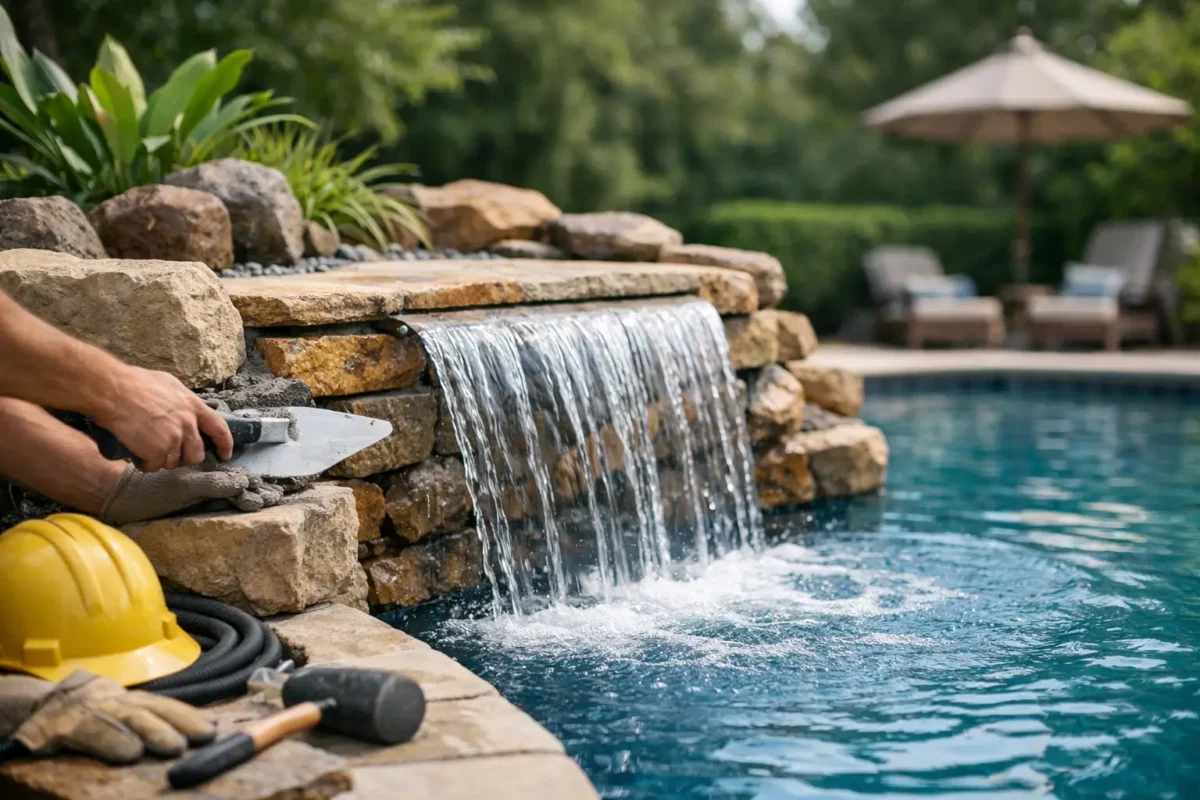
A pool without movement can look polished, but it rarely feels complete. The right pool waterfall feature installation changes that immediately – adding sound, visual depth, and a stronger architectural presence that turns a standard pool into a premium outdoor centerpiece.
For villa owners, developers, hospitality operators, and facility managers, a waterfall is not just a decorative add-on. It affects circulation design, equipment selection, structural planning, and long-term maintenance. When the installation is handled correctly, the result is elegant, durable, and easy to operate. When it is treated as an afterthought, problems show up fast in the form of weak flow, splash loss, noisy pumps, staining, or uneven performance.
Why pool waterfall feature installation deserves proper planning
A waterfall feature changes more than appearance. It introduces a second visual layer to the pool and can soften hard architectural lines with motion and sound. In high-end residential settings, that often means a more refined leisure environment. In hotels, residential towers, and commercial properties, it can strengthen the arrival experience and support a more premium brand image.
There is also a technical side many buyers underestimate. Waterfalls rely on controlled flow rate, correct pipe sizing, suitable pump capacity, and precise installation geometry. The clean sheet effect of a sheer descent, for example, depends on balance and pressure. A natural rock cascade depends on controlled spill points and stable structural support. The desired look determines the engineering approach.
That is why the best results come from planning the feature at the same time as the pool shell, hydraulic layout, and surrounding finishes. Retrofitting is possible, but it usually adds cost and limits some design options.
Choosing the right waterfall style for the property
Not every waterfall fits every pool. The architecture of the property should lead the decision.
Sheer descent and blade waterfalls
These are among the most popular choices for modern pools. They produce a clean, controlled sheet of water that suits contemporary villas, rooftop amenities, and commercial leisure areas with a minimalist finish. They work especially well with tiled feature walls, LED lighting, and geometric pool lines.
The key advantage is precision. The challenge is that precision must be maintained. Uneven leveling, low flow, or poor filtration can disrupt the water sheet and reduce the premium effect.
Rock and lagoon-style cascades
For larger residential landscapes or resort-style developments, a natural cascade can add texture and a more organic look. This style pairs well with freeform pools, planted edges, and settings where the goal is a relaxed luxury atmosphere rather than a sharp architectural statement.
These installations need careful attention to waterproofing, load support, and water return control. What looks natural still requires exact technical execution behind the scenes.
Wall-integrated waterfalls and spillways
This option is ideal when space is limited or when the design calls for a discreet but upscale water feature. A wall-integrated spillway can create movement without dominating the full poolscape. It is often a strong choice for compact villa courtyards, plunge pools, and formal hospitality spaces.
This approach can also be easier to coordinate with existing structures, though access for maintenance should always be considered early.
What determines a successful installation
A premium waterfall depends on equipment quality and installation accuracy in equal measure. One without the other is rarely enough.
Hydraulic design and flow rate
The pump must be sized for the specific feature, not guessed based on the main pool equipment alone. Some waterfalls require a dedicated pump to achieve the right pressure and consistency. Pipe runs, elevation changes, fitting resistance, and feature width all affect performance.
This is where many installations fall short. An underpowered system produces weak flow and inconsistent visual output. An oversized system can create excess splash, noise, and unnecessary energy use. The right balance is what creates a refined final result.
Structural support and waterproofing
If the waterfall is integrated into a wall, raised beam, cladded facade, or rock formation, the supporting structure must be engineered for moisture exposure, movement, and finish durability. In the UAE climate, heat and material expansion can also affect long-term stability.
Waterproofing details matter just as much as the visible finish. A leak behind decorative cladding or inside a raised wall can become expensive quickly. Premium installation means protecting the unseen layers, not just polishing the visible ones.
Finish materials and water behavior
Stone, porcelain, glass mosaic, and textured cladding all create a different visual effect once water runs across them. Some materials highlight a glossy sheet of water. Others break the flow into a softer, more natural pattern.
The choice should match both the design brief and the maintenance expectation. Smooth surfaces are easier to clean and often better for modern waterfalls. Textured finishes can look dramatic but may collect scale or debris more easily.
Pool waterfall feature installation for new builds vs retrofits
New construction offers the best level of freedom. The plumbing, pump room layout, structural reinforcement, and control systems can all be designed around the feature from day one. That usually leads to cleaner aesthetics and fewer compromises.
Retrofit pool waterfall feature installation is still a strong option, especially for property owners upgrading an existing pool to improve value and visual impact. The trade-off is that the installation team must work within the existing shell, deck, and equipment arrangement. In some projects, that may require additional pipe routing, masonry work, or equipment upgrades.
A site review is essential before committing to a retrofit concept. What looks simple in a photo reference may require substantial work in reality.
Equipment selection affects long-term performance
A waterfall is only as reliable as the system behind it. Premium projects should prioritize durable pumps, quality fittings, dependable filtration support, and controls that allow practical operation.
For residential buyers, that may mean setting schedules so the waterfall runs during entertainment hours without increasing wasteful energy use. For hotels and commercial properties, it may mean integrating the feature into broader automation and maintenance protocols.
Water quality should also be part of the discussion. Poor balance can lead to scaling on spill edges, staining on surrounding surfaces, and reduced visual clarity. In a market where presentation standards are high, water treatment and circulation support are not secondary issues.
Cost expectations and what changes the budget
There is no single price for pool waterfall feature installation because design and site conditions vary widely. A compact wall-mounted spillway for a residential pool is very different from a multi-outlet architectural water wall or a custom rock cascade for a resort environment.
Budget usually shifts based on the feature type, the finish material, whether the system needs a dedicated pump, structural work, lighting integration, and access conditions on site. Retrofits often cost more than clients expect because hidden work can include demolition, rerouting, reinforcement, and finish restoration.
The better question is not just what it costs to install, but what it costs to install correctly. A lower upfront price can become expensive if the feature performs poorly, leaks, or requires repeated service interventions.
Why professional installation matters in premium properties
In luxury and commercial environments, the standard is higher. The waterfall must look clean, operate quietly, and hold up under regular use. It also needs to align with the broader design language of the property.
That requires more than access to products. It requires technical judgment, branded equipment knowledge, installation discipline, and ongoing support. A full-scope partner can assess the visual objective, specify suitable components, coordinate the mechanical side, and support maintenance after handover. That is especially valuable when the pool is part of a larger residential development, hospitality asset, or managed facility where downtime is not acceptable.
Aquatic Pools and Fountains works in precisely that space – supplying premium pool and water feature equipment while supporting projects with technical guidance, installation expertise, and service reliability expected in high-value properties.
What to ask before approving the project
Before moving ahead, buyers should ask a few practical questions. Will the waterfall have a dedicated pump or share circulation equipment? How will splash and runoff be controlled? What finish materials are best for the intended water effect? How accessible are the feature components for maintenance? What water treatment measures will protect the visual finish over time?
These questions help separate a decorative concept from a properly engineered installation.
A well-executed waterfall does more than enhance a pool. It gives the entire space a stronger sense of quality, movement, and permanence – and that is exactly what premium aquatic design should deliver.