
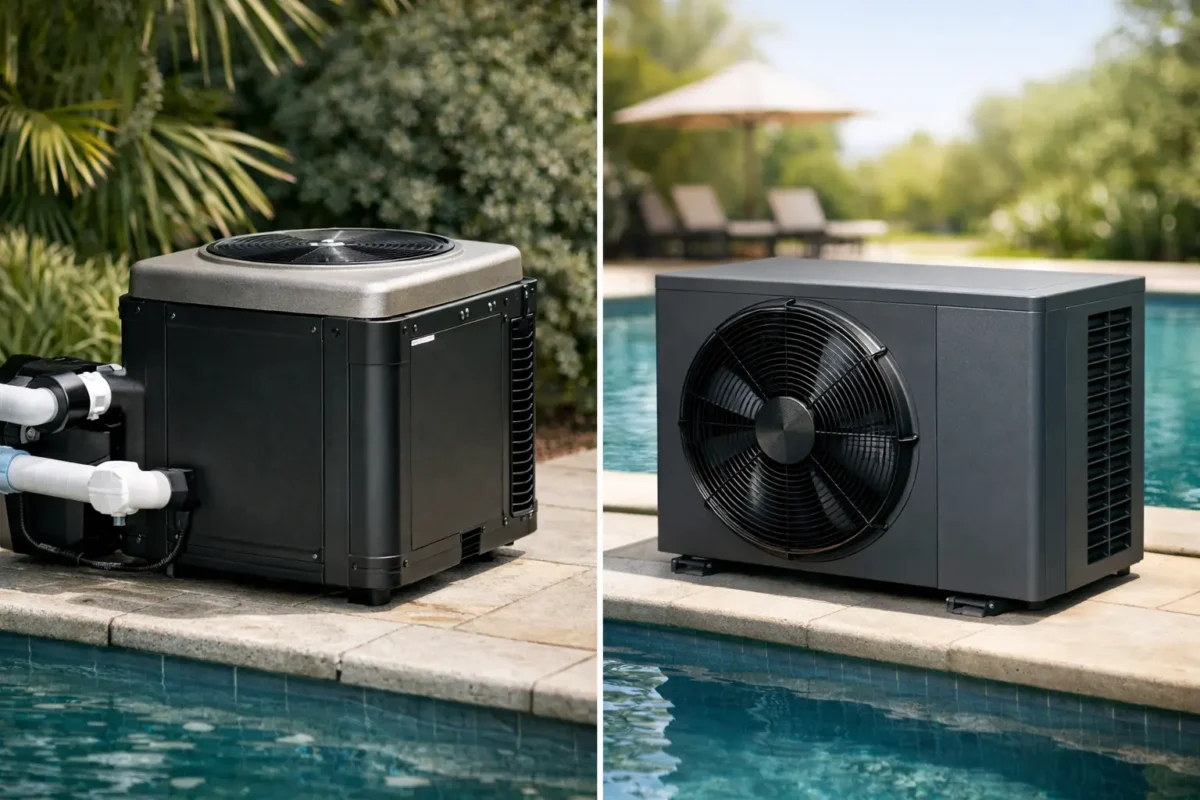
The wrong pool heating system usually reveals itself at the worst time – when guests are expected, occupancy is high, or a villa owner wants perfect water temperature without delay. That is why the pool heater vs heat pump decision deserves more than a quick price comparison. For premium residential and commercial pools, the right choice affects comfort, operating cost, maintenance planning, and long-term reliability.
In the UAE, that decision is rarely one-size-fits-all. A private villa pool in Dubai has different usage patterns than a hotel pool, a residential tower amenity deck, or a therapy pool with stricter temperature demands. The best result comes from matching heating technology to the property, the expected usage schedule, and the owner’s standards for performance.
Pool heater vs heat pump: the core difference
A conventional pool heater generates heat directly, usually through gas or electric resistance, and raises water temperature quickly. A heat pump works differently. It transfers heat from the surrounding air into the pool water, which makes it far more energy-efficient in the right conditions but slower to respond.
That distinction matters. If your priority is rapid heating on demand, a heater has a clear advantage. If your priority is lower long-term energy consumption for regular temperature maintenance, a heat pump is often the stronger investment.
Neither option is universally better. The right system depends on how the pool is used, how often it needs to be heated, and how much value you place on speed versus efficiency.
When a pool heater makes more sense
A pool heater is built for performance first. It can raise pool temperature fast, which is valuable when the pool is not heated continuously or when temperature needs to be adjusted with little notice. This is especially relevant for hospitality settings, event-driven properties, and owners who use the pool selectively rather than every day.
For example, a luxury villa owner may only want the pool heated on weekends or for evening entertaining. In that case, waiting for gradual temperature recovery may not be acceptable. A heater gives immediate control and faster results.
The same applies to some commercial environments. Therapy pools, training pools, and hospitality pools with strict guest expectations may need dependable heating regardless of outside air conditions. Where temperature precision and rapid recovery are priorities, a heater remains a practical solution.
The trade-off is operating cost. Direct heating is effective, but it generally consumes more energy than a heat pump over time. If the system runs frequently, those costs become more noticeable. That is why a heater often suits intermittent use better than continuous use.
When a heat pump is the better investment
A heat pump is designed for efficiency and steady performance. Instead of producing heat directly, it captures ambient heat and transfers it into the water. In warm climates, this can deliver excellent efficiency and significantly lower running costs compared with traditional heating methods.
For many UAE properties, this is a compelling advantage. Pools that are used consistently and kept within a target temperature range often benefit from the economics of a heat pump. Residential compounds, hotel leisure pools, and wellness-focused properties frequently prefer this approach because it supports comfort without excessive energy spend.
A heat pump is especially effective when pool heating is part of a routine operating plan rather than an occasional demand. If the goal is to maintain pleasant water temperature across a season, not create a rapid temperature jump in a few hours, the technology aligns very well with that requirement.
The main compromise is speed. A heat pump does not deliver the same immediate rise in temperature as a conventional heater. It performs best when allowed to work consistently and efficiently over time.
Cost is not just the purchase price
Many buyers start with equipment cost, but premium pool planning requires a broader view. The true comparison includes initial supply, installation requirements, electrical or fuel infrastructure, operating expense, maintenance expectations, and equipment lifespan.
A heater may have a different entry cost depending on the model and energy source, but the larger issue is usually what it costs to run. If the pool is heated often, a system with higher energy consumption can become expensive over the years.
A heat pump can offer stronger lifecycle value because of lower operating costs, particularly in climates where ambient conditions support efficient performance. For developers, facility managers, and commercial operators, that longer-term efficiency can have a meaningful effect on operating budgets.
This is why premium buyers should avoid choosing strictly on sticker price. The better question is what the system will cost over five or ten years while delivering the expected level of comfort.
Performance in UAE conditions
The UAE climate changes the conversation in an important way. Heat pumps generally perform well in warmer environments because they rely on extracting heat from the air. That makes them attractive for many properties in Dubai and across the region, where ambient temperatures support efficient operation for much of the year.
Still, application matters. If a pool must be heated quickly for occasional use, the climate advantage does not erase the response-time difference. A heat pump may be efficient, but it is not the ideal answer for every demand profile.
There is also the question of scale. Larger pools, high-bather-load pools, and pools exposed to wind or nighttime heat loss may need a carefully sized system to perform properly. Undersized equipment creates disappointment regardless of technology. Proper specification is what protects both comfort and operating efficiency.
Pool heater vs heat pump for villas, hotels, and commercial sites
For villas, the right answer often depends on lifestyle. If the owner wants quick heating for selective use, a heater may suit expectations better. If the pool is part of a daily wellness routine or family use pattern, a heat pump often delivers better long-term value.
For hotels and hospitality properties, the calculation becomes more operational. Guest satisfaction depends on dependable water temperature, but energy management matters as well. In many cases, a heat pump is attractive for baseline efficiency, especially for pools heated regularly. Where rapid recovery is critical, some operators still favor heater-based systems or a more specialized configuration.
For commercial and multi-residential developments, consistency, durability, and cost control tend to drive the decision. Facility teams usually need equipment that can maintain performance over time without excessive operating expense. That often makes heat pumps a strong candidate, provided the system is engineered correctly for the pool size and usage pattern.
Installation and maintenance considerations
High-quality equipment performs best when the installation is planned properly. That includes hydraulic integration, electrical requirements, ventilation considerations where relevant, control compatibility, and accurate sizing. Premium properties should treat heating equipment as part of the total pool system, not as an isolated add-on.
Maintenance also deserves attention. Heaters and heat pumps each have service needs, and those needs should be factored into procurement decisions. Commercial operators, in particular, benefit from working with a supplier that can support technical selection, installation, and after-sales service rather than simply delivering a unit.
That is where an experienced partner adds value. Aquatic Pools and Fountains supports clients with both product expertise and technical execution, which is essential when specifying heating solutions for luxury residential and demanding commercial environments.
Which option is right for you?
If speed is your top priority, a pool heater is often the better fit. It gives faster temperature rise and stronger on-demand performance, which is ideal for intermittent use or applications with strict timing requirements.
If efficiency and ongoing operating economy matter more, a heat pump is usually the stronger choice. It rewards consistent use patterns and can deliver excellent long-term value in the right climate.
For many premium properties, the answer comes down to usage behavior. How often is the pool heated? How quickly must it reach target temperature? Is the property owner focused on immediate performance, reduced energy costs, or a balance of both? Those are the questions that lead to the right specification.
The smartest pool heating decision is not about choosing the trendier option. It is about selecting a system that matches the property, the performance expectation, and the standard of experience you want every swimmer to feel the moment they step into the water.