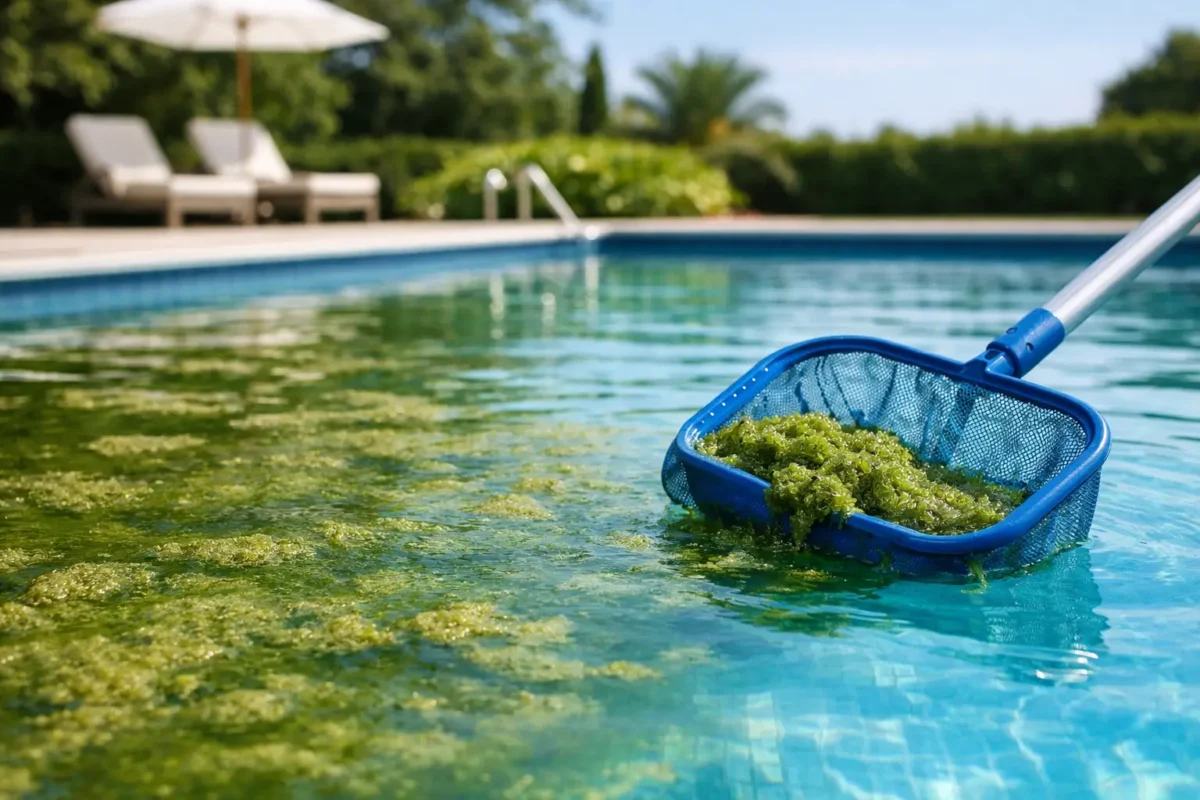
A pool can look perfectly balanced one week and turn dull, cloudy, or green far faster than most owners expect. If you are asking what causes pool algae growth, the short answer is this: algae takes hold when water chemistry, circulation, cleaning, and environmental conditions fall out of control long enough for microscopic spores to multiply.
In premium residential and commercial pools, algae is rarely caused by one issue alone. More often, it develops from a combination of weak sanitizer levels, poor filtration, dead spots in circulation, heavy debris, warm water, and delayed maintenance. Once those factors overlap, algae moves quickly from a minor water quality issue to a visible problem that affects appearance, swimmer comfort, and system performance.
What causes pool algae growth in the first place?
Algae spores are always present in the environment. They enter pools through wind, rain, dust, landscaping debris, swimwear, and even pool accessories. On their own, those spores do not automatically create a bloom. The real problem starts when the pool gives them what they need to reproduce.
That environment usually includes low or inconsistent sanitizer, phosphates or organic contamination, sunlight, and areas where water does not circulate effectively. In a hot climate, the process becomes more aggressive. Warm water speeds biological activity, which means a pool in Dubai or anywhere in the UAE can develop algae faster than a pool in a milder region if maintenance is not precise.
This is why premium pool care is not just about adding chlorine when the water looks off. It requires a controlled approach to filtration, dosing, brushing, testing, and equipment performance.
Low sanitizer is the most common trigger
The most direct answer to what causes pool algae growth is inadequate sanitation. Chlorine or other disinfectants must remain within the proper range at all times, not only after a problem appears. If free chlorine drops too low, algae can begin colonizing surfaces and suspended particles before the water shows obvious signs of change.
This often happens after heavy pool use, rain, extreme heat, or a delay in chemical dosing. In some cases, owners believe sanitizer is present because test strips show some chlorine, but the water is still poorly protected due to imbalanced pH or high stabilizer levels. In other words, chlorine may be in the pool without working efficiently.
Commercial and hospitality pools are especially vulnerable if bather load is high and chemical demand is not matched properly. Residential pools can face the same issue after parties, landscaping work, or periods when the property is unoccupied.
Poor circulation creates algae-friendly dead zones
Even with good chemistry on paper, algae can still form where water movement is weak. Circulation matters because sanitizer must be distributed evenly throughout the pool. If water stagnates in corners, steps, tanning ledges, skimmer blind spots, or behind fittings, algae can begin attaching to surfaces in those areas first.
This is a common issue in larger pools, custom-shaped pools, overflow systems, and pools with design features that look elegant but require more thoughtful hydraulic performance. Undersized pumps, dirty filters, blocked returns, or limited run times all reduce circulation quality.
A high-end pool should not only look refined. It should operate with hydraulic efficiency. When circulation is engineered correctly, the system supports cleaner water, more stable chemistry, and fewer algae incidents.
Filtration problems allow contamination to build up
A pool filter does not kill algae, but it plays a central role in preventing the conditions that help algae thrive. Filters remove suspended debris and fine contaminants that would otherwise feed water quality problems. When the filter is dirty, undersized, damaged, or not run long enough, the pool carries a higher organic load.
That matters because algae does not need dramatic neglect to grow. It only needs a favorable opening. Poor filtration gives it one.
Sand filters with channeling, cartridges overdue for cleaning, and media systems that have not been serviced properly all reduce clarity and increase strain on sanitation. Facility managers sometimes focus on chemical correction while overlooking the fact that the filtration system itself is underperforming. In many cases, both issues need to be addressed together.
Water imbalance makes sanitizer less effective
Many pool owners think algae appears because there is “not enough chlorine.” Sometimes that is true, but chemistry is more nuanced than that. pH, total alkalinity, calcium hardness, cyanuric acid, and total dissolved solids all affect how the water behaves and how efficiently sanitizer performs.
If pH rises too high, chlorine becomes less active. If stabilizer levels are excessive, chlorine can become less responsive. If testing is infrequent or inconsistent, these imbalances can develop gradually until algae gains momentum.
This is one reason professional water testing systems and disciplined maintenance schedules matter in premium environments. Elegant pool design and world-class equipment still depend on chemical precision. Without that precision, the water becomes harder to control and more expensive to recover.
Debris, dust, and organics feed the problem
Leaves, pollen, dust, insects, sunscreen residue, body oils, and landscaping runoff all place a demand on the pool. In outdoor pools, especially in areas with wind and construction dust, this load can rise quickly. Every bit of contamination consumes sanitizer and adds nutrients that support algae growth.
If baskets are not emptied, surfaces are not brushed, and vacuuming is delayed, organics settle into corners and along the floor. Those areas become ideal starting points for algae, particularly mustard or green algae.
This is where regular physical cleaning is just as important as chemical treatment. A visually clean pool is not always a biologically clean pool, but a poorly brushed and debris-filled pool almost always becomes harder to sanitize properly.
Sunlight and heat speed up algae growth
Sunlight does not create algae on its own, but it accelerates the conditions that allow algae to spread. UV exposure can reduce chlorine strength, particularly in outdoor pools that are not stabilized correctly. Add high temperatures to the equation, and sanitizer is consumed faster while algae activity increases.
That is why algae problems often intensify in summer or during periods of extreme heat. Pools with shallow areas, decorative water features, or long hours of direct sun may require tighter monitoring than owners expect. The same applies to fountains and water displays where circulation patterns are different from standard swimming pools.
In hot climates, prevention must be proactive. Waiting for visible green water is already too late.
Inadequate brushing and surface cleaning
Algae does not always start in the water column. It often begins as a thin film on walls, steps, grout lines, ladders, and shaded surfaces. If those areas are not brushed regularly, algae can anchor itself and resist normal sanitizer levels.
This is especially relevant for textured finishes, tile lines, and decorative details where contamination can cling more easily. Pool owners who rely only on automatic circulation and chemical dosing may miss the mechanical cleaning needed to break up early growth.
Brushing is not a minor maintenance task. It is part of the control strategy. Once algae forms a protective layer on a surface, treatment becomes more demanding and chemical consumption rises.
Equipment issues can quietly create the right conditions
A failing pump, inaccurate dosing system, blocked suction line, damaged skimmer, worn filter components, or malfunctioning chlorinator can all contribute to algae growth without creating an immediate dramatic failure. The pool may appear to be operating normally while performance drops in ways that affect water quality every day.
That is why technical inspection matters. Reliable pool care is not just about products. It is about confirming that pumps, filters, disinfection systems, and testing tools are working as intended. For luxury properties and commercial facilities, overlooked equipment inefficiencies often become expensive water recovery problems later.
How to prevent algae before it becomes expensive
The best prevention strategy combines four things: stable sanitizer, balanced chemistry, strong circulation, and routine cleaning. Remove one of those pillars, and algae risk rises. Remove two, and the issue can escalate quickly.
For residential pools, that means scheduled testing, proper chemical dosing, brushing, skimmer cleaning, and filter maintenance. For commercial pools, the same principles apply at a higher standard, with tighter monitoring, stronger operational discipline, and professional oversight.
It also helps to think beyond symptom treatment. If algae keeps returning, the question is not only what product to add. The real question is what underlying condition is allowing regrowth – weak hydraulics, poor filtration, inconsistent testing, nutrient load, or neglected surfaces.
For clients who expect dependable water quality, visual excellence, and long-term system performance, working with a technically capable partner makes a measurable difference. Aquatic Pools and Fountains supports that standard with premium equipment, maintenance expertise, and the level of control required for demanding pool environments.
When algae shows up, it is usually a warning that the pool system needs more than a quick chemical correction – it needs attention to the details that keep great water consistently clear.