
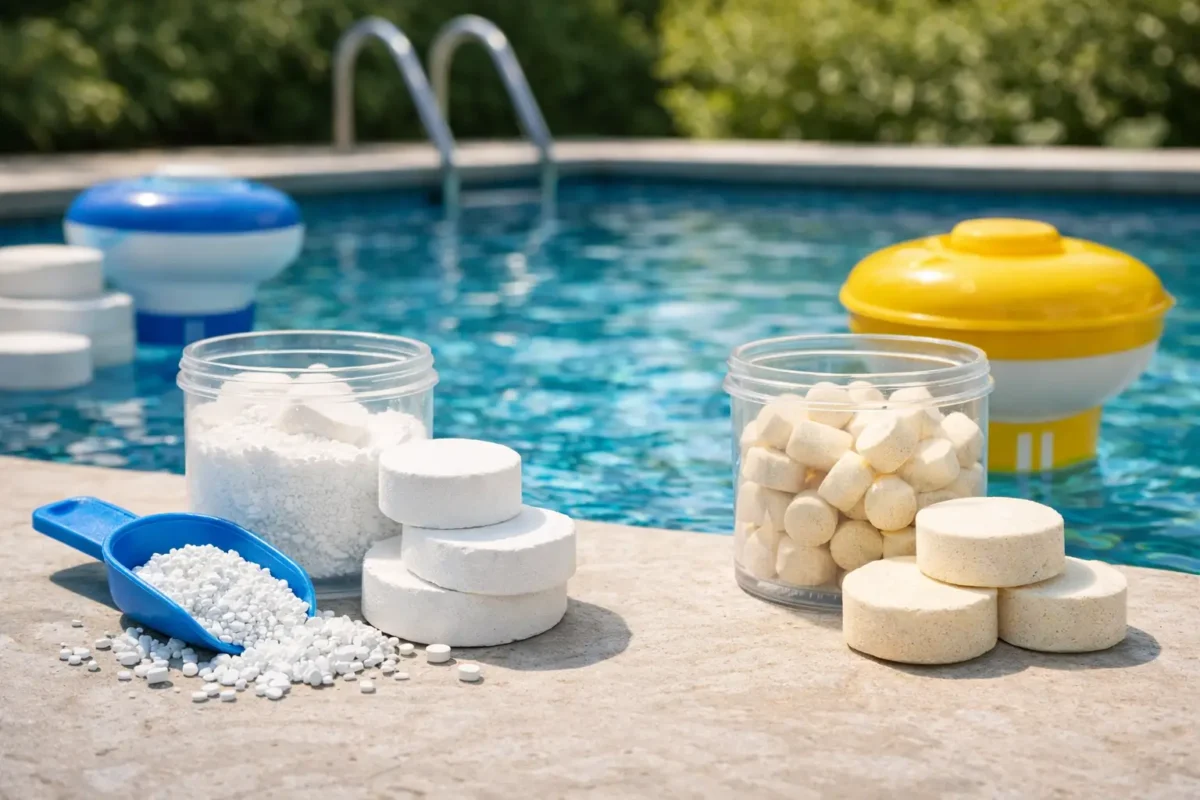
A pool can look flawless on the surface and still have the wrong sanitizer working behind the scenes. When clients ask about pool chlorine vs bromine, they are usually not asking for chemistry theory. They want to know which option protects water quality better, which one is easier to manage, and which one makes more sense for a premium residential or commercial installation.
That is the right question. Sanitizer choice affects swimmer comfort, maintenance routines, operating costs, equipment performance, and the long-term consistency of your water treatment strategy. In luxury villas, hospitality projects, residential towers, and high-use commercial facilities, the best answer is rarely about trends. It is about matching the sanitizer to the environment, the system design, and the performance standard expected from the pool.
Pool chlorine vs bromine: the core difference
Both chlorine and bromine are disinfectants. Their main role is to kill bacteria, control contaminants, and help keep pool water safe and clear. The difference is in how they behave once they enter the water.
Chlorine is the more common choice for swimming pools. It is widely available, cost-effective, and highly efficient when properly balanced. It works quickly, responds well to regular water treatment programs, and suits a broad range of residential and commercial pool applications.
Bromine is also an effective sanitizer, but it is more often associated with spas, hot tubs, and warmer water environments. It tends to remain stable at higher temperatures and can be gentler in terms of odor. That said, it usually comes at a higher operating cost and is not always the first choice for large outdoor pools.
For most standard pool installations, chlorine remains the dominant option. Bromine has strengths, but those strengths are more specific.
How chlorine performs in residential and commercial pools
Chlorine is popular for good reason. It acts fast, it is easier to source, and it integrates well with many modern disinfection setups. For property owners and facility managers focused on dependable performance, it offers a practical and scalable solution.
In outdoor pools, chlorine has a major advantage because it works well within established maintenance programs and can be supported by stabilizers, automated dosing systems, and regular testing routines. This makes it suitable for villa pools, apartment amenities, hotel pools, and large recreational systems where clarity and sanitation must remain consistent.
Chlorine also gives operators more straightforward control. If there is a sudden rise in swimmer load, debris, or contamination, chlorine can be adjusted quickly. That responsiveness matters in commercial settings where water conditions can change fast.
The trade-off is familiar. Chlorine can produce a stronger smell if water balance is poor, and some swimmers report eye or skin irritation when the chemistry is not managed correctly. In many cases, that is less a chlorine problem and more a maintenance problem. Proper pH, filtration, circulation, and dosing make a major difference.
Where bromine stands out
Bromine has a different profile. Its most recognized advantage is stability in warm water, which is why it is frequently chosen for spas and heated environments. If a water feature or small leisure pool runs at elevated temperatures, bromine may hold its disinfecting ability more effectively than chlorine.
It also tends to create less noticeable chemical odor. For indoor environments or enclosed leisure spaces, that can be attractive. Some users also find bromine-treated water more comfortable on the skin.
However, bromine is not automatically the premium choice just because it feels gentler. It is usually more expensive than chlorine, especially over time, and its use in larger pools can become less economical. It is also less common in standard outdoor pool operations, which means some owners and operators may find chlorine-based systems easier to support with readily available products, service routines, and technical expertise.
Sunlight is another factor. Bromine is not the strongest choice for outdoor pools exposed to intense UV conditions. In climates with strong year-round sun, this matters. A sanitizer that performs well in a spa or indoor setting may not deliver the same value in a large open-air pool.
Pool chlorine vs bromine in the UAE climate
In hot, high-UV conditions, sanitizer performance cannot be evaluated in isolation. Ambient temperature, water temperature, bather load, dust, evaporation, and strong sunlight all influence the result. That is why pool chlorine vs bromine should always be considered in the context of the site.
For many outdoor pools in Dubai and across the UAE, chlorine is the more practical and reliable option. It supports efficient large-scale treatment, works well with automated systems, and aligns with the operational needs of both residential and commercial pools exposed to harsh environmental conditions.
Bromine becomes more relevant in specific installations, especially indoor pools, spas, hydrotherapy systems, and heated water applications where temperature stability and user comfort are priorities. In those cases, the added cost may be justified by the operating environment.
This is where technical planning matters. A premium pool should not be treated with a one-size-fits-all chemical strategy. The sanitizer should suit the design, circulation system, usage pattern, and maintenance framework from day one.
Cost, maintenance, and long-term value
If cost is a deciding factor, chlorine usually wins. The product itself is generally more affordable, and the broader market availability makes replenishment and service planning easier. For large pools, this can have a significant impact on annual operating budgets.
Bromine often carries a higher product cost and may require a more deliberate approach to supply and monitoring. That does not make it a poor option. It simply means it is better suited to installations where its specific benefits outweigh the expense.
From a maintenance perspective, both sanitizers still require disciplined water testing, filtration support, and proper balancing. Neither one eliminates the need for professional oversight. A well-designed treatment program includes sanitizer control, pH management, circulation efficiency, and regular equipment inspection.
High-end pools deserve that level of attention. The sanitizer is only one part of the performance picture. Pumps, filters, dosing systems, test kits, and operator response all affect the final water quality.
Which one is better for swimmer comfort?
This is often where opinions become subjective. Some bathers prefer bromine because it can feel less harsh and produce less chemical smell. Others are perfectly comfortable in chlorine-treated water when the system is balanced correctly.
The key point is this: properly maintained water should not feel aggressive regardless of sanitizer type. Red eyes, strong odor, or irritated skin usually point to imbalance, poor ventilation, or inadequate treatment control rather than a simple chlorine-versus-bromine issue.
For hospitality and luxury residential environments, comfort is essential. Guests and residents expect water that looks inviting and feels clean without the heavy chemical impression associated with neglected pools. That standard can be achieved with either sanitizer, but chlorine tends to offer more flexibility and value in larger pool settings.
How to choose the right sanitizer
The strongest choice depends on the application. For most outdoor residential and commercial pools, chlorine is the preferred solution because it delivers efficient sanitation, easier system integration, and stronger cost control. It is the industry standard because it performs consistently across a wide range of pool types.
Bromine is worth considering when the installation involves heated water, enclosed environments, or spa-focused use where temperature resilience and lower odor are priorities. In those scenarios, it can be an excellent fit.
For developers, facility managers, and property owners, the smartest decision is not just choosing a chemical. It is building the right treatment strategy around the pool. That means selecting the correct sanitizer, pairing it with dependable equipment, and ensuring the maintenance approach is designed for the actual demands of the site.
At Aquatic Pools and Fountains, that is where technical guidance adds value. Premium pools require more than stocked products. They require the right specification, the right system support, and a service partner that understands performance over the long term.
Final thought
If you are deciding between chlorine and bromine, start with how the pool will actually be used, not with assumptions about which sanitizer sounds more advanced. The best water treatment choice is the one that stays effective under your conditions, supports elegant water quality every day, and protects the investment you have made in the pool itself.