
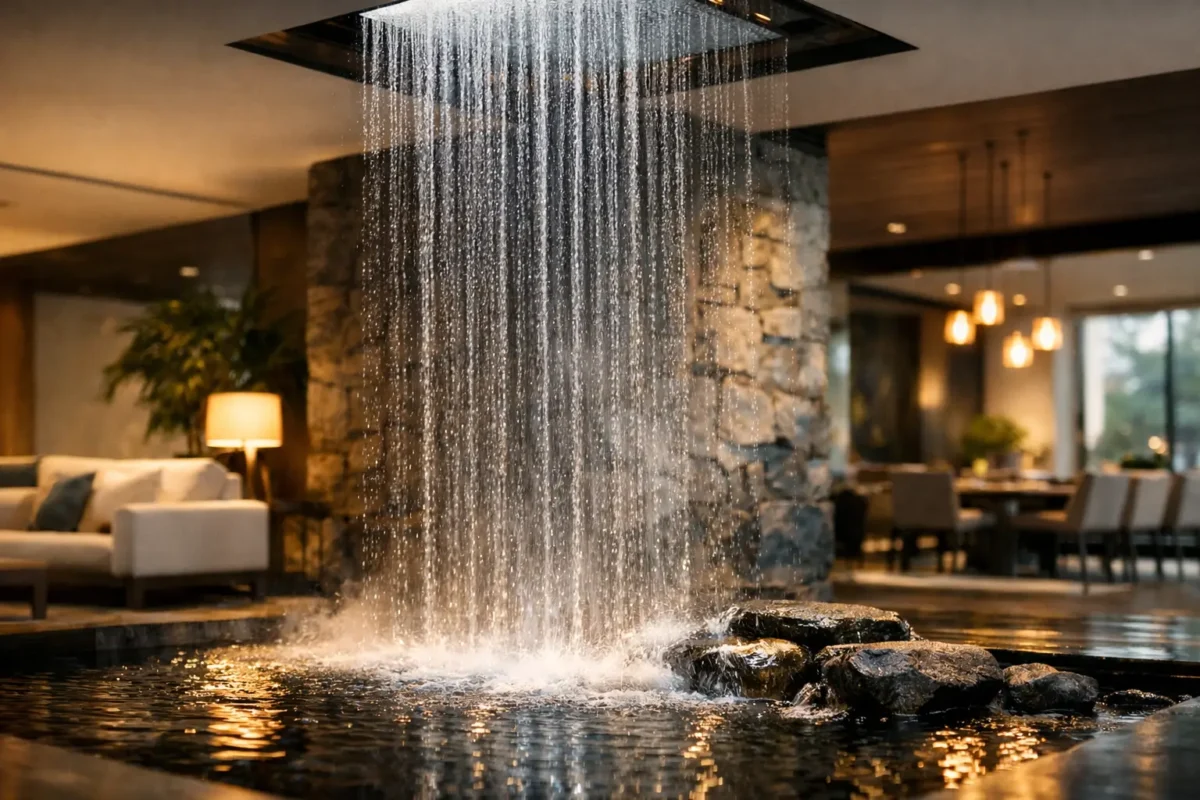
A lobby can look finished on paper and still feel forgettable in person. What changes that experience is movement, sound, and atmosphere – and an indoor rain waterfall feature does all three at once. In luxury villas, hotel receptions, corporate entrances, and premium residential developments, this type of water installation creates an immediate sense of distinction that static décor simply cannot match.
An indoor rain waterfall feature is not just a decorative addition. It is a technical installation that must balance visual impact, water circulation, structural coordination, noise control, lighting, and long-term serviceability. When specified correctly, it becomes a signature design element that strengthens the value of the property. When specified poorly, it can become a maintenance concern that undermines the entire space.
Why an indoor rain waterfall feature stands out
Most interior finishes rely on texture, lighting, and material selection to create luxury. Water introduces a different dimension. It reflects light, softens acoustics in a controlled way, and gives a space a premium identity that feels active rather than staged.
For villa owners, this often means transforming an entrance hall, indoor courtyard, or double-height living area into a focal point. For developers and hospitality operators, it means giving visitors a memorable first impression the moment they arrive. In commercial spaces, it can elevate reception areas, executive zones, wellness environments, and shared amenities with a more refined visual language.
The appeal is not only aesthetic. A well-designed rain waterfall system can support brand positioning for a property, especially where exclusivity, calm, and architectural sophistication matter. In premium real estate, details that feel custom and engineered tend to carry more weight than decorative pieces that can be replaced at any time.
Where an indoor rain waterfall feature works best
Not every indoor space should include a rain waterfall. The strongest results come when the feature is integrated into the architecture rather than inserted as an afterthought.
Double-height entrances are one of the most effective settings because they allow the vertical drop of water to be appreciated from multiple angles. Reception areas also perform well, particularly when the feature is aligned with lighting and premium surface materials such as stone, glass, or metal finishes. In villas, indoor courtyards and transitional spaces between living zones can create a more private, resort-level experience.
Hotels and upscale residential towers often use these installations to define key public zones without relying on partitions. The water feature becomes an architectural divider while maintaining openness. That said, space planning matters. If circulation routes are too tight or splash management is overlooked, the installation can interfere with function instead of improving it.
Residential and commercial expectations are different
In a private residence, the priority is usually elegance, quiet operation, and a finish that feels personal to the interior design. The feature must complement the home rather than dominate it. Scale, lighting temperature, and sound level all need careful tuning.
In a commercial setting, durability and operational consistency become even more important. Hotels, mixed-use developments, and office properties need systems that can handle extended run times, regular public exposure, and maintenance schedules without compromising presentation. The visual goal may be similar, but the engineering standard is typically higher.
Design choices that shape the result
The term indoor rain waterfall feature covers a wide range of formats. Some installations create a fine rain curtain from a concealed ceiling trough. Others deliver a more defined water sheet over glass, acrylic, stone, or custom-fabricated panels. Each choice changes the look, sound, and maintenance profile.
A rain-style effect tends to feel lighter and more contemporary. It works particularly well in minimalist interiors and premium hospitality spaces. A sheet waterfall can appear more architectural and dramatic, especially when paired with integrated LED lighting or textured back panels.
Material selection is equally important. Stainless steel components are often preferred for their durability and finish quality. Glass gives a clean, modern appearance, while stone and textured surfaces add visual depth and a more natural character. The right option depends on the interior concept, but performance should lead the decision, not appearance alone.
Lighting deserves more attention than it usually gets. Properly placed LED lighting can make the falling water more visible, more elegant, and more dimensional, particularly in evening settings or indoor areas with limited natural light. Poor lighting, by contrast, can flatten the effect and make even an expensive feature look underwhelming.
The technical side matters more than most buyers expect
A premium water feature is only as strong as the system behind it. This is where many projects separate into two categories: installations that remain impressive over time, and installations that begin showing problems far too early.
Water circulation equipment must be sized correctly for the design intent. If pump selection is off, the water pattern may appear weak, uneven, or excessively turbulent. Filtration also matters indoors because clean water is essential to maintaining clarity, protecting components, and preserving the quality of the visual effect.
Water treatment should never be treated as secondary. Even decorative systems need appropriate disinfection and water quality control, especially in enclosed environments where odor or visible water issues are unacceptable. In higher-end projects, automated control options can also improve consistency and reduce manual intervention.
Drainage design, basin construction, and access for servicing are just as important as the visible feature. If a system looks elegant from the front but offers poor technician access, future maintenance becomes slower, more disruptive, and more expensive. Premium execution means planning for long-term operation from day one.
Noise, humidity, and maintenance planning
One of the most common assumptions is that more water always means more luxury. In reality, the right sound profile depends on the location. A reception feature may benefit from a stronger audible presence, while a villa interior may require a softer, more controlled effect.
Humidity must also be considered. Indoor water installations can influence surrounding conditions, particularly in enclosed or climate-sensitive spaces. Proper design coordination helps reduce unwanted moisture effects and protects nearby finishes.
Maintenance should be realistic, not theoretical. Every indoor rain waterfall feature needs periodic cleaning, system checks, and water quality monitoring. The difference is whether those tasks are straightforward or unnecessarily difficult. A professionally engineered system should be designed for dependable upkeep, not constant corrective work.
What premium buyers should look for
For property owners and project teams, supplier capability matters as much as product selection. The right partner should be able to support design coordination, equipment specification, installation requirements, and after-sales service with equal confidence.
That means looking beyond the visible waterfall panel or rain bar. Ask about pump and filtration quality, water treatment options, lighting integration, spare parts availability, servicing access, and how the feature will perform after months or years of use. A reliable supplier should be ready to discuss all of it clearly.
This is especially important in luxury and commercial environments where presentation standards stay high every day. An indoor feature is not successful because it looks impressive during handover. It is successful because it continues to operate cleanly, safely, and elegantly over time. That is where technical competence proves its value.
Aquatic Pools and Fountains serves this type of requirement by combining premium equipment supply with technical support, installation coordination, and long-term maintenance insight. For clients who want a statement feature without compromising system reliability, that full-scope approach is often the difference between a display piece and a dependable asset.
Is it the right choice for every project?
Not always, and that is exactly why specification should be handled carefully. An indoor rain waterfall feature is ideal when a property needs a high-impact visual centerpiece and has the structural, mechanical, and design coordination to support it. In the right space, it delivers elegance, brand value, and a stronger sensory experience.
If the available area is limited, maintenance access is poor, or the project team is treating the installation as a simple décor item, a different water feature concept may be the smarter choice. Premium projects benefit from solutions that fit the environment, not from forcing a trend into the wrong setting.
The best indoor water features feel inevitable, as if the space was always meant to have them. When the design is refined, the equipment is specified properly, and the support behind the installation is strong, the result is more than visual impact. It becomes part of how people remember the property.