
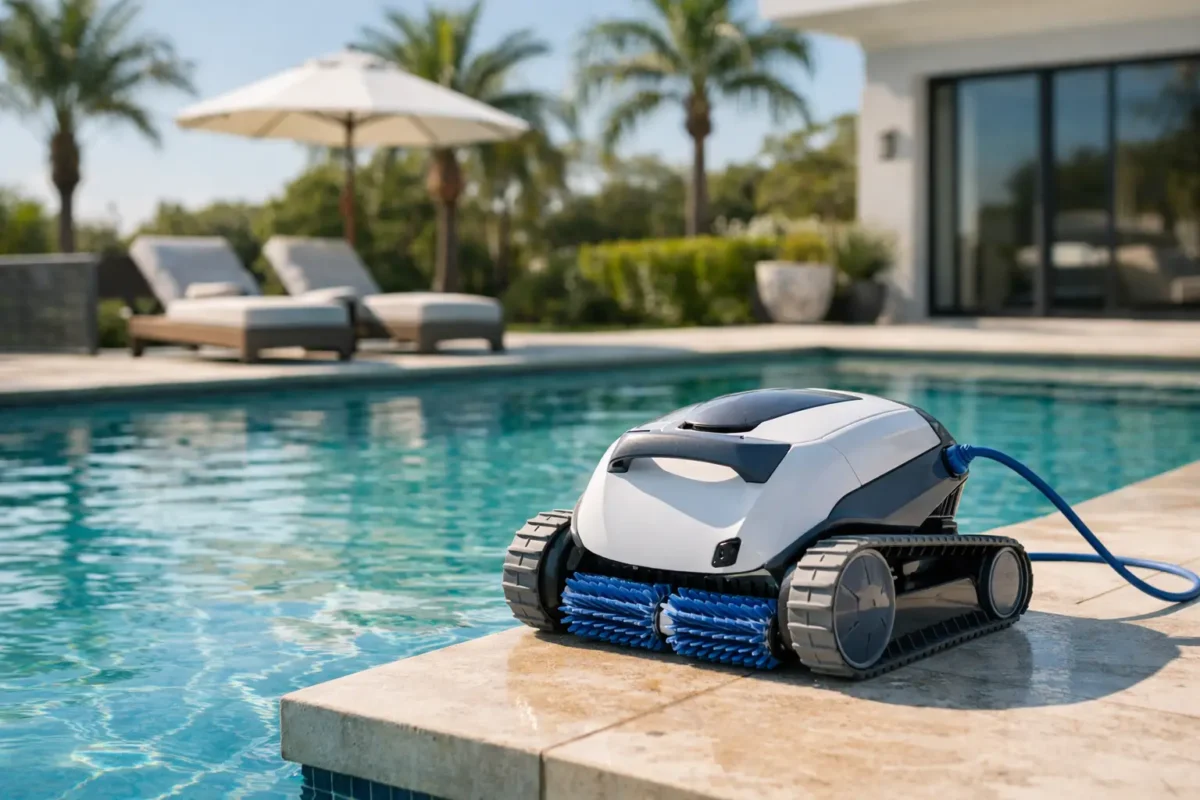
If your pool still depends on manual vacuuming or a basic suction cleaner, the difference is obvious after one busy week – fine dust settles on the floor, corners collect debris, and maintenance starts taking more time than it should. This robotic pool cleaner review is written for owners and operators who expect a cleaner pool, lower labor demands, and equipment that matches the standard of a premium residential or commercial setting.
For villas, hospitality properties, and managed facilities, a robotic cleaner is not just a convenience upgrade. It is a practical investment in presentation, water quality support, and maintenance efficiency. The real question is not whether robotic cleaners work. The question is which type works best for your pool, your usage pattern, and your operating expectations.
Robotic pool cleaner review: what actually matters
Most buyers start by comparing price, but that is rarely the right first filter. In a premium pool environment, cleaning consistency, wall-climbing ability, filtration performance, and serviceability matter far more over time. A lower-cost unit that misses fine debris or struggles with large pools usually creates more work, not less.
The best robotic pool cleaners operate independently from the pool filtration system. That means they collect debris in their own filter canisters or bags, reduce strain on pumps and filters, and follow programmed cleaning paths rather than moving randomly. In practical terms, that gives you better surface coverage and more predictable results.
Performance also depends heavily on pool type. A compact residential plunge pool has very different cleaning demands than a long overflow pool, a tiled villa pool with fine dust exposure, or a commercial basin with heavier daily use. One model may be excellent for light weekly maintenance but underpowered for larger, debris-prone installations.
Where robotic cleaners perform best
Robotic cleaners are especially strong in pools where visual standards are high. If the finish is tile, mosaic, or another premium surface, even light sediment becomes noticeable quickly. A robotic unit can remove fine particles before they build up, helping the pool maintain a polished appearance between scheduled service visits.
They are also highly effective where labor efficiency matters. Facility managers and hospitality operators benefit from reducing manual vacuuming time, while private owners appreciate a pool that stays guest-ready with less hands-on effort. In these settings, automation supports both appearance and operational consistency.
That said, not every robotic cleaner is built for every environment. Some residential models perform well in standard pools but are not ideal for demanding commercial schedules or pools with complex shapes, beach entries, ledges, or frequent leaf load.
Cleaning power and debris handling
A strong robotic cleaner should handle both visible debris and fine suspended dust that settles over time. In the UAE and similar climates, windblown sand and fine particulates are a real test. This is where filtration design separates entry-level units from premium machines.
A cleaner with only coarse filtration may pick up leaves and larger debris but leave behind the very material that makes pool floors look dull. Higher-grade models with fine or ultra-fine filtration are better suited for luxury pools where the finish must stay visibly clean. Some units also allow interchangeable filter baskets, which is useful when debris types vary by season or property type.
Floor, wall, and waterline coverage
Many buyers assume all robotic cleaners climb walls. They do not. Some are floor-only machines, and while they can still be useful, they are not enough for pools that demand complete visual cleanliness. For a true premium result, wall climbing and waterline scrubbing are valuable features.
The waterline is often the first area to show oils, residue, and visible buildup. A robotic cleaner that can actively scrub this zone reduces manual brushing and keeps the pool looking maintained at all times. In higher-end residential and commercial pools, this is not a minor feature. It has a direct effect on appearance.
Navigation and cycle efficiency
Random movement may be acceptable in a small pool, but in larger or irregular pools it often leads to missed sections and longer cleaning cycles. Smarter navigation systems improve route planning, reduce overlap, and produce more reliable cleaning coverage.
This matters even more when the cleaner is part of a broader maintenance routine. You want a machine that finishes on time, covers the pool properly, and does not require repeated repositioning. Advanced models with scanning and programmable cycles generally justify their cost in better results and reduced intervention.
The trade-offs buyers should know
A fair robotic pool cleaner review should be clear about limitations. These machines are effective, but they are not maintenance-free. Filters need to be emptied and cleaned regularly. Brushes wear over time. Cables need proper handling, and motors or control components eventually require service.
There is also the question of pool size and duty cycle. A residential model used in a heavily occupied commercial setting will usually wear faster and deliver inconsistent results. On the other hand, specifying an oversized commercial-grade cleaner for a simple home pool may add cost without meaningful benefit. The correct match is more important than buying the most expensive unit available.
Corded vs cordless is another decision point. Cordless models are appealing because they reduce cable management and look more streamlined in use. However, runtime limitations and charging schedules may not suit larger pools or back-to-back cleaning needs. Corded units often remain the stronger choice for longer cycles and heavier-duty applications.
How to judge long-term value
The strongest buying decision comes from looking beyond the initial purchase price. Long-term value is shaped by durability, spare parts availability, service support, and the quality of the cleaning result over several seasons.
If a cleaner saves labor but frequently needs troubleshooting, that value disappears quickly. If replacement filters, brushes, or drive components are difficult to source, downtime becomes an issue. For property managers, developers, and serious homeowners, after-sales support is part of the product, not an optional extra.
This is why buyers in premium segments usually benefit from working with a specialized supplier rather than choosing based on online specifications alone. Technical guidance helps align the cleaner with pool dimensions, surface type, debris load, and expected maintenance frequency. Aquatic Pools and Fountains serves this kind of requirement well because the conversation goes beyond the box and into actual operating conditions.
Robotic pool cleaner review: who should buy one
If your pool is a design feature, a guest-facing asset, or a high-usage facility, a robotic cleaner is usually a worthwhile upgrade. The case is strongest when appearance matters daily, when manual cleaning time is expensive, or when you want a more consistent standard between professional maintenance visits.
For villa owners, the benefit is simple: less manual effort and a cleaner-looking pool throughout the week. For hospitality and commercial properties, the benefit is broader – reduced labor pressure, more predictable maintenance outcomes, and a cleaner environment for guests or residents.
If your pool sees very light use and already has frequent full-service maintenance, the return may be less dramatic, though still meaningful for convenience. It depends on how much independence, consistency, and visual presentation you expect from your equipment.
Best fit scenarios
Robotic cleaners tend to offer the best return in medium to large pools, pools exposed to dust or landscaping debris, and pools with visible tile finishes where cleanliness is easy to judge. They are also a strong fit where staff efficiency matters or where a pool must remain presentation-ready without constant manual attention.
They are less impressive when buyers expect them to replace all pool maintenance. They do not replace chemistry control, backwashing, inspection, or periodic deep cleaning. What they do exceptionally well is automate one of the most repetitive parts of pool care.
What premium buyers should prioritize before purchase
Start with coverage. Make sure the cleaner is designed for your pool length, depth profile, and surface type. Then look at filtration quality, wall and waterline capability, cleaning cycle options, and ease of filter access. A machine that cleans well but is inconvenient to empty often gets used less consistently.
Next, consider support. Ask whether replacement parts are available, how servicing is handled, and whether the model is appropriate for your expected usage frequency. This step is often overlooked, but it directly affects ownership experience.
Finally, be realistic about expectations. A robotic cleaner should reduce manual work significantly and improve day-to-day cleanliness, but the best result still comes from pairing quality equipment with proper pool system care and professional oversight when needed.
A well-chosen robotic cleaner does more than pick up debris. It protects the presentation standard of the pool, supports a more efficient maintenance routine, and gives owners and operators greater control over results. If you are investing in a premium pool environment, your cleaning equipment should meet the same standard.