
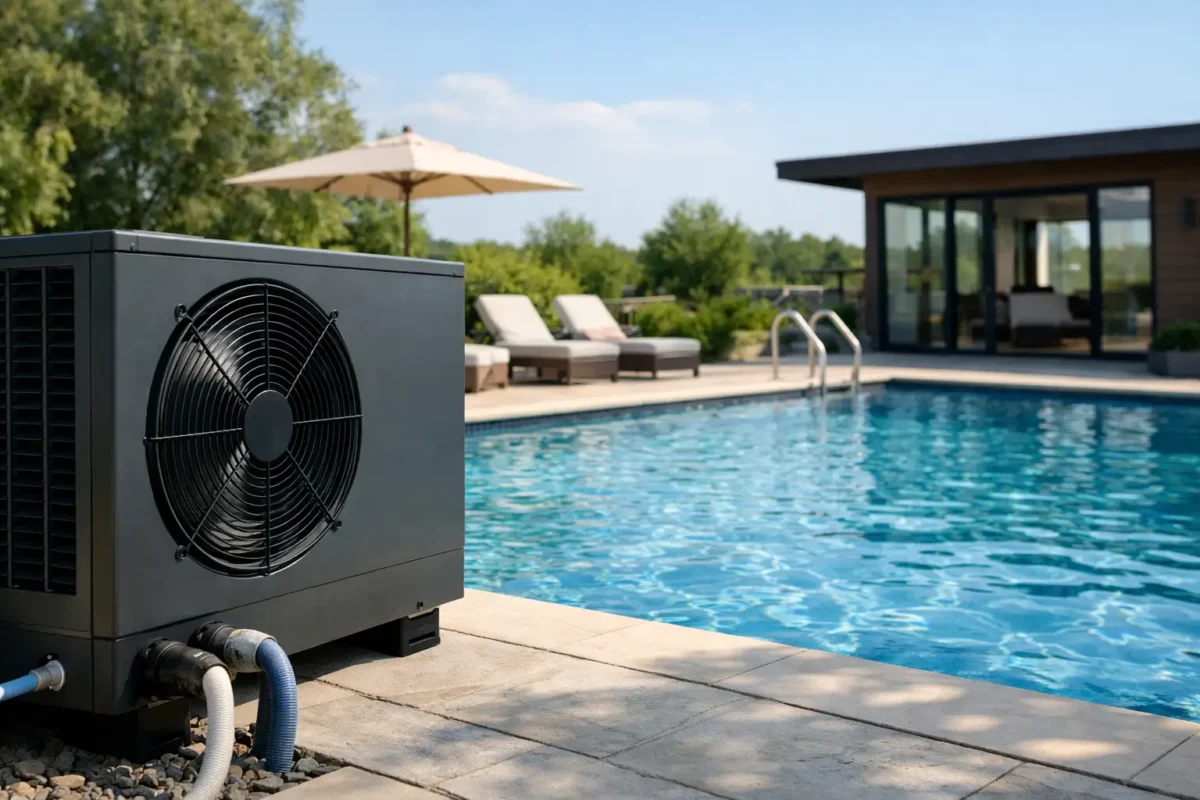
A pool that looks exceptional but feels too cold gets used less. That is the real issue for many villa owners, hospitality operators, and property managers weighing swimming pool heat pumps against older heating systems. In a market where comfort, efficiency, and long-term performance all matter, the right heat pump is not an accessory. It is part of the pool’s core operating strategy.
Why swimming pool heat pumps are a smart upgrade
Swimming pool heat pumps are designed to transfer heat from the surrounding air into the pool water. Unlike systems that generate heat directly through heavy energy consumption, heat pumps work by moving available heat efficiently. For premium residential and commercial pools, that difference has a direct impact on operating cost, temperature stability, and equipment value over time.
In the UAE, this matters more than many buyers first assume. Pools are often viewed as year-round assets, whether in private villas, residential developments, hotels, or wellness facilities. The challenge is not only heating water in cooler months. It is maintaining a comfortable, controlled swimming environment without relying on inefficient or outdated systems that increase utility costs and maintenance demands.
A well-selected heat pump brings consistency. It helps keep the water within a usable temperature range, extends the practical swimming season, and improves the overall experience for residents, guests, and tenants. For commercial properties, that can also support occupancy standards, guest satisfaction, and amenity value.
How swimming pool heat pumps work in real-world installations
The principle is straightforward. The unit draws in ambient air, extracts heat energy through its refrigerant cycle, and transfers that heat to the pool water through a heat exchanger. Because the system is transferring heat rather than creating it from scratch, it can operate far more efficiently than many conventional alternatives.
That said, performance always depends on installation conditions. A heat pump’s output is affected by air temperature, pool size, desired water temperature, wind exposure, and whether the pool has a cover. An uncovered outdoor pool will lose heat faster, which means the unit must work harder to maintain target temperature. A properly covered pool with balanced circulation and filtration will perform much better.
This is why equipment selection should never be based on headline capacity alone. The best result comes from matching the unit to the actual pool environment, bather expectations, and operating pattern.
What buyers should look for before choosing a unit
The right heat pump is rarely the cheapest one on paper. For high-end residential and commercial projects, the better measure is lifecycle value.
Capacity is the first consideration. An undersized unit may run continuously and still struggle to reach the required temperature. An oversized unit may increase upfront cost without delivering proportional benefit if the sizing logic is wrong. Proper calculation should account for pool volume, exposure, surface area, and expected usage.
Build quality matters just as much. In demanding climates, premium materials help protect the unit from corrosion, wear, and premature failure. Titanium heat exchangers, durable cabinet construction, and reliable internal components are especially important for long-term pool performance.
Noise level is another practical factor. For villas, rooftop leisure areas, boutique hospitality spaces, and landscaped pool decks, quiet operation is not a luxury. It is part of the user experience. Inverter-driven models often provide better control and lower sound levels because they adjust output rather than cycling aggressively on and off.
Control features also deserve attention. Modern units can offer precise temperature settings, digital monitoring, fault alerts, and integration with broader pool equipment systems. For facility managers and larger developments, that level of control supports better maintenance planning and more predictable operation.
The cost question: upfront investment versus operating savings
Many buyers focus first on purchase price. That is understandable, but it can lead to the wrong decision.
Swimming pool heat pumps usually require a higher initial investment than some basic heating alternatives. The payoff comes through efficiency and lower ongoing energy use. Over time, especially on pools used regularly, the savings can be substantial. For residential owners, that means better comfort without the shock of excessive utility costs. For hotels, compounds, and managed properties, it can support tighter operational control across multiple amenities.
Still, savings are not automatic. Results depend on correct sizing, proper installation, water circulation quality, and realistic operating settings. A premium unit installed poorly can underperform. A well-matched system installed professionally can deliver steady returns for years.
That is why technical guidance matters as much as equipment availability.
Residential and commercial needs are not the same
A villa pool and a hotel pool may use the same core technology, but they should not be specified in the same way.
For residential properties, buyers often prioritize quiet performance, discreet design, energy efficiency, and dependable year-round comfort. The owner wants a pool that is ready when family or guests want to use it, without constant intervention.
Commercial environments usually demand more. Hotels, residential towers, fitness clubs, and hospitality projects need equipment that can handle longer operating hours, heavier usage, and stricter service expectations. Recovery time, durability, maintainability, and system integration all become more important. A temporary drop in water comfort may be an inconvenience at home, but it can become a service issue in a commercial setting.
This is where a full-scope supplier adds real value. Product supply is only one part of the equation. System design input, installation quality, commissioning, and ongoing support all shape how the heat pump performs after handover.
Common mistakes that reduce heat pump performance
The most common mistake is poor sizing. Buyers sometimes assume a larger unit is always better or choose a smaller model to reduce upfront cost. Both decisions can create inefficiency.
Another issue is ignoring heat loss. If the pool is exposed to wind, left uncovered at night, or paired with inadequate circulation, the system has to work harder than necessary. The result is weaker performance and higher running cost.
Placement is another factor. Heat pumps need appropriate airflow and service access. If the unit is boxed into a tight area or installed without sufficient clearance, efficiency can suffer and maintenance becomes more difficult.
Water chemistry also plays a role. Poorly balanced water can damage components over time, including parts that are meant to resist corrosion. Heating equipment performs best as part of a well-managed pool system, not as a standalone fix.
Why professional installation matters
Premium equipment deserves precise execution. A heat pump must be integrated correctly with the circulation system, filtration components, electrical supply, and control setup. Small errors in pipe layout, flow rate, drainage, or commissioning can affect performance from the first day.
Professional installation also protects the investment. It helps ensure the system operates at the manufacturer’s intended standard, supports warranty conditions, and reduces the risk of avoidable service issues later.
For many buyers, especially developers and commercial operators, the ideal approach is working with a supplier that can advise on product selection, install the equipment properly, and continue supporting the pool throughout its operating life. That level of continuity creates better outcomes than simply purchasing a unit and leaving the rest to chance.
Aquatic Pools and Fountains supports this approach by combining premium equipment supply with technical guidance, installation expertise, and after-sales service for both residential and commercial aquatic projects.
Is a heat pump the right choice for every pool?
Not always. The answer depends on how the pool is used, how often temperature control is needed, the target comfort level, and the property’s broader operational priorities.
For pools used only occasionally, buyers may question whether the investment is justified. For regularly used pools, especially in premium properties where comfort is part of the expectation, heat pumps are often one of the most practical long-term solutions. They offer a strong balance between performance and operating efficiency, particularly when paired with proper pool covers and quality circulation systems.
The best decision comes from looking at the full picture rather than the equipment in isolation. Pool size, usage profile, exposure conditions, and maintenance standards all influence the outcome.
A well-chosen heat pump does more than warm water. It protects the value of the pool as a usable, comfortable, and professionally managed feature of the property. When that matters to residents, guests, or tenants, selecting the right system is not a minor upgrade. It is a smart operational decision that continues paying off every time the pool is ready to use.