
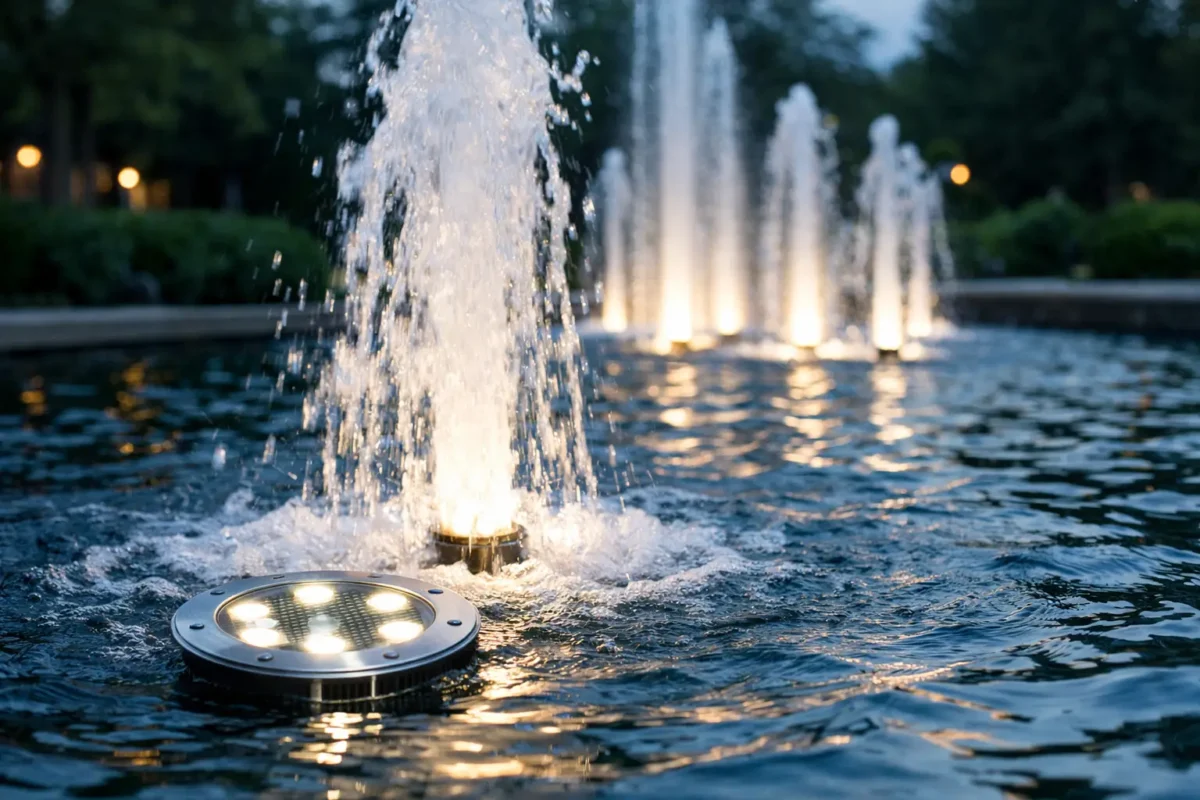
A fountain can look expensive in daylight and still fall flat after sunset. The difference is rarely the stone, the nozzle pattern, or even the water height. More often, it comes down to fountain underwater lights and whether they were selected with the same care as the rest of the installation. In premium residential and commercial settings, lighting is what turns a water feature into a focal point rather than a background element.
For property owners, developers, and facility teams, the decision is not simply about adding illumination. It is about choosing fixtures that can withstand constant submersion, heat, water treatment conditions, and demanding operating schedules while still delivering clean, elegant light. In a market where appearance matters and maintenance access can be difficult, the right lighting choice protects both aesthetics and long-term value.
Why fountain underwater lights matter
Underwater lighting defines how a fountain is perceived at night. It shapes the water, highlights movement, and gives depth to jets, cascades, and basin surfaces. A well-lit fountain appears more refined, more architectural, and more intentional. In hospitality environments, that visual effect supports the wider guest experience. In villas and residential compounds, it adds sophistication and extends the usable atmosphere of outdoor areas.
There is also a practical side. Proper lighting improves visibility around decorative water features, especially in entry courts, podiums, terraces, and public-facing landscapes. For commercial properties, this matters because presentation and safety often need to work together.
Not every fountain needs a dramatic color-changing display. In fact, many premium projects benefit more from stable white light with precise beam control. The best result depends on the fountain design, the surrounding architecture, and the role the feature plays within the property.
What separates premium fountain lighting from standard options
At first glance, many underwater fixtures can appear similar. The real difference shows up after months of operation. Premium fountain underwater lights are engineered for continuous performance in submerged conditions, with housing materials, seals, lens quality, and electrical protection designed for reliability.
Stainless steel bodies are common in higher-grade products because they resist corrosion and maintain their finish in demanding outdoor environments. The sealing system is equally important. If water enters the fixture, performance drops quickly and replacement becomes unavoidable. In decorative fountains where lights are integrated into concrete basins or installed near fixed pipework, that failure can create unnecessary disruption.
LED technology has become the preferred standard for most modern fountains because it offers strong output, lower energy consumption, and longer service life than older lighting formats. Even so, LED quality varies significantly. Inferior fixtures may show uneven color, reduced brightness over time, or driver issues that cause flickering and premature failure.
This is where technical selection matters. A premium fountain feature deserves lighting that matches the quality of the pumps, nozzles, controls, and finishes around it.
Key factors when selecting fountain underwater lights
The first consideration is the fountain type itself. A small decorative bowl fountain has very different lighting needs than a multi-jet plaza feature or a hotel entrance display. Beam angle, light intensity, fixture size, and mounting style should all be based on how the water moves and where the viewer stands.
White light temperature is another decision that affects the final look. Warm white can create a softer, more luxurious atmosphere, especially in residential landscapes and hospitality projects. Cool white tends to produce a sharper, cleaner effect that suits contemporary architecture and corporate settings. Neither is automatically better. It depends on the visual language of the property.
Color-changing RGB or DMX-controlled systems can be highly effective when used with purpose. They are ideal for branded environments, event-capable venues, and public installations where lighting scenes are part of the experience. However, they also introduce more complexity. Controls, programming, and maintenance must be handled correctly or the feature can feel inconsistent rather than impressive.
Voltage and electrical safety are equally critical. Underwater lighting should never be treated as a decorative afterthought. Correct transformer selection, cable quality, ingress protection, and installation methods are essential for safe and dependable operation. For high-value properties, professional specification and installation are not optional. They are the standard.
Installation quality is as important as the fixture
Even excellent lighting products can underperform if they are installed poorly. Placement is especially important in fountains because glare, shadowing, and uneven light spread can distort the water effect. A fixture set at the wrong angle may create bright hotspots in the basin while failing to illuminate the jets properly.
Cable routing and niche preparation also deserve attention. Fountain basins are harsh operating environments, and every connection point must be protected against long-term moisture exposure. If future maintenance is likely, access should be considered at the design stage rather than after the fountain is completed.
For larger commercial or hospitality projects, coordination between the fountain specialist, MEP team, and landscape or architectural consultant helps avoid expensive revisions later. Lighting should support the fountain choreography, not compete with it. The strongest results come from integrated planning, where hydraulic design and visual presentation are considered together.
Common mistakes buyers should avoid
One of the most common mistakes is choosing lights based on price alone. Lower-cost fixtures can seem attractive during procurement, but replacement, drainage, access, and service disruption quickly make them more expensive over time. For fountains in luxury villas, hotels, towers, and public-facing developments, frequent failures are not a minor inconvenience. They affect the image of the property.
Another mistake is overspecifying color effects when the project really needs clarity and elegance. Not every fountain benefits from changing colors, rapid transitions, or theatrical programming. In many premium settings, restrained lighting delivers a stronger result.
Buyers also sometimes underestimate maintenance conditions. If a basin is deep, tiled, crowded with nozzles, or difficult to isolate for service, fixture durability becomes even more important. The harder the fountain is to access, the less room there is for compromise.
Finally, there is the issue of compatibility. Underwater lights should be selected with the wider system in mind, including transformers, controllers, niches, and the fountain’s operating schedule. Piecing together mismatched components from multiple sources often leads to avoidable technical issues.
Fountain underwater lights for villas, hotels, and commercial assets
Residential and commercial buyers often share the same goal: a fountain that looks exceptional and operates without constant attention. The way that goal is achieved can differ.
For villas, the priority is usually elegance, quiet performance, and a finish that complements landscaping, facades, and outdoor living areas. Lighting must enhance the design without feeling overly commercial. Compact fixtures, warm white tones, and subtle beam control are often the right fit.
Hotels and hospitality venues typically need stronger visual impact. The fountain may serve as a signature element at the entrance, pool deck, courtyard, or dining terrace. In these cases, consistent output and dependable nightly operation are essential, because the feature contributes directly to the guest experience.
For real estate developers, facility managers, and commercial properties, durability and serviceability become major priorities. Fountain lighting may run for long hours and must maintain its appearance despite heavy usage. Products with proven construction quality and professional support are the smarter investment.
This is where working with a specialized supplier adds value. A company such as Aquatic Pools and Fountains can support not only product selection, but also technical guidance, installation planning, and maintenance requirements across both residential and commercial projects.
How to judge long-term value
The best lighting decision is rarely the cheapest fixture with the highest advertised brightness. Long-term value comes from balanced performance. That means durable materials, stable LED output, trusted electrical components, a finish suited to submerged operation, and support from professionals who understand fountain systems.
It also means choosing lighting that still looks right a year from now. Trend-driven effects can date quickly, while clean and well-executed illumination tends to hold its appeal. For premium properties, timeless presentation usually offers better value than novelty.
A fountain is meant to be seen, especially after dark. When the lighting is correct, the water looks sharper, the architecture looks stronger, and the entire setting feels more complete. If the goal is a fountain that performs as beautifully as it presents, fountain underwater lights deserve the same level of attention as every other critical component. Choose with precision, and the result will continue to justify itself night after night.