
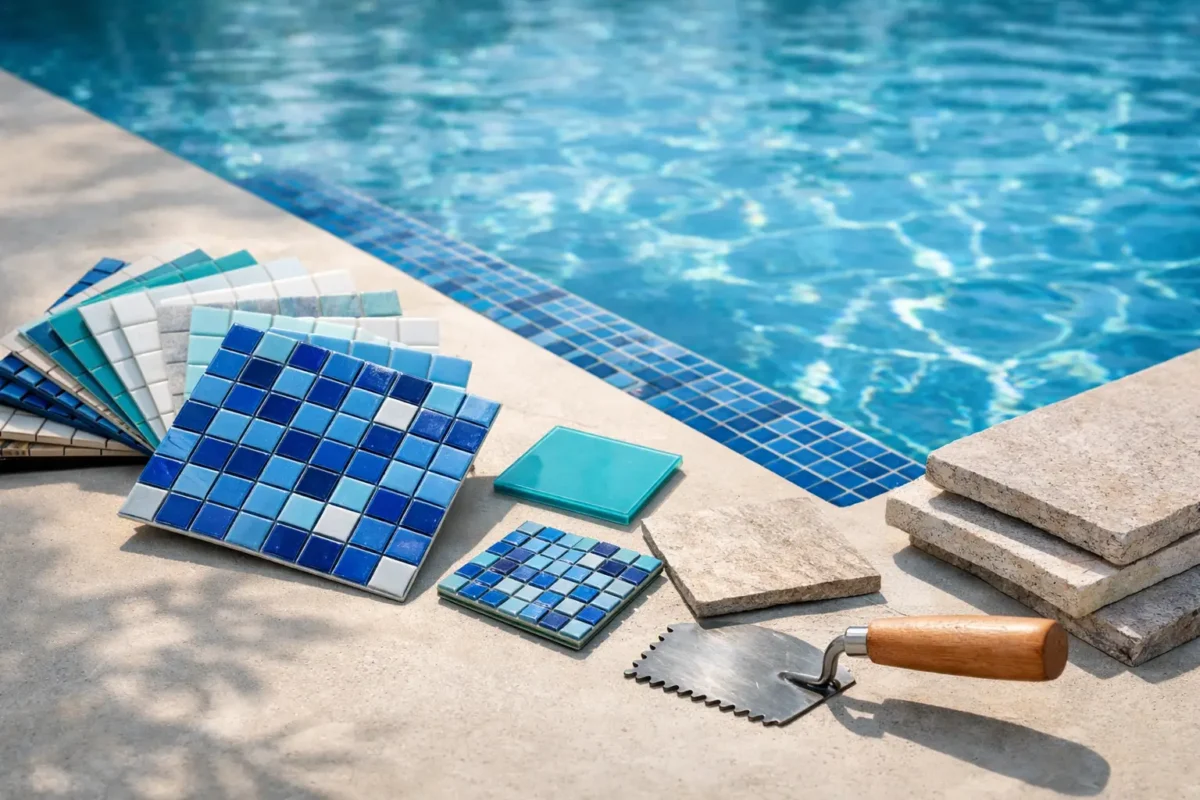
The difference between a pool that looks expensive and one that truly feels complete often comes down to the finish. Swimming pool tiles mosaic is not just a decorative layer. It shapes how water reflects, how surfaces perform over time, and how the entire pool reads within a villa, hotel, residential tower, or commercial property.
For premium projects, mosaic tile selection should never be treated as an afterthought. In Dubai and across the UAE, pools are exposed to intense sun, heat variation, chemicals, and constant visual scrutiny. That means the right mosaic has to deliver on appearance, durability, and technical compatibility at the same time.
Why swimming pool tiles mosaic matters
Mosaic tiles do more than add color to a basin. They create the visual identity of the pool, from crisp modern blue finishes to darker reflective tones that give water a more architectural character. In high-end residential and hospitality settings, that visual impact matters immediately. Guests notice it before they notice the pump room, filtration system, or circulation design.
At the same time, mosaic affects maintenance outcomes. Tile quality, surface finish, joint consistency, and installation accuracy all influence how well the pool resists staining, scaling, and long-term wear. A well-selected mosaic system supports easier cleaning and a more stable finish. A poor selection may look attractive on day one but begin showing edge wear, shade inconsistency, or adhesion problems far too early.
This is why experienced buyers and developers usually assess pool tiles with the same seriousness they apply to lighting, filtration, and disinfection systems. Aesthetic appeal is essential, but it has to be backed by reliable performance.
Best materials for swimming pool tiles mosaic
Material choice is the first major decision because it affects price, finish, durability, and maintenance expectations.
Glass mosaic
Glass mosaic remains a leading choice for luxury pools because it delivers depth, brightness, and a refined water effect that is difficult to replicate with other materials. It reflects light exceptionally well, which makes it especially effective in pools designed for visual impact, including overflow pools, spa zones, and statement water features.
High-quality glass mosaic also performs well in wet environments when properly specified and installed. It offers broad design flexibility, from uniform tones to blended shades and iridescent finishes. The trade-off is that product quality matters significantly. Lower-grade glass can show imperfections, inconsistent backing, or finish issues that become visible once submerged.
Porcelain mosaic
Porcelain mosaic is valued for strength, consistency, and dependable long-term performance. It is often selected for commercial pools, high-traffic properties, and projects where durability is the top priority. Porcelain generally handles chemical exposure well and can be an excellent option for pool floors, steps, and functional areas where slip resistance and structural reliability are central concerns.
Its visual effect is usually more controlled and less luminous than glass, which may suit contemporary or understated pool designs. For many buyers, porcelain offers the right balance between premium appearance and practical service life.
Ceramic mosaic
Ceramic can be used in some pool applications, but it is typically less favored for premium aquatic installations where durability and finish quality are expected to meet higher standards. In demanding climates and commercial settings, buyers often move toward glass or porcelain for stronger long-term value.
Color, finish, and the water effect
Tile color does not simply define the tile surface. It defines the color of the water. That distinction is critical when specifying a pool for a luxury residence or public-facing property.
Lighter blues produce a clean, classic aquatic look and help smaller pools feel brighter. Deep blue and teal shades create richer visual depth and often suit larger pools or hospitality environments. Gray, black, and dark mixed mosaics can produce a dramatic mirror-like effect, but they also make dust, scale, and surface variation more noticeable if maintenance standards are not consistent.
Finish matters just as much. Gloss finishes intensify reflection and give water a more vibrant appearance. Matte or textured finishes can be useful in select zones, especially on steps or shallow entries, where added grip may be beneficial. The right specification often combines both visual and functional considerations rather than choosing one over the other.
For premium projects, sample review under natural light is worth the time. A tile that looks balanced in a showroom may read very differently outdoors in strong sun.
Design choices that elevate the pool
A well-executed mosaic scheme should support the architecture around it. In villas, that may mean aligning the pool tone with stone decking, facade colors, and landscape lighting. In hotels or towers, it may involve creating a finish that reinforces the property’s broader design language.
Uniform mosaic creates a clean, elegant look and is often the safest choice for sophisticated projects. Mixed-tone blends can add movement and a more natural water appearance. Feature bands, lane markings, logos, and custom patterns may also be appropriate, especially for branded commercial properties or statement residential pools.
That said, more design is not always better. Complex patterns increase installation sensitivity and can date faster than simple, disciplined finishes. In many premium settings, restraint produces the stronger result.
Installation quality is as important as tile quality
Even the best tile will underperform if installation standards are weak. This is where many pool projects lose value. Buyers focus on tile selection but underestimate the importance of substrate preparation, adhesive compatibility, grout selection, and expansion detailing.
Swimming pool tiles mosaic must be installed with materials designed for permanent submerged conditions. The bonding system, waterproofing method, and grout specification need to work together as one complete finish assembly. If any part of that system is compromised, the visible symptoms may include hollow spots, loose tiles, discoloration, cracked grout lines, or water intrusion.
In the UAE climate, thermal movement and exposure conditions make technical precision even more important. Large commercial pools, rooftop installations, spas, and water features all require careful detailing. This is not an area for shortcuts.
For that reason, many property owners and developers prefer working with a partner that understands both product supply and technical execution. Aquatic Pools and Fountains supports this level of coordination by combining premium pool materials with installation guidance, technical support, and long-term maintenance capability.
Maintenance and long-term performance
A premium mosaic finish should continue looking sharp well after handover. That depends partly on product quality, but it also depends on water chemistry, cleaning methods, and routine service standards.
Incorrect chemical balance can damage grout, contribute to scale buildup, and dull the appearance of tile surfaces. Harsh cleaning methods may scratch certain finishes or weaken joints over time. This is why maintenance planning should be discussed during specification, not after installation is complete.
For commercial properties, this is especially relevant. A visually impressive pool can lose its appeal quickly if scale lines, stained grout, or inconsistent water balance are left unmanaged. For residential clients, proper service protects the investment and preserves the original finish quality.
What buyers should check before specifying mosaic tiles
Before approving a mosaic range, it is worth confirming a few practical details. Product consistency, shade control, sheet alignment, submerged-use suitability, and chemical resistance should all be clear. So should installation requirements.
It is also smart to look beyond the tile itself. Ask whether the selected product suits the pool’s intended use, expected maintenance level, and design environment. A family villa, a rooftop plunge pool, a resort pool, and a competition facility may all require different priorities.
Price matters, but so does replacement risk. Choosing a cheaper mosaic that fails early can create far higher costs through repair work, disruption, and finish mismatch. Premium specification tends to be more economical when viewed across the full service life of the pool.
The right mosaic is a design and performance decision
Pool finishes are highly visible, but they are also highly technical. The best swimming pool tiles mosaic combines elegance with proven reliability. It should enhance water appearance, withstand demanding conditions, support maintenance efficiency, and suit the overall standard of the property.
For villa owners, developers, hospitality operators, and facility managers, the goal is not simply to choose a tile that looks attractive in a sample board. The goal is to deliver a finished pool that performs confidently and presents well year after year. When mosaic selection is handled with that level of care, the result is not just a better surface. It is a stronger investment in the pool itself.
If you are selecting finishes for a new build, renovation, or commercial aquatic project, the smartest next step is to evaluate mosaic options with both design intent and technical performance in mind.