
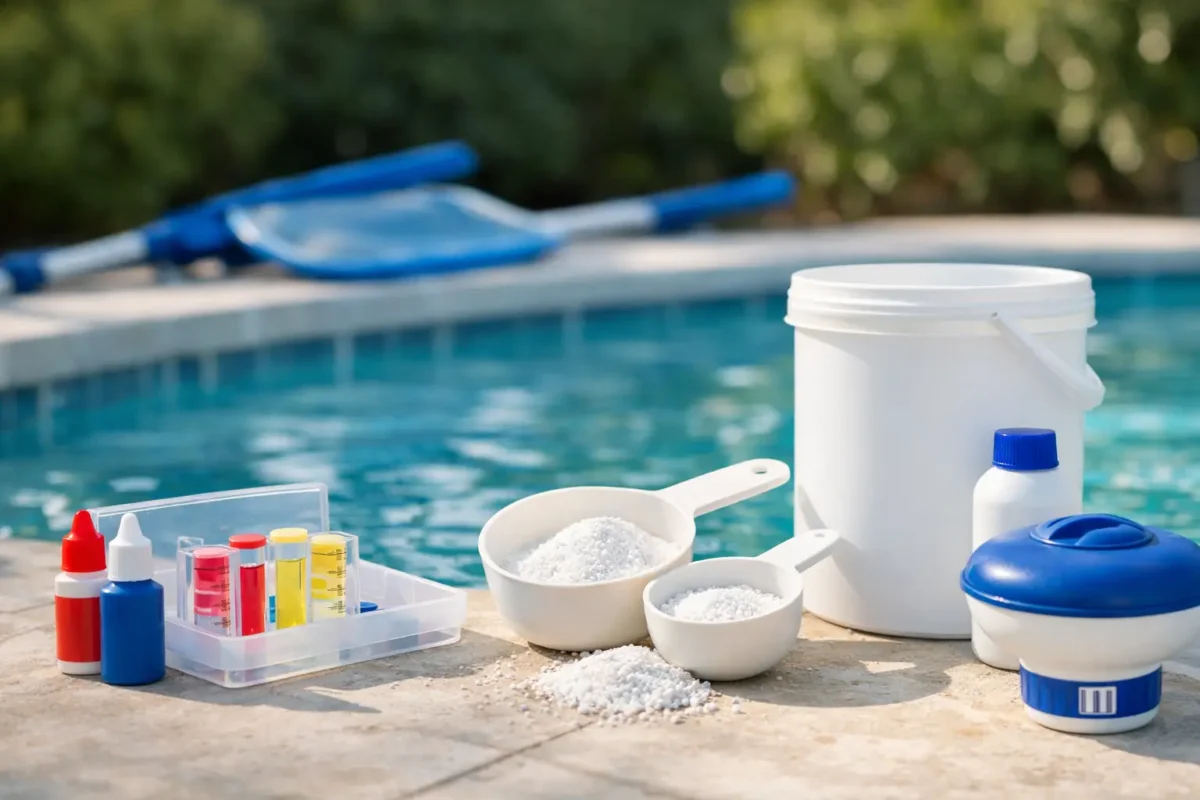
Cloudy water rarely starts as a filtration problem. More often, it begins with chemistry that has drifted just far enough out of range to affect sanitizer performance, water clarity, and surface protection. If you want to know how to balance pool chemicals properly, the goal is not simply adding more chlorine. The real objective is creating stable water conditions that protect swimmers, equipment, finishes, and long-term operating costs.
For villa pools, hospitality properties, and commercial facilities, balanced water is part of quality control. It preserves the look of the pool, reduces unnecessary chemical consumption, and helps pumps, filters, heaters, and disinfection systems perform as they should. In a climate like the UAE, where heat, sunlight, evaporation, and heavy usage can shift water chemistry quickly, precision matters.
How to Balance Pool Chemicals in the Right Order
The order matters because each chemical parameter affects the next. If you adjust chlorine before correcting pH, or try to fix calcium hardness before checking alkalinity, you can waste product and still end up with unstable water.
Start by testing the water completely. You need accurate readings for pH, total alkalinity, free chlorine, calcium hardness, and stabilizer if the pool is outdoors. In many cases, it is also wise to check total dissolved solids and phosphates, especially if the pool has recurring clarity issues or high bather load.
Once you have reliable test results, correct total alkalinity first. Alkalinity acts as a buffer for pH, so if it is too low or too high, pH will be difficult to control. After alkalinity, adjust pH. Then move to sanitizer levels such as chlorine or bromine. Calcium hardness should be corrected next, followed by cyanuric acid in outdoor pools if stabilization is needed.
This sequence creates a stable baseline. It also gives each product a better chance to work as intended.
The Core Chemical Levels That Need Attention
Pool water balance is built around a few essential values. They are connected, and ignoring one usually causes problems in another.
pH
pH tells you whether the water is too acidic or too basic. For most pools, the ideal range is 7.2 to 7.6. If pH rises too high, chlorine becomes less effective and scale can form on tiles, fittings, and equipment. If pH drops too low, the water can become aggressive, leading to corrosion, eye irritation, and damage to metal components.
High temperatures and frequent chemical additions can push pH upward or downward depending on the treatment system in use. That is why regular testing matters more than occasional correction.
Total alkalinity
A practical target for total alkalinity is usually 80 to 120 ppm, although some systems perform best within a narrower band. When alkalinity is low, pH may swing rapidly. When it is too high, pH often remains stubbornly elevated and difficult to reduce.
This is one of the most overlooked readings in residential pools. Owners often chase pH every few days without realizing alkalinity is the reason the water never stabilizes.
Free chlorine
Free chlorine is the active sanitizer keeping water safe and clear. Typical residential pools often perform well between 1 and 3 ppm, while commercial pools may follow stricter local operating standards. The ideal level depends on pool type, sunlight exposure, stabilizer level, and bather load.
More chlorine is not always better. If pH is high, even a seemingly acceptable chlorine reading may not sanitize effectively. That is one reason balanced water outperforms aggressive dosing.
Calcium hardness
Calcium hardness is especially important for plaster, concrete, and tiled pools. Water that is too soft may pull minerals from surfaces, while water that is too hard can leave scale deposits on walls, circulation lines, and heat exchange equipment. A common working range is around 200 to 400 ppm, but the right target depends on the pool finish and system design.
In premium pool environments, surface appearance matters as much as mechanical protection. Poor calcium balance can affect both.
Cyanuric acid
For outdoor pools, cyanuric acid helps protect chlorine from rapid breakdown under UV exposure. A common range is 30 to 50 ppm for many pools, though this should be managed carefully. Too little stabilizer means chlorine burns off quickly. Too much can reduce chlorine efficiency and make water harder to manage.
This is a common issue in sunny climates where operators keep adding stabilized chlorine products without tracking cumulative stabilizer levels.
What to Add When Levels Are Off
Knowing how to balance pool chemicals also means understanding what each correction product is actually doing.
If total alkalinity is low, an alkalinity increaser such as sodium bicarbonate is usually used. If it is too high, acid is typically required, often in a controlled dosing process rather than one large addition. For pH reduction, muriatic acid or dry acid may be used, while pH increaser is typically sodium carbonate.
If free chlorine is low, the right response depends on the cause. Heavy pool usage, strong sun, organic contamination, or poor circulation can all consume sanitizer. You may need a routine chlorine dose, or in some cases a shock treatment if combined chlorine or visible contamination is present.
Low calcium hardness requires a calcium increaser. High calcium hardness is more difficult because it may require partial water replacement, scale control treatment, or broader chemistry adjustment. This is where professional support becomes valuable, particularly in high-end residential and commercial pools where finish preservation is a priority.
The most important rule is simple. Never add chemicals blindly or mix them together. Test first, calculate dosage based on water volume, circulate properly, and allow enough time before retesting.
How Often Should Pool Water Be Tested?
For most private pools, testing two to three times per week is a sensible minimum during active use. In hotter months, after pool parties, after rainfall, or when topping up water frequently, daily checks may be more appropriate. Commercial pools, hospitality pools, and high-traffic facilities usually require much tighter monitoring and logging.
The testing method matters too. Basic strips are quick, but they are not always precise enough for premium pools or large assets where water quality affects guest experience and equipment life. Liquid test kits and digital water testing systems offer more dependable readings and support better decision-making.
For owners managing a luxury villa pool or facility managers responsible for multiple water features, consistency beats guesswork. A documented maintenance routine reduces surprises.
Common Mistakes That Throw Water Out of Balance
The most common mistake is treating symptoms instead of causes. Cloudy water leads to extra chlorine. Scaling leads to stain removers. Eye irritation leads to assumptions that chlorine is too high. In reality, the underlying issue may be poor pH control, weak circulation, excessive stabilizer, or neglected filtration.
Another frequent mistake is making multiple adjustments at once. If you add alkalinity increaser, pH reducer, shock, and clarifier within a short period, it becomes difficult to know what actually solved the problem or what created a new one.
Pool owners also underestimate the impact of evaporation and refill water. In warm regions, top-up water can change hardness, alkalinity, and dissolved mineral levels over time. That is why a pool that was balanced last month may no longer be balanced now, even if usage has been moderate.
Finally, many pools are under-tested after equipment upgrades. A new heat pump, chlorinator, UV system, or automatic dosing unit can improve performance, but only if the water chemistry is aligned with the system.
When Professional Pool Chemistry Support Makes Sense
There is a difference between routine maintenance and technical water management. Small corrections are manageable for many property owners. But if your pool has persistent algae, repeated scaling, cloudy water that returns quickly, or chemical demand that seems unusually high, there is usually a deeper issue.
That issue may involve circulation design, undersized filtration, inaccurate dosing, poor-quality test practices, or source water conditions. In premium residential and commercial settings, solving the root cause is more cost-effective than repeating temporary fixes.
This is where an experienced pool partner adds real value. Companies such as Aquatic Pools and Fountains support clients with not only quality chemicals and testing systems, but also the technical guidance needed to protect high-performance installations over time. For developers, facility teams, and discerning homeowners, that level of support helps preserve both water quality and asset quality.
A Smarter Standard for Clear, Stable Water
Balanced pool chemistry is not about chasing perfect numbers every hour. It is about maintaining the right operating range so sanitizer works efficiently, surfaces stay protected, and the pool remains consistently inviting. Once the testing routine is sound and corrections are made in the proper order, water management becomes far more predictable.
If the pool looks clear but still feels difficult to manage, trust the readings, review the sequence, and correct with precision. Clear water is good. Clear, stable, professionally balanced water is better.