
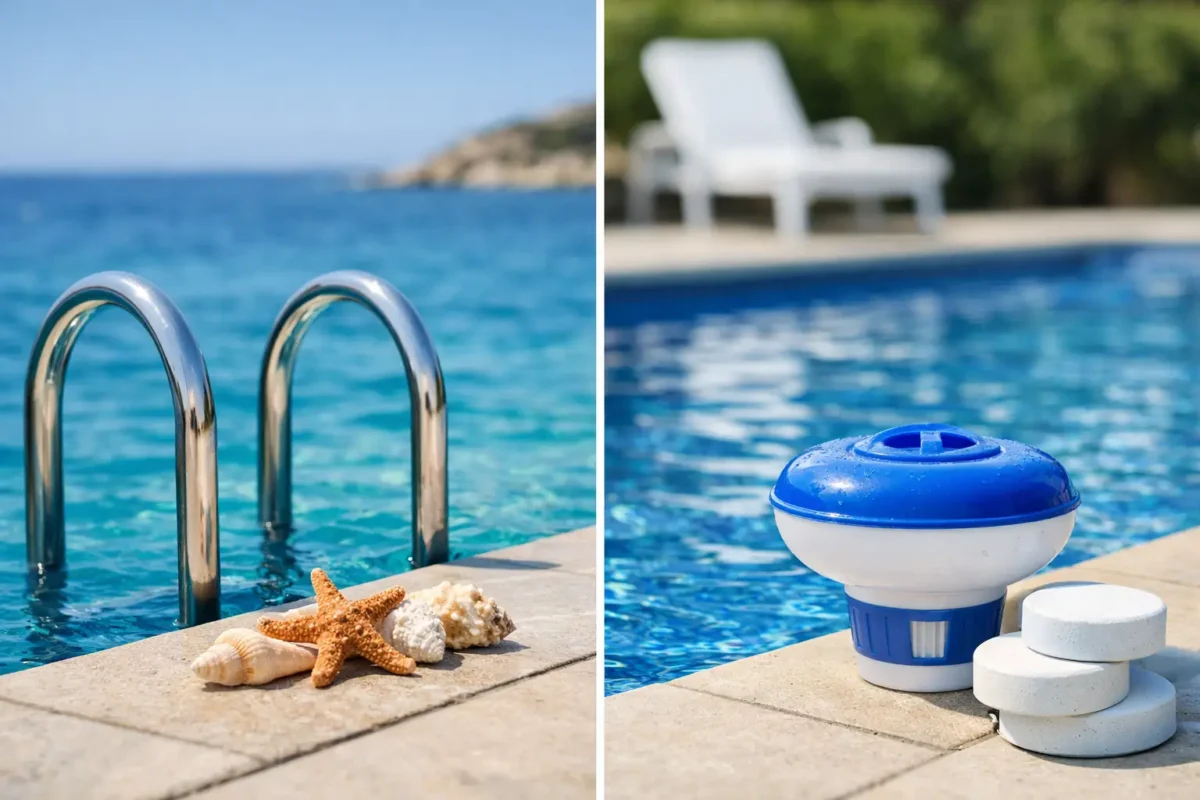
A pool can look flawless on opening day and still become a maintenance burden if the sanitizing system is the wrong match for the property. When owners compare a saltwater vs chlorine pool, the real question is not which one sounds better on paper. It is which system will deliver cleaner water, steadier performance, and more practical long-term operation for the way the pool is actually used.
For villa pools, hospitality environments, residential towers, and commercial leisure spaces, that decision affects guest comfort, maintenance planning, equipment life, and operating costs. A premium installation deserves more than a generic answer, because each system performs differently once climate, bather load, and service expectations come into play.
Saltwater vs chlorine pool: the real difference
Both systems use chlorine to sanitize the water. That point is often misunderstood. A traditional chlorine pool receives chlorine directly through liquid, tablets, or granules. A saltwater pool uses a salt chlorinator cell to convert dissolved salt into chlorine inside the system.
So this is not a choice between chlorine and no chlorine. It is a choice between manual or external chlorine dosing and on-site chlorine generation. That distinction matters because it changes how the water feels, how consistently sanitizer is produced, and what maintenance demands fall on the operator.
In premium residential and commercial settings, consistency usually matters as much as sanitation itself. Water that tests properly one week and drifts out of balance the next can quickly affect swimmer comfort, surface condition, and service costs.
Water feel and swimmer comfort
Saltwater pools are often chosen because the water tends to feel softer and less aggressive on the skin and eyes. For many homeowners and hospitality operators, that alone is a strong advantage. Guests typically notice the difference, especially in pools used frequently or for longer swim sessions.
Traditional chlorine pools can also be comfortable when water chemistry is expertly maintained. The problem is not chlorine itself, but unstable chemistry or overcorrection. When chlorine levels swing too high, or pH is poorly controlled, swimmers are more likely to notice irritation, dryness, or strong chemical odor.
For luxury villas and high-visibility commercial properties, user experience matters. A pool that feels refined, balanced, and pleasant to enter supports the premium standard of the entire space. That is one reason saltwater systems are increasingly attractive for modern installations.
Upfront cost vs long-term operating cost
The cost conversation is where many decisions become more nuanced. A chlorine pool usually costs less to set up. The equipment is straightforward, and the initial investment is typically lower because there is no chlorinator cell or controller to install.
A saltwater pool requires a higher upfront spend. You need the chlorination unit, the cell, and a system sized correctly for the pool volume and expected usage. In a professionally specified installation, sizing is critical. An undersized chlorinator may struggle in high temperatures or under heavier bather load, which leads to inconsistent sanitation.
Over time, however, saltwater systems can become more economical in day-to-day chemical handling. Because chlorine is generated within the system, manual chemical dosing may be reduced. That does not remove the need for water balancing, testing, and occasional correction, but it can simplify routine operation.
For commercial pools or shared amenities, the financial comparison depends on usage intensity, service structure, and equipment quality. A low-grade system may create more maintenance issues than it solves. A high-quality system, properly installed and maintained, can support efficient performance for years.
Maintenance demands are different, not lower by default
One of the most common misconceptions is that saltwater pools are maintenance-free. They are not. They simply shift the maintenance profile.
A traditional chlorine pool requires consistent monitoring of sanitizer levels and manual chemical addition. Depending on the property and season, that can mean more hands-on attention. For some operators, especially those already using structured maintenance routines, that is manageable and predictable.
A saltwater system automates chlorine generation, but the chlorinator cell must be inspected and cleaned. Salt concentration must remain in range. pH control also becomes especially important, because saltwater pools often trend upward in pH over time. If that is ignored, scale can develop on the cell and reduce efficiency.
In the UAE climate, evaporation, heat, and intense pool usage can place extra pressure on water balance regardless of system type. That is why technical oversight matters. A premium pool should never rely on assumptions or casual maintenance. It should be supported by proper testing, calibrated equipment, and service professionals who understand how each component works together.
Equipment life and corrosion concerns
When buyers hear the word saltwater, they often worry about corrosion. That concern is valid, but it needs context. Saltwater pools contain far less salt than seawater, yet salt can still accelerate corrosion if the installation is poorly designed or if the wrong materials are used.
This is especially important in premium projects with metal fixtures, lighting components, ladders, handrails, heating systems, and decorative water features nearby. Material compatibility is not optional. It is part of proper engineering.
A well-built saltwater pool uses quality components selected for durability and system compatibility. When the right equipment is installed and maintained, corrosion risks can be effectively managed. When corners are cut, problems can surface early.
Chlorine pools are not free from equipment issues either. Improper chemical dosing, especially concentrated chlorine added carelessly, can also damage finishes and equipment. In both systems, the water treatment method is only as reliable as the quality of the installation and ongoing care.
Which system performs better in high-use properties?
For hotels, residential communities, and commercial leisure facilities, performance under demand is a serious consideration. High bather load, long operating hours, and elevated temperatures all increase the sanitizing requirement.
A chlorine pool can respond quickly because chemicals can be dosed directly and adjusted fast when usage spikes. That can be an advantage in heavily used environments where immediate correction is sometimes needed.
A saltwater system can perform very well in high-use settings, but only if it is properly sized and supported. The chlorinator must be capable of producing enough sanitizer for peak conditions. In some commercial applications, operators use saltwater chlorination alongside supplementary dosing or control systems to maintain precise water quality.
This is where technical guidance becomes essential. The right answer is rarely based on trend alone. It depends on pool size, usage pattern, circulation efficiency, filtration quality, and how closely the water is managed.
Saltwater vs chlorine pool for residential buyers
For villa owners and private residential buyers, saltwater often appeals because it combines comfort with a cleaner user experience. There is less direct handling of chlorine products, and the water tends to feel more polished. For families who swim often, that can be a meaningful quality-of-life benefit.
A traditional chlorine pool still makes sense for owners who want lower initial cost, simple equipment architecture, or direct control over chemical treatment. If the pool is maintained by a professional team, a chlorine system can be highly effective and dependable.
The better choice depends on what the owner values most. If comfort, convenience, and a more refined bathing experience lead the priority list, saltwater may be the stronger fit. If lower startup cost and simpler replacement parts matter more, chlorine may remain the practical option.
Saltwater vs chlorine pool for commercial projects
In commercial settings, the decision should be made with less emotion and more technical discipline. Guest experience matters, but so do maintenance schedules, compliance, operating costs, and system resilience.
Saltwater systems can be an excellent choice for upscale hospitality, wellness, and premium residential developments where swimmer comfort and brand perception carry real value. They can help deliver a more elegant experience while supporting efficient operation when backed by quality equipment and proper service.
Chlorine systems remain widely used in commercial projects because they are familiar, flexible, and responsive under varying demand. For some facility managers, that level of direct chemical control is exactly what they want.
At Aquatic Pools and Fountains, system selection is best approached as an engineering decision, not a marketing preference. The highest-performing pool is the one built around the property, the usage pattern, and the maintenance standard expected over time.
How to choose with confidence
If you are deciding between the two, start with the realities of your property. Consider who uses the pool, how often it is used, whether comfort is a premium selling point, and how the system will actually be maintained after installation.
A beautifully finished pool can lose its appeal quickly if the sanitizing method creates inconsistent water quality or excessive service demands. The better investment is the system that aligns with your operational needs from day one and continues to perform under real conditions, not ideal ones.
The right pool system should feel effortless to the swimmer and predictable to the operator. That is usually the clearest sign you have chosen well.