
A pool can look perfectly blue and still have a filter system working far harder than it should. In Dubai and across the UAE, where pools often run through long hot periods, understanding how to maintain pool filters is not a minor maintenance detail. It is one of the main factors behind water clarity, circulation efficiency, and the long-term protection of pumps, valves, and connected equipment.
A neglected filter does more than allow debris to build up. It increases operating pressure, reduces flow, strains the pump, and makes sanitizers less effective because water is not moving and cleaning as it should. For villa pools, hospitality facilities, and commercial properties alike, proper filter care protects both appearance and performance.
Why pool filter maintenance matters
The filter is the working core of your circulation system. Its job is to trap suspended dirt, body oils, dust, leaves, fine particles, and other contaminants before they return to the pool. When the filter is clean and functioning correctly, the entire system stays balanced more easily.
When maintenance is delayed, the signs usually build gradually. Water clarity starts slipping. Return pressure feels weaker. The pump may sound strained. Chemical demand can rise because the water quality is becoming harder to stabilize. In high-end residential and commercial environments, that decline is not just technical. It affects guest experience, property presentation, and operating cost.
Different filters also behave differently. A maintenance routine that suits one system may be wrong for another, so the first step is always knowing what type of filter you have.
How to maintain pool filters by filter type
Most swimming pools use one of three systems: sand filters, cartridge filters, or diatomaceous earth, often called DE, filters. Each has a different cleaning method, service interval, and replacement cycle.
Sand filters
Sand filters are widely used because they are dependable and relatively simple to operate. Water passes through filter media that captures debris before clean water returns to the pool. Maintenance is usually centered on backwashing when the pressure rises above the clean starting level recommended for the system.
If a sand filter is backwashed too often, it may not filter as effectively because a slightly settled sand bed can improve capture. If it is backwashed too late, pressure builds and circulation suffers. That balance matters. The filter media itself also does not last forever. Over time, sand becomes less effective due to wear, channeling, and compaction, and it may need replacement based on usage and water conditions.
Cartridge filters
Cartridge filters are valued for fine filtration and water-saving operation because they do not require routine backwashing. Instead, the cartridge element is removed and cleaned. This makes them attractive for premium residential settings where water quality and surface finish matter.
The trade-off is that cartridge filters require more hands-on servicing. If the cartridges are not cleaned properly or replaced when damaged, flow can drop quickly. In dusty environments or heavily used pools, cartridges may need attention more often than owners expect.
DE filters
DE filters offer very fine filtration and are often selected where water clarity standards are especially high. They can deliver excellent results, but they also demand the most precise maintenance. Backwashing, internal cleaning, and correct DE recharging all need to be handled properly.
For that reason, DE systems are often better managed with professional support, especially in commercial or high-value installations where consistency matters more than experimentation.
The routine that keeps filters performing
Good filter maintenance starts with one simple habit: track clean operating pressure. After a full cleaning or service, note the pressure reading on the gauge. That number becomes your baseline.
As debris builds inside the filter, pressure rises. A noticeable increase usually signals that cleaning is due. Relying only on appearance is a mistake because pool water can still look acceptable while circulation is already restricted.
You should also inspect the pump basket and skimmer baskets regularly. A filter cannot perform well if upstream debris is choking the system before water even reaches it. Many service issues blamed on the filter are actually caused by blocked baskets, low water level, suction restriction, or air entering the line.
Chemical balance plays a role too. Poorly balanced water can lead to scale, oils, and residue building up inside filter media or cartridges. In other words, filter care is not separate from water treatment. It works as part of the same system.
How to clean each filter correctly
Cleaning a sand filter
For sand filters, cleaning usually means backwashing. The process reverses water flow to flush trapped debris out through waste. The key is not just doing it, but doing it correctly. The pump should be off before changing valve positions, and the backwash cycle should continue until the sight glass or discharge water appears clear. A short rinse cycle afterward helps resettle the media before returning to normal filtration.
If pressure remains high even after proper backwashing, the issue may be deeper. The sand could be compacted, the laterals could be damaged, or oils and scale may be clogging the media bed. In those cases, a deeper service is the right move.
Cleaning a cartridge filter
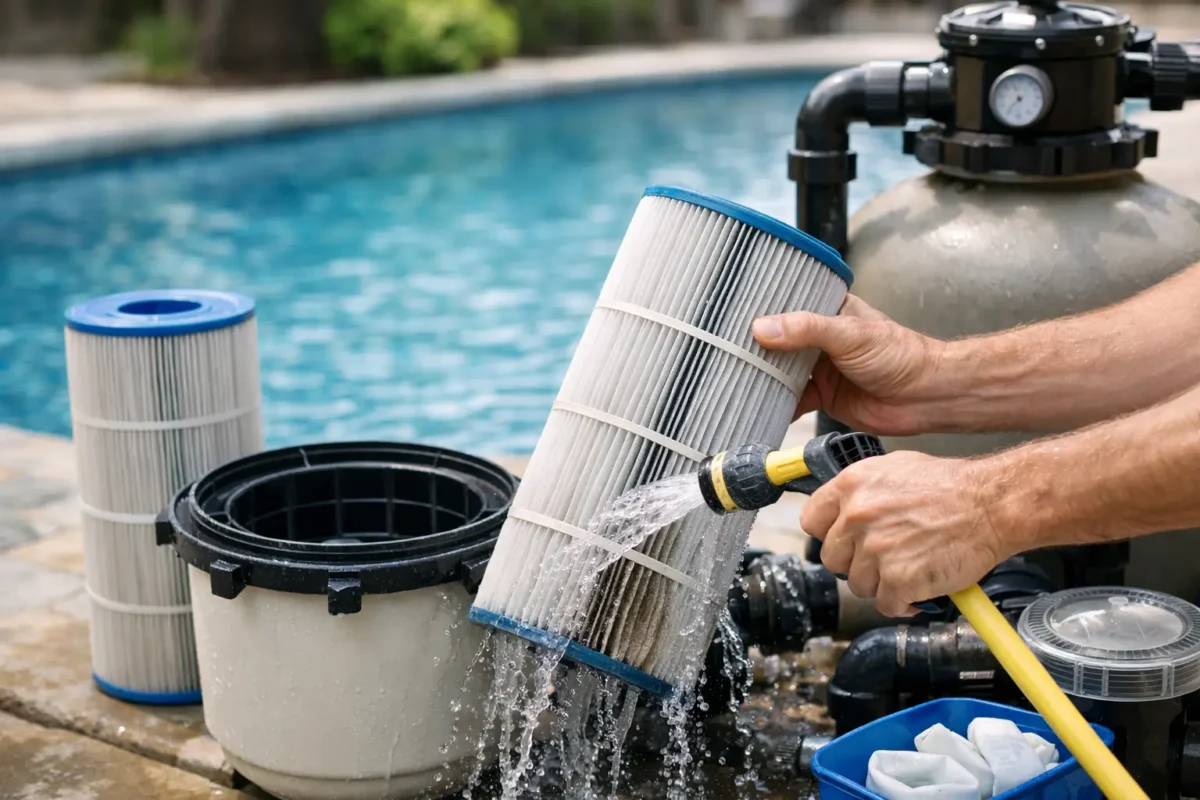
To clean a cartridge filter, the system must be shut down, pressure released, and the housing opened carefully. The cartridge should be inspected for tears, collapsed bands, worn end caps, or embedded debris. A gentle but thorough wash is important. Too much pressure from a hose can damage the pleats, while too little cleaning leaves residue behind.
If oils, sunscreen buildup, or mineral deposits are present, water alone may not be enough. A proper cleaning solution may be required, depending on the condition of the cartridge. If the material is damaged or cleaning no longer restores flow, replacement is the better choice. Trying to extend a failing cartridge usually costs more in circulation problems and pump stress.
Cleaning a DE filter
DE filter cleaning often involves backwashing followed by recharging with the correct amount of DE powder. Periodically, the filter should also be opened for internal inspection and cleaning of the grids. If the grids are torn or coated with hardened residue, filtration quality drops and powder may return to the pool.
This is one area where precision matters. Undercharging or overcharging the filter can affect performance, and incorrect handling can create a mess or shorten equipment life.
Signs your pool filter needs service sooner
Some pools need more frequent attention than others. A residential pool used only on weekends will not load a filter the same way a hotel pool or a large family villa does. Dust exposure, landscaping debris, bather load, and water chemistry all change the maintenance interval.
Watch for a rising pressure gauge, reduced return flow, cloudy water, algae recurring despite chemical treatment, debris returning to the pool, or unusual sounds from the pump. These are not small warnings. They are signs the system is losing efficiency.
If you see sand in the pool, DE blowing back into the water, or cartridge material looking distorted, the problem is beyond routine cleaning. That usually points to worn internal components or damaged filter elements that should be professionally assessed.
Common mistakes to avoid
One of the most common mistakes is cleaning on a fixed calendar without checking actual pressure and condition. Filters do not load at the same rate year-round. Another is replacing chemicals or increasing sanitizer levels while ignoring poor circulation. If the filter is struggling, water treatment alone will not solve the issue.
Over-cleaning can also be a problem. Excessive backwashing wastes water and may reduce filtration efficiency in sand systems. Aggressive washing can damage cartridge fabric. Opening equipment without fully depressurizing it creates safety risks as well.
For premium residential and commercial pools, guesswork is rarely cost-effective. A filter system is part of a wider equipment set that includes pumps, valves, disinfection systems, heaters or coolers, and automation controls. Servicing one part incorrectly can affect the rest.
When professional support makes sense
If your property depends on consistently clear, presentation-ready water, professional maintenance is often the smarter route. This is especially true for commercial pools, hospitality sites, real estate assets, and large private villas where downtime and poor water appearance are not acceptable.
A qualified team can do more than clean the filter. They can check pressure behavior, inspect valve condition, identify media breakdown, verify hydraulic performance, and spot early signs of wear before a minor issue becomes equipment failure. That level of support protects operating efficiency and preserves the quality standard expected in premium aquatic environments.
Aquatic Pools and Fountains supports clients with high-performance pool equipment, technical guidance, and maintenance solutions designed for both elegant residential pools and demanding commercial installations.
A clean filter is not just a maintenance task. It is one of the clearest indicators that your entire pool system is being managed to the standard the property deserves.