
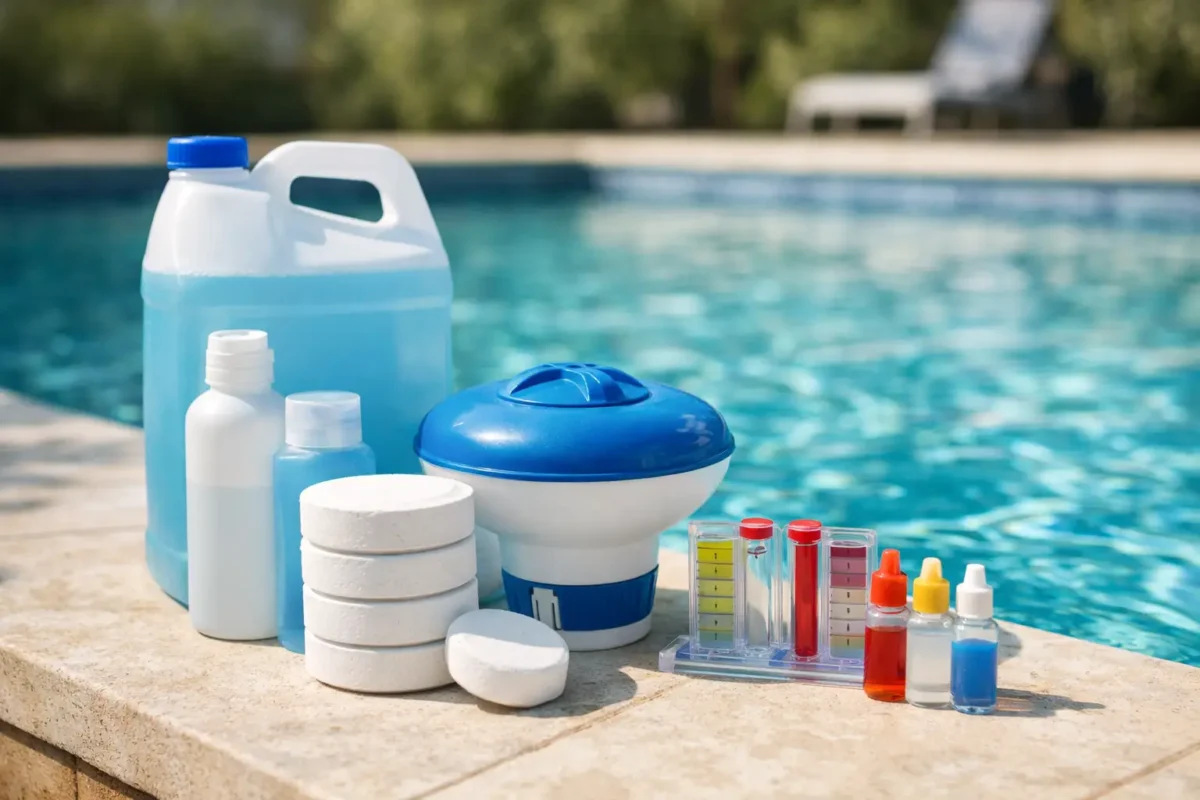
Crystal-clear water is never an accident. In a hot climate, a pool can shift from balanced to problematic faster than many owners expect, especially when high temperatures, direct sun, heavy use, and dust all work against water quality. That is why pool chemicals are not a minor maintenance detail. They are the foundation of safe swimming, equipment protection, and the polished appearance expected from premium residential and commercial pools.
For villa owners, developers, hospitality operators, and facility managers, chemical treatment is not just about keeping water blue. It is about protecting the full investment – tile finishes, pumps, filters, heaters, fittings, and automated systems. Poor balance can lead to cloudy water, scale buildup, corrosion, eye irritation, unpleasant odor, and avoidable wear across the entire installation. Well-managed chemistry does the opposite. It supports clean, comfortable water and helps every component perform as intended.
Why pool chemicals matter more than most owners realize
A swimming pool is a controlled water environment, but it is never static. Swimmers introduce oils, sunscreen, and contaminants. Wind carries in dust and debris. Heat accelerates chemical loss. If disinfection drops or balance shifts, problems begin quickly.
The right pool chemicals maintain three priorities at once. First, they sanitize the water by controlling bacteria, algae, and organic contaminants. Second, they stabilize balance so the water stays comfortable and does not damage surfaces or equipment. Third, they preserve visual quality, which matters just as much in luxury villas, residential towers, hotels, and high-visibility commercial properties.
This is where professional oversight makes a difference. Chemical treatment is not about adding products by routine alone. It is about understanding how one reading affects the next, and how the pool’s design, load, and environment change the treatment plan.
The core pool chemicals every pool depends on
Disinfectants are the first category most people think about, and for good reason. Chlorine remains the most widely used sanitizer because it is effective, dependable, and suitable for many pool types. Used correctly, it destroys harmful contaminants and supports healthy water conditions. However, chlorine levels that are too low reduce protection, while excessive dosing can irritate swimmers and waste product. The right target depends on usage, temperature, and the broader water balance.
pH control is just as critical. If pH rises too high, chlorine becomes less effective and scale can begin to form. If it falls too low, the water can become aggressive, which may affect metal components, grout, and finishes. This is why pH increasers and reducers play a central role in chemical management. They are not optional corrections. They are part of routine control.
Alkalinity products support pH stability. When total alkalinity is out of range, pH tends to swing unpredictably, making the pool harder to manage and more expensive to correct. Calcium hardness also deserves close attention. Water with low calcium can become corrosive, while high calcium contributes to scaling, especially in warmer conditions.
Then there are specialty treatments. Algaecides help prevent or control algae growth, particularly in outdoor pools exposed to sun and dust. Clarifiers and flocculants improve water clarity by helping fine particles collect for easier filtration or removal. Shock treatments are used when the water needs a stronger oxidizing action to break down waste and restore freshness. These products are useful, but only when applied in the right context. More chemical is not automatically better.
Water balance is not one number
Many pool owners ask for the ideal chlorine level, or the right pH target, as if one figure alone defines healthy water. In practice, balance is a relationship between several readings. Chlorine, pH, alkalinity, calcium hardness, stabilizer levels, temperature, and bather load all influence each other.
That is why testing matters as much as dosing. Reliable water testing systems allow technicians and operators to make accurate adjustments instead of guesses. A pool may look clean and still be chemically unstable. On the other hand, a temporary visual issue may not require aggressive treatment if the underlying chemistry remains sound.
For premium pools, especially those integrated into luxury landscapes or commercial amenities, this precision matters. Balanced water protects the finish, supports comfort, and reduces avoidable maintenance disruptions. It also helps extend the working life of pumps, filters, heaters, chlorinators, and disinfection systems.
Residential and commercial pools need different chemical strategies
Not every pool should be treated the same way. A private villa pool used by a family has very different demands than a hotel pool, a residential tower amenity, or a corporate leisure space. Usage frequency, water volume, exposure, and circulation patterns all shape the chemical program.
Residential owners often prioritize comfort, appearance, and ease of maintenance. They typically benefit from a simple, tightly managed treatment plan supported by dependable testing and periodic technical review. The goal is clean water without overcomplicating day-to-day care.
Commercial and hospitality environments require a more disciplined approach. Higher bather loads, longer operating hours, and stricter performance expectations mean water conditions can change fast. In these settings, pool chemicals must work alongside filtration, dosing systems, and regular service schedules. A reactive approach is rarely enough. Consistency is what protects both the user experience and the asset itself.
Climate changes the chemical equation
In the UAE, environmental conditions put extra pressure on pool water. Strong sunlight accelerates sanitizer depletion. Heat can encourage algae growth and increase chemical demand. Dust and debris add contamination and affect clarity. Decorative features, overflow systems, and premium finishes may also require closer monitoring to maintain their intended appearance.
This is one reason why off-the-shelf advice does not always translate well across regions. A treatment plan suited to a mild climate may underperform in a hotter, more demanding environment. Product quality also matters. Lower-grade chemicals may appear cost-effective at first, but inconsistent strength or poor formulation often leads to uneven results, more corrections, and unnecessary strain on the system.
For property owners and managers responsible for premium installations, it makes better sense to source quality-assured chemicals and support them with technical guidance. That is how water stays consistently clear, safe, and aligned with the standards expected in upscale residential and commercial settings.
Common problems pool chemicals help prevent
Cloudy water is one of the most common complaints, but it rarely comes from one cause alone. It may result from poor filtration, weak sanitizer levels, imbalanced pH, suspended particles, or heavy swimmer load. Chemical correction works best when paired with a proper system check.
Algae is another frequent issue, particularly in warm, sun-exposed pools. Green, yellow, or black algae can take hold quickly when sanitizer levels are not maintained or circulation is inadequate. In these cases, treatment may involve shock dosing, algaecide, brushing, and filtration support rather than a single-product fix.
Scaling and surface deposits often point to high calcium hardness or elevated pH. Corrosion can signal the opposite problem – water that is too aggressive. Eye irritation, strong chemical smell, and swimmer discomfort are also commonly misunderstood. These issues do not always mean there is too much chlorine. Often, they indicate imbalance or the presence of chloramines, which require proper oxidation and correction.
Choosing pool chemicals with a long-term view
The best buying decision is not always the cheapest container on the shelf. Professional buyers and quality-focused homeowners usually look at the full picture: product consistency, compatibility with equipment, storage requirements, technical support, and availability when replenishment is needed.
That is particularly important for larger properties and managed facilities. Running short on a critical treatment chemical or using the wrong formulation can create downtime, service disruption, and reputational issues. A reliable supplier adds value by helping clients choose the right products for the system, the pool size, and the operating conditions.
Aquatic Pools and Fountains supports this approach by combining quality product supply with technical knowledge, maintenance understanding, and a premium standard suited to both elegant private pools and demanding commercial projects.
When professional support makes the difference
Some pools are straightforward to manage. Others include heating systems, advanced disinfection, high-end finishes, water features, or variable usage patterns that make chemistry more complex. In these cases, guessing with pool chemicals can become expensive.
Professional support helps owners avoid two common mistakes: under-treating the water and over-correcting every issue. Both create instability. Skilled technicians look at the pool as a complete operating system, where chemical treatment, circulation, filtration, and equipment condition all need to work together.
For developers, hospitality operators, and facility managers, that level of support is not a luxury. It is part of responsible asset management. For homeowners, it offers peace of mind and a better ownership experience.
A well-maintained pool always shows its quality before anyone asks about it. The water looks cleaner, feels better, and places less stress on every system behind the scenes. With the right pool chemicals, chosen carefully and managed properly, that standard becomes easier to maintain day after day.