
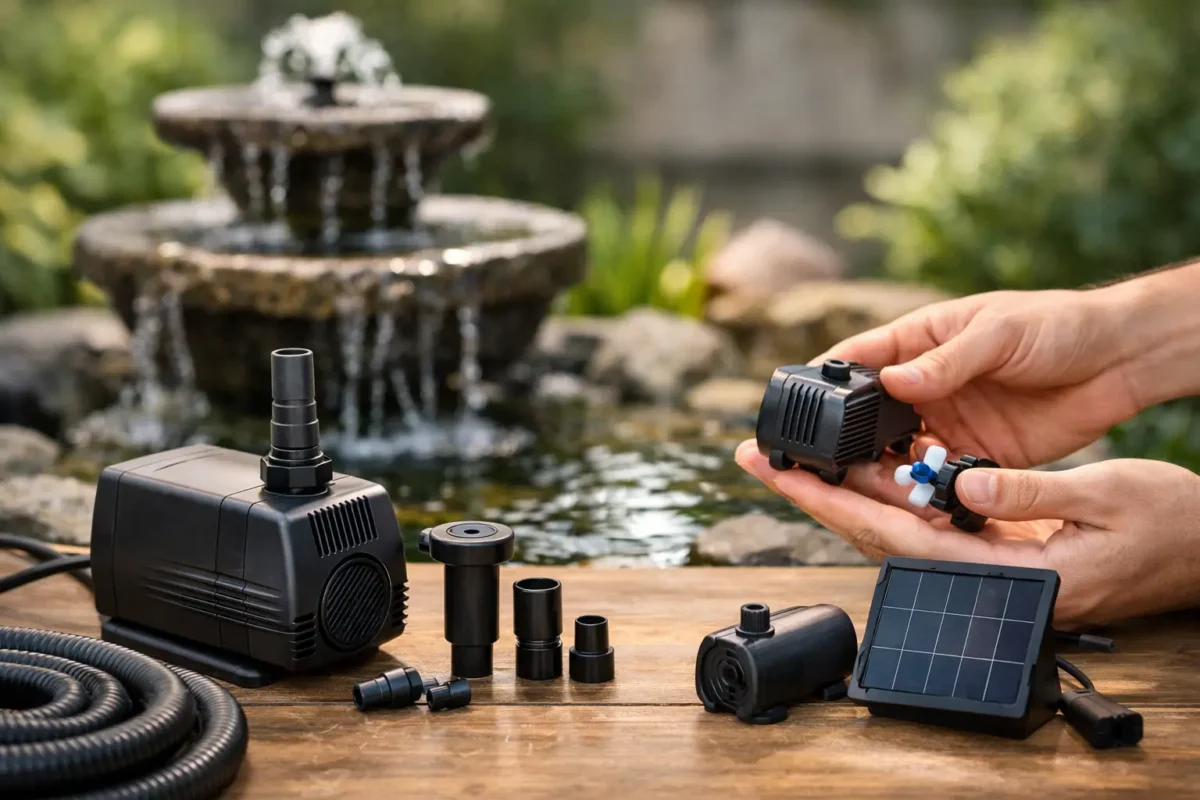
A fountain that looks flawless in a design drawing can still disappoint on site if the fountain pump is undersized, poorly matched, or built for the wrong operating conditions. In premium residential and commercial settings, the pump is not a background component. It is the working core of the water feature, shaping visual impact, operating stability, and long-term maintenance demands.
For villa owners, developers, hospitality operators, and facility managers, this matters more than most people expect. A strong fountain design depends on more than nozzles and lighting. The wrong pump can lead to weak spray height, uneven patterns, excessive noise, unnecessary energy use, and premature wear. The right selection supports clean performance, refined presentation, and dependable daily operation.
Why the fountain pump matters so much
Every fountain is judged by what people see and hear. The water pattern must be consistent, the pressure must remain stable, and the system should run with minimal disruption. That places the fountain pump at the center of both aesthetics and performance.
A properly selected pump maintains the flow rate and pressure needed for the intended effect, whether the feature is designed as a gentle decorative accent in a private courtyard or a bold centerpiece for a hotel entrance. It also affects how the entire system behaves over time. Better pump matching means less strain on fittings, reduced vibration, and a more predictable maintenance schedule.
In the UAE, operating conditions add another layer of importance. Heat, dust, water quality variation, and continuous runtime can all put pressure on equipment. Premium installations need equipment that is selected not only for visual output but also for environmental durability and service life.
How to choose a fountain pump correctly
The first step is not selecting a brand or a motor size. It is understanding the fountain itself. The size of the basin, the height and shape of the spray, the number of nozzles, the pipe layout, and the desired visual effect all influence pump requirements.
Flow rate and head are the two core performance figures. Flow rate determines how much water the pump moves, while head reflects the resistance the pump must overcome to deliver that water through pipework and up to the nozzle. Many fountain performance problems come from focusing on one and ignoring the other. A pump may move plenty of water but still fail to create the correct display if the pressure is insufficient.
This is where technical matching becomes essential. A low decorative plume in a residential feature requires a very different approach than a multi-jet architectural fountain in a commercial development. The pump should be selected based on the actual hydraulic demand of the system, not on a rough guess or a generic replacement recommendation.
Surface pump or submersible pump?
This depends on the design and service priorities of the installation. Submersible pumps are often preferred for compact decorative fountains because they save space and can simplify installation. They are a practical option when the pump is intended to remain hidden within the water feature itself.
Surface pumps are more common in larger or more technically demanding systems where easier maintenance access, higher capacity, or centralized equipment control is required. In commercial environments, this can be a major advantage. Service teams can inspect and maintain the equipment without draining the feature or disrupting surrounding finishes.
Neither option is automatically better. The right choice depends on scale, access, operating hours, and maintenance planning.
What premium buyers should look for
A fountain pump should never be judged by purchase price alone. In high-visibility properties, the real cost comes from inconsistency, downtime, and early replacement. Premium buyers are better served by looking at material quality, performance stability, and service support.
Construction quality matters. Pumps used in decorative water features should be built with durable components suited to continuous operation and changing site conditions. Corrosion resistance, motor reliability, seal quality, and heat tolerance all affect long-term value. For projects in demanding climates, these details are not optional.
Noise control is another factor that deserves attention. In luxury villas, hospitality spaces, and executive commercial settings, excessive pump noise can undermine the elegance of the feature. Properly specified equipment, installed with the right hydraulic balance, helps maintain the refined experience clients expect.
Energy efficiency also plays a practical role. Some fountains run only for selected periods, while others operate for extended daily schedules. In larger developments or multi-feature properties, pump efficiency has a direct effect on operating cost. The right solution balances visual ambition with responsible energy use.
Common sizing mistakes and their impact
One of the most common issues is oversimplifying the application. People often assume that a larger pump guarantees a better display. In practice, an oversized unit can create instability, waste energy, and place unnecessary stress on the system. It may also force constant adjustment just to keep the visual effect under control.
Undersizing is equally problematic. A fountain may appear acceptable when first switched on, but once real operating conditions come into play, the spray pattern can weaken, become uneven, or fail to achieve the intended height. This is especially frustrating in statement installations where visual precision matters.
Another mistake is ignoring the interaction between the pump and the nozzle set. Nozzles are performance components, not decorative add-ons. The fountain pump and nozzle configuration must be selected together so the final effect is intentional rather than approximate.
Installation quality is part of pump performance
Even a high-grade pump can underperform if the installation is poorly executed. Pipe sizing, valve selection, suction conditions, electrical setup, and control integration all influence how the system performs in real use.
Professional installation protects both the equipment and the investment around it. In premium properties, fountain systems are often integrated into paving, landscaping, lighting, and architectural elements. A technical error does not just affect water movement. It can affect finishes, safety, maintenance access, and the presentation of the entire feature.
For this reason, experienced buyers usually prefer a supplier that can support specification, product selection, installation guidance, and ongoing maintenance rather than simply supplying equipment from stock. A pump is one component, but it works best when treated as part of a complete system.
Fountain pump maintenance and service planning
A well-selected fountain pump should deliver dependable performance, but no pump benefits from neglect. Regular inspection helps preserve output, protect internal components, and reduce the likelihood of service interruption.
Maintenance needs depend on the system design and water conditions. Debris buildup, blocked intakes, fluctuating water levels, worn seals, and electrical issues can all reduce performance over time. In commercial and hospitality settings, where appearance must remain consistent, preventive maintenance is usually more cost-effective than reactive repair.
This is especially relevant for properties with year-round presentation standards. A decorative fountain at a residential tower, resort, or retail destination is part of the overall brand impression. If the water feature is weak, noisy, or out of balance, visitors notice immediately.
When replacement makes more sense than repair
Not every pump problem should lead straight to replacement, but there are cases where upgrading is the better decision. If a pump is repeatedly failing, operating inefficiently, or no longer aligned with the fountain’s hydraulic requirements, continued repair may only extend the problem.
Replacement can also make sense when the visual design has changed. If nozzles, lighting effects, or water patterns have been upgraded, the original pump may no longer be the right fit. Matching the equipment to the new performance target protects the quality of the final result.
Choosing a supplier, not just a product
For residential and commercial buyers investing in premium water features, product availability is only part of the equation. Technical confidence matters just as much. The best outcomes come from working with specialists who understand pump curves, fountain hydraulics, installation demands, and long-term service realities.
Aquatic Pools and Fountains supports clients with a broad range of premium fountain equipment, technical guidance, installation support, and maintenance expertise for projects that demand both elegance and reliability. That matters when the expectation is not merely that the fountain runs, but that it performs beautifully day after day.
A fountain pump should be selected with the same care as any visible design element, because its impact is visible in every spray line, every reflected light effect, and every hour of uninterrupted operation. If the goal is a fountain that looks polished, performs consistently, and holds its standard over time, the right pump choice is where that result begins.