
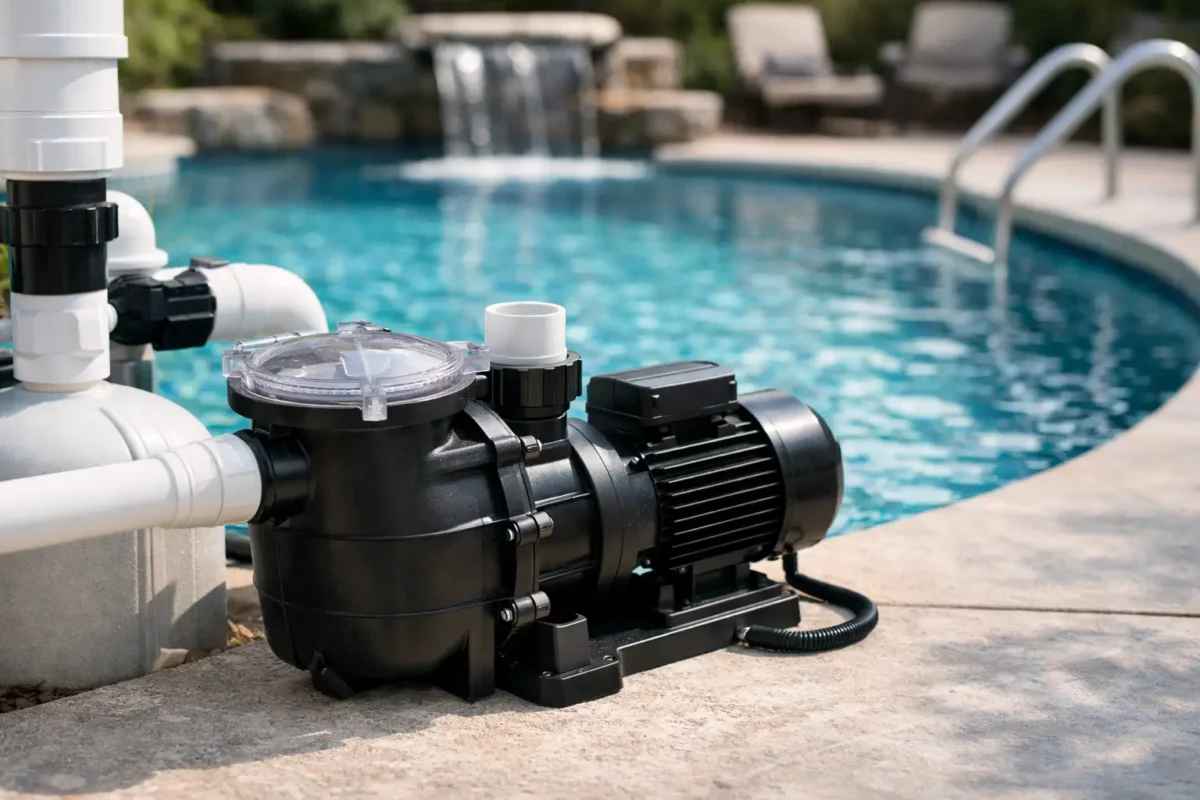
A pool that looks impressive at first glance can still underperform if the pump is poorly matched. That is why a serious pool circulation pump review should never focus on horsepower alone. For villa owners, developers, and facility teams, the right pump determines water clarity, chemical balance, energy use, and how reliably the entire system performs under daily demand.
In premium residential and commercial settings, the pump is not a background component. It is the working core of circulation. When it is undersized, oversized, noisy, or inefficient, every part of the pool system feels the strain. Filtration becomes inconsistent, sanitization becomes harder to control, and operating costs rise faster than most buyers expect.
What a pool circulation pump review should actually measure
Many buyers begin with brand recognition or price, which is understandable, but neither tells the full story. A proper review starts with flow requirements. The pump must move enough water to support the pool volume, turnover target, filtration design, and hydraulic layout without wasting energy.
That means performance should be judged under real operating conditions, not just by the highest number on a product sheet. Pipe length, bends, valves, water features, heaters, chlorination equipment, and elevation changes all affect head pressure. A pump that looks strong on paper may deliver disappointing real-world circulation if the system is more complex than expected.
Noise is another factor often ignored until installation is complete. In luxury villas, rooftop pools, spa environments, and hospitality settings, a loud pump quickly becomes a quality issue. A quieter pump motor and a better-engineered housing can make a noticeable difference in guest comfort and day-to-day livability.
Durability matters just as much. In the UAE climate, heat, dust, heavy use, and long operating hours can expose weaknesses quickly. High-grade materials, strong seals, corrosion resistance, and dependable motor construction are not premium extras. They are practical requirements for long service life.
Pool circulation pump review: single-speed vs variable-speed
If the goal is basic circulation at the lowest upfront cost, a single-speed pump may seem attractive. It is simpler, familiar, and often sufficient for smaller or less demanding systems. The trade-off is efficiency. It runs at one fixed output, whether the pool needs full power or not.
Variable-speed pumps are stronger contenders for buyers focused on operating cost, control, and system refinement. They allow the pump to run at lower speeds for routine filtration and higher speeds only when needed for backwashing, water features, or peak circulation demand. That usually means lower power consumption, quieter operation, and more precise performance over time.
For larger villas, apartment amenities, hotels, and commercial pools, variable-speed models often justify the higher purchase price. The savings do not come from marketing claims. They come from matching pump output to actual use instead of forcing the system to run at full intensity all day.
Still, it depends on the project. A compact pool with a simple hydraulic design may not need advanced speed control. A high-visibility property with multiple circulation zones, decorative features, or long daily run times usually benefits from that flexibility.
How to judge pump sizing without guessing
Oversizing is one of the most common buying mistakes. Some buyers assume a larger pump means cleaner water and stronger performance. In reality, an oversized pump can create excessive flow, increase noise, place stress on filters and fittings, and waste electricity every day.
Undersizing brings a different problem. The pool may struggle to maintain water clarity, especially in hot weather or high-use conditions. Dead spots can develop, debris removal becomes less effective, and sanitizing systems may not perform as intended.
The right approach is to size the pump around the full hydraulic system. Pool volume is only the starting point. You also need to consider filter capacity, desired turnover rate, piping layout, suction and return design, and any extra equipment connected to circulation.
This is where technical support matters. A premium pump is only as effective as the system design behind it. Buyers who rely on generic sizing charts often end up correcting the decision later through higher bills, poor circulation, or early equipment wear.
Key performance areas that separate a premium pump from an average one
A strong pump review should look beyond the label and examine how the unit behaves over time. Motor efficiency is one of the clearest indicators of long-term value. Better motors hold performance more consistently and consume less power under normal operation.
Impeller and wet-end design also deserve attention. Efficient hydraulic design improves water movement while reducing turbulence and unnecessary load. That can support better circulation with less strain on the motor.
Build quality is equally important. A pump intended for premium installations should have a durable housing, dependable lid sealing, and service-friendly construction. Maintenance access should be straightforward, especially for commercial properties where downtime affects users and operations.
Another useful benchmark is integration. Modern pool systems often include heaters, chlorinators, automation panels, and decorative water features. A pump that works well within a broader equipment setup offers better long-term value than one that performs in isolation but creates compatibility issues later.
What matters most for villa owners
For private residences, the best pump is usually the one that disappears into daily life. It should run quietly, support clear water with minimal disruption, and avoid driving up utility costs. Buyers in this segment often care about elegance as much as equipment performance, so sound levels, footprint, and clean installation matter.
Reliability is especially important in seasonal or second-home properties. If a villa pool is not monitored every day, the circulation system must remain stable without constant adjustment. A well-selected pump helps maintain water quality more predictably and reduces the risk of avoidable service issues.
The right choice also depends on how the pool is used. A family pool with moderate use has different demands than an overflow pool with integrated spa jets and decorative features. A premium review takes those differences seriously rather than recommending one pump type for every home.
What commercial buyers should prioritize
Hotels, residential towers, wellness facilities, and developers usually evaluate pumps differently. Here, consistency and serviceability carry more weight. A pump may run for long hours under heavier hydraulic demand, and any interruption can affect multiple users, compliance standards, and maintenance schedules.
Commercial buyers should pay close attention to duty cycle, spare parts availability, maintenance access, and the practical reputation of the manufacturer. Energy efficiency matters too, especially when pools operate year-round and utility savings compound across multiple assets.
This is where a trusted technical supplier becomes essential. Procurement teams do not just need a pump. They need assurance that the equipment fits the application, performs as specified, and can be supported after installation. That is often the difference between a sound capital purchase and a recurring operational headache.
Common mistakes buyers make in a pool circulation pump review
The first mistake is comparing pumps only by horsepower. Two pumps with the same horsepower can behave very differently depending on hydraulic design, efficiency, and system resistance.
The second is ignoring lifecycle cost. A lower upfront price may look attractive, but if the pump is noisy, inefficient, or prone to service issues, it rarely stays cheaper for long.
The third is treating the pump as a standalone product. In reality, it is part of a complete circulation package that includes filter performance, pipe design, sanitization equipment, and control systems. Strong results come from compatibility, not from one component in isolation.
A final mistake is buying without technical evaluation. This is especially risky in premium or commercial environments, where the margin for error is smaller and the expectations are much higher.
Our view on the best buying approach
The strongest pool circulation pump review is one that connects performance to the actual project. For some pools, that means a high-quality single-speed unit with dependable construction and straightforward maintenance. For many modern residential and commercial installations, a variable-speed model offers a better balance of efficiency, noise control, and operational precision.
Buyers who prioritize water quality, durability, and long-term value should look past headline specs and focus on proper sizing, proven build quality, and technical support. That approach protects both the visual standard of the pool and the financial efficiency of the system behind it.
At Aquatic Pools and Fountains, that standard matters because a pump is never just a pump in a premium installation. It is a performance decision that affects the entire aquatic environment. Choose with that level of care, and the result is not only cleaner water, but a pool that feels easier to own, operate, and trust every day.