
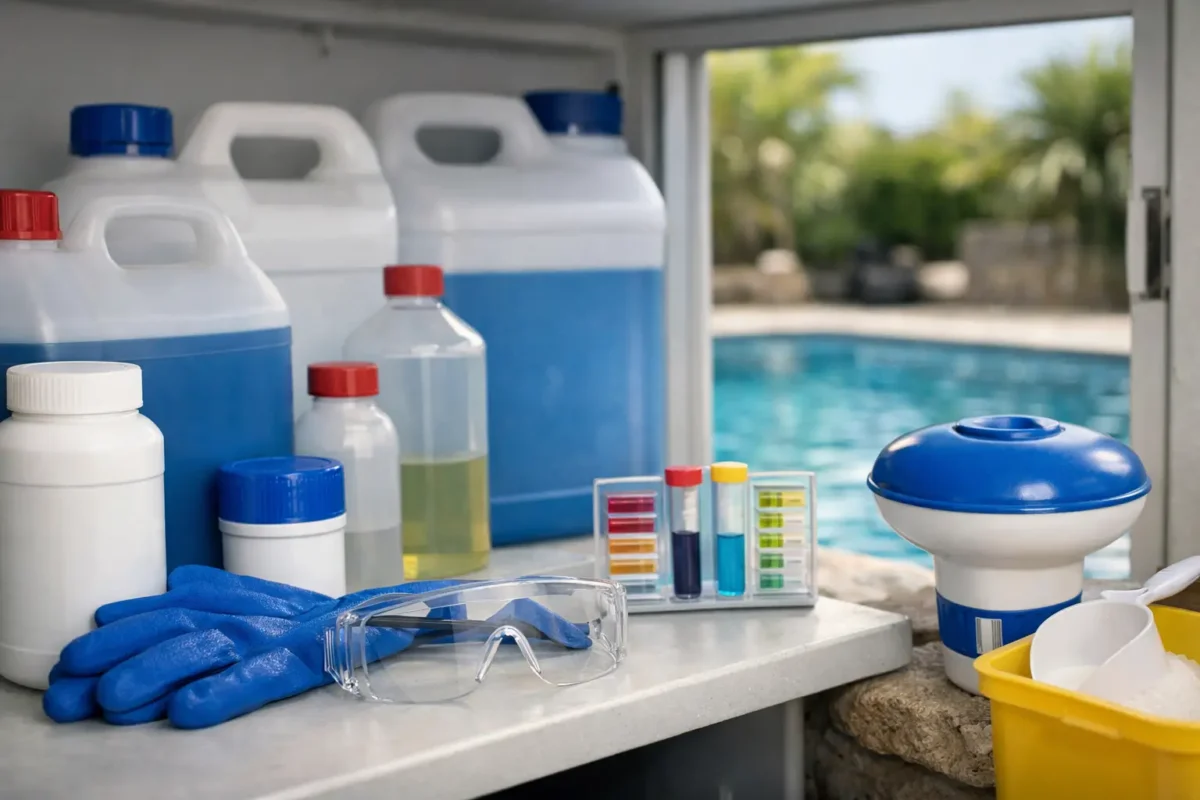
A warped chlorine bucket, faded labels, and a damp plant room are usually the first signs of a bigger problem. Poor chemical storage does not just shorten product life – it creates safety risks, weakens water treatment, and can lead to costly damage in residential and commercial pool environments. This pool chemical storage guide is built for property owners, facility managers, and developers who want cleaner operations, better product performance, and a higher standard of safety.
In premium pool settings, chemical storage should never be treated as an afterthought. Whether you manage a private villa pool in extreme summer heat or a commercial facility with routine maintenance schedules, the storage area has a direct effect on water quality, equipment reliability, and staff safety. Good storage protects your investment before the chemical ever reaches the water.
Why a pool chemical storage guide matters
Pool chemicals are engineered for performance, but only when they are stored under the right conditions. Heat, moisture, poor ventilation, and cross-contamination can all reduce effectiveness. In some cases, improper storage can create dangerous reactions, especially when oxidizers, acids, and other treatment products are kept too close together.
This matters even more in the UAE climate. High temperatures can accelerate product degradation, while enclosed service rooms can trap humidity and fumes. A storage area that looks acceptable during cooler months may become a liability in peak summer. For luxury residential projects and commercial sites alike, a professional storage setup supports consistent treatment results and reduces avoidable waste.
The right storage environment for pool chemicals
The best storage area is cool, dry, clean, and well ventilated. That sounds straightforward, but in practice it requires planning. Pool chemicals should be kept out of direct sunlight and away from heat sources such as pumps, heaters, or unventilated machinery rooms. They should also be protected from water intrusion, including washdown overspray, leaks, and condensation.
A dedicated chemical room or enclosed storage cabinet is often the strongest option, provided it is designed for chemical use. The space should stay dry year-round and allow air circulation so fumes do not build up. Flooring should be stable and easy to clean, and shelves should be corrosion-resistant rather than basic metal that can deteriorate over time.
It also helps to think beyond the room itself. If chemicals are stored next to cleaning agents, landscaping products, fuel, or general maintenance supplies, the risk profile changes immediately. Premium pool care depends on separation, not convenience.
Temperature and humidity control
Most pool chemicals perform best when stored in moderate conditions. Excessive heat can reduce shelf life and affect packaging integrity. Humidity is equally problematic because many dry chemicals absorb moisture from the air, leading to clumping, reduced potency, or unstable handling conditions.
If the storage space tends to run hot, ventilation improvements or relocation may be necessary. Air conditioning is not always required, but heat buildup should not be ignored. For high-value residential and commercial properties, controlled storage conditions are a practical way to protect both safety and product cost.
Separate chemicals by type, not by container size
One of the most common storage mistakes is organizing products by available shelf space rather than compatibility. Chlorine products, acids, algaecides, balancing chemicals, and specialty treatments should not simply be stacked wherever they fit. They need separation based on how they behave.
Chlorine and other oxidizers should be stored away from acids and from any combustible or organic materials. Acids should remain isolated in their own area, ideally with secondary containment that helps manage spills. Liquid products should not be placed above dry chemicals, where leaks could contaminate containers below.
Even sealed containers should be treated carefully. Caps loosen, packaging degrades, and handling errors happen. A well-organized room assumes that failures are possible and reduces the chance that one issue becomes a serious incident.
Never mix old and new stock casually
Partially used containers should remain clearly labeled and tightly closed. They should not be combined with fresh product unless the manufacturer specifically allows it. Mixing residual material from one container into another can contaminate the entire batch. That can affect dosing accuracy, reduce treatment effectiveness, and create unnecessary hazards for maintenance staff.
A first-in, first-out approach is the better standard. Older stock should be used before newer deliveries, as long as the product remains within its recommended storage life and shows no signs of damage.
Labeling, containment, and access control
Clear labeling is non-negotiable. Every product should remain in its original container with the manufacturer label intact and readable. Transferring chemicals into unlabeled or repurposed containers creates obvious safety and compliance risks. It also increases the chance of dosing errors, especially in properties where multiple team members or contractors access the storage area.
Secondary containment adds another layer of protection. Spill trays, bunded shelves, or dedicated containment zones help prevent leaks from spreading across the room or reaching incompatible products. In commercial settings, this is especially important because higher stock volume increases exposure if something goes wrong.
Access should also be controlled. Chemical storage is not a general utility space. Children, tenants, untrained staff, and casual visitors should never have unrestricted access. For villas, this may mean a lockable cabinet or secure service room. For hotels, towers, and larger facilities, it means controlled entry and clear operating procedures.
A practical pool chemical storage guide for daily operations
The strongest storage setup is the one your team can maintain consistently. That means the room should support good habits rather than rely on memory alone. Shelves should be logically arranged, products should be easy to identify, and safety equipment should be immediately visible.
Routine inspections make a measurable difference. Containers should be checked for swelling, cracks, rust, leaks, and fading labels. If a bucket looks distorted or a liquid container appears pressurized, it should be isolated and assessed promptly. Ignoring early warning signs is where small handling issues turn into operational risk.
Cleanliness matters as well. Chemical dust, residue, and random tools on the floor all increase the chance of cross-contamination. A premium facility should treat the chemical room with the same discipline applied to filtration equipment or plant infrastructure. That standard protects both appearance and performance.
What to keep nearby
A chemical storage area should have the basics needed for safe handling, including personal protective equipment suited to the products in use, spill response materials appropriate for the site, and current product instructions or safety documentation. Emergency eyewash access may also be necessary depending on the facility type and chemical range.
The exact setup depends on the property. A private pool with limited stock will not mirror a commercial operations room. Still, the principle is the same – prepare for normal handling and for the possibility that something spills, leaks, or is used incorrectly.
Common mistakes that compromise safety and product quality
The most frequent issue is storing chemicals in pump rooms simply because space is available. These rooms often run hot, damp, and crowded, which makes them a poor long-term choice. Another mistake is leaving containers open after use, even briefly. Moisture and contamination can enter quickly, especially in humid climates.
Buying in bulk without a proper storage plan is another costly habit. Bulk purchasing can improve efficiency, but only if the site has the capacity to store products safely and rotate stock properly. Otherwise, the result is aging inventory, degraded materials, and unnecessary replacement cost.
There is also a tendency to assume that all pool chemicals can be managed the same way. They cannot. Some products are relatively stable, while others require much tighter control. That is why a one-size-fits-all storage room rarely performs at a premium level.
When professional guidance makes the difference
For larger homes, hospitality venues, residential developments, and commercial properties, chemical storage should be reviewed as part of the full pool infrastructure, not as a side issue. The layout of the plant room, ventilation, dosing systems, stock volume, and maintenance routines all affect what safe storage looks like in practice.
This is where technical support adds real value. A specialized partner can assess whether the current storage setup matches the chemical program, identify risks before they become failures, and recommend a more durable configuration. Aquatic Pools and Fountains supports clients with both premium product supply and the technical guidance needed to maintain safer, more efficient pool environments.
A well-run pool does not start at the waterline. It starts in the spaces behind the scenes, where chemicals are stored, handled, and protected with the same level of care as every other critical system. If your storage area is hot, crowded, or inconsistent, improving it is one of the smartest upgrades you can make.