
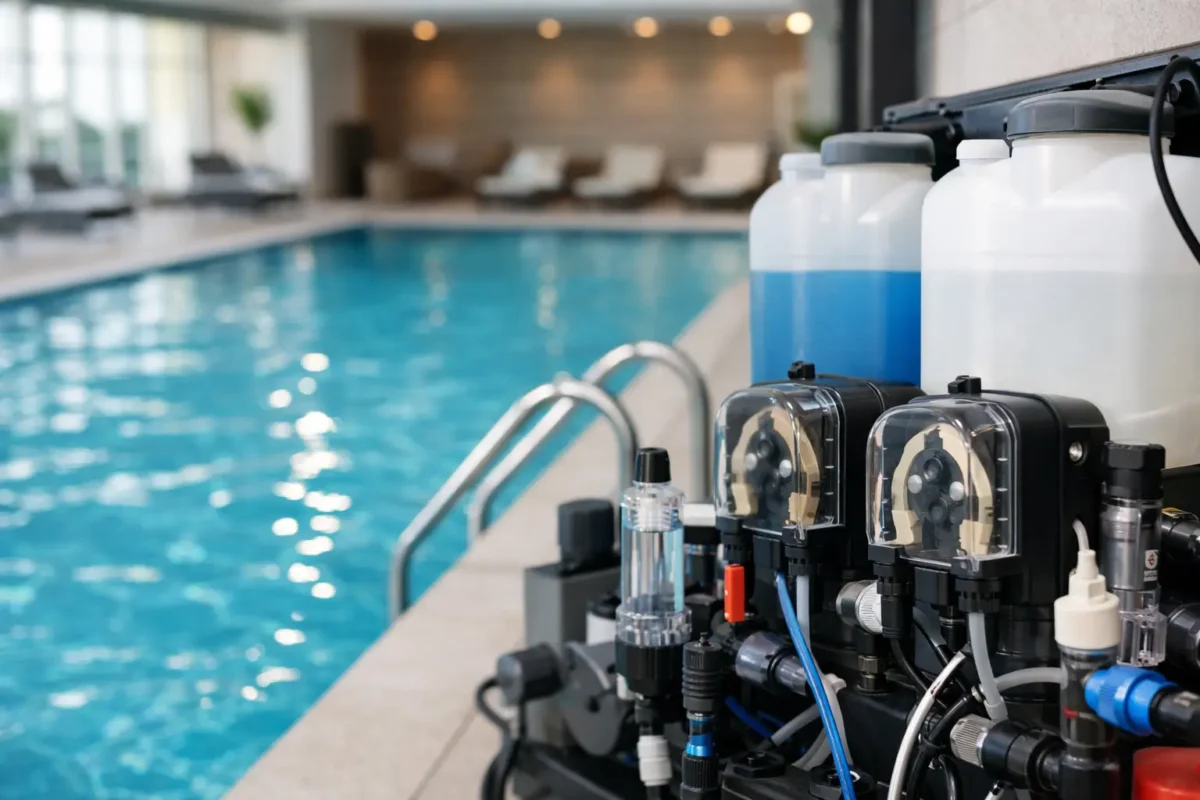
A pool that looks clear at 9 a.m. can be out of balance by afternoon in the UAE heat. High temperatures, heavy use, evaporation, and constant top-ups put real pressure on water quality. That is why a pool chemical dosing system is no longer a luxury add-on for many villas, hotels, residential towers, and commercial facilities. It is a practical investment in water consistency, swimmer comfort, and long-term asset protection.
For premium properties, manual chemical treatment often creates uneven results. One day the chlorine is too low, the next day the pH drifts high, and both problems can affect water clarity, equipment life, and guest experience. Automated dosing changes that. It brings precision to a process that is difficult to manage by hand, especially in demanding environments where appearance and performance both matter.
What a pool chemical dosing system actually does
A pool chemical dosing system monitors key water parameters and adds measured amounts of treatment chemicals when needed. In most installations, this means controlling pH and disinfectant levels so the pool remains within the target range throughout the day.
The system typically works through sensors, a controller, and dosing pumps. The sensors read the water condition. The controller interprets those readings against the programmed set points. The pumps then inject the right amount of liquid chemical into the circulation line. When properly specified and calibrated, this process keeps the pool far more stable than manual testing and hand dosing.
That consistency matters. Balanced water helps disinfect more effectively, reduces irritation to eyes and skin, protects finishes, and supports the service life of pumps, heaters, filters, and fittings. In premium residential pools, it reduces the need for constant owner attention. In hospitality and commercial settings, it supports operational reliability and a more professional standard of care.
Why automated dosing matters for UAE pools
Pool conditions in Dubai and across the UAE are rarely static. Sun exposure is intense, water temperatures stay high for long periods, and bather load can shift quickly depending on the property type. A private villa may have light use on weekdays and heavy family use on weekends. A hotel pool may experience sharp peaks every day. A residential tower may have continuous turnover from residents and guests.
In these conditions, delayed correction is expensive. If pH rises too far, chlorine becomes less effective. If sanitizer drops, water quality can deteriorate quickly. If chemicals are overdosed in response, swimmers feel the difference immediately. Manual treatment can still work for some small pools, but it depends heavily on disciplined testing, trained staff, and fast response times.
A pool chemical dosing system shortens that gap between change and correction. It does not eliminate the need for maintenance, but it gives operators a more controlled and repeatable process. That is a major advantage for high-value properties where water quality is part of the overall experience.
Key benefits of a pool chemical dosing system
The first benefit is consistency. Stable water chemistry helps maintain clarity and comfort throughout the day, not just shortly after the maintenance team has visited. This is especially valuable for properties with long operating hours or visible pools that form part of the design statement.
The second benefit is chemical efficiency. Automated dosing adds chemicals in measured amounts instead of relying on rough adjustments. Over time, that can reduce waste and improve cost control. The savings vary by pool size and usage pattern, but the operational logic is straightforward – precise dosing is usually more efficient than reactive dosing.
The third benefit is equipment protection. Water that stays within the proper range is less likely to contribute to corrosion, scale buildup, and premature wear. In premium installations with high-spec filtration, heating, lighting, and water features, protecting the wider system is just as important as treating the water itself.
The fourth benefit is labor support. Facility teams still need to inspect, test, and maintain the system, but automation reduces the burden of constant manual adjustment. For facility managers and commercial operators, that can improve maintenance planning and reduce the risk of inconsistency between shifts or contractors.
Which type of system is right for your pool
Not every pool needs the same level of automation. The right specification depends on pool size, bather load, operating hours, water source, and the quality expectations of the property.
For many residential pools, a compact dosing setup for pH and chlorine is the most practical solution. It provides dependable control without unnecessary complexity. This is often the right balance for villa owners who want elegant, low-hassle pool ownership with professional-grade results.
For hotels, residential developments, schools, clubs, and commercial facilities, a more advanced system is usually justified. These installations may require higher-capacity dosing pumps, more durable controllers, expanded monitoring, and integration with broader plant room equipment. Where compliance, guest satisfaction, and heavy usage are all factors, entry-level systems may not be enough.
There is also a difference between selecting a system for a new project and retrofitting one into an existing pool. New builds give more flexibility around plant room layout, dosing point placement, and control integration. Retrofit projects can still achieve excellent performance, but they require careful attention to compatibility, available space, and the condition of existing circulation equipment.
What to look for before you buy
Build quality should come first. A dosing system is not just a controller on a wall. It is part of a working water treatment environment, and components need to perform reliably in demanding technical conditions. Quality sensors, accurate pumps, durable tubing, and dependable control logic make a clear difference over time.
Ease of calibration and servicing also matters. Even the best system requires routine checks. If calibration is awkward or parts are difficult to access, long-term performance suffers. Buyers often focus on initial price, but experienced operators know that maintainability is part of the real value.
Chemical compatibility is another practical consideration. The system must match the treatment method being used and the pool’s operating profile. A poorly matched setup can create unnecessary service issues or deliver unstable results.
It is also worth considering how visible the pool is within the property. A decorative residential pool, a rooftop hospitality pool, and a high-traffic commercial lap pool all have different expectations around aesthetics, uptime, and control. The right system should fit the asset, not just the pipe size.
Installation and maintenance are part of the result
A premium dosing system can underperform if it is installed poorly. Sensor placement, injection point location, controller programming, and commissioning all affect how accurately the system responds. This is why technical support is not an optional extra. It is part of the result.
Proper commissioning includes calibration, verification against manual test readings, and adjustment based on actual pool behavior. Pools do not all react the same way. Water source, circulation rate, and user load all influence performance. A professional setup takes those variables into account rather than treating every pool as identical.
Ongoing maintenance remains essential. Sensors need cleaning and recalibration. Dosing lines and pump components need inspection. Chemical tanks need to be managed safely. Automation improves control, but it does not replace professional oversight. For clients who want dependable long-term performance, the best outcomes come from combining quality equipment with scheduled technical service.
Why premium buyers should avoid the cheapest option
Low-cost systems can look attractive on paper, especially when comparing only headline features. In practice, the gap usually appears in accuracy, durability, spare parts availability, and after-sales support. For a private plunge pool, that may be an inconvenience. For a luxury villa, hotel, or commercial property, it can turn into downtime, guest complaints, and higher maintenance costs.
A better approach is to judge value across the full life cycle. How stable are the readings. How often does the system need attention. Are replacement parts available. Can trained technicians support the product properly. These questions matter more than a low entry price.
This is where a specialist supplier adds real value. Aquatic Pools and Fountains supports clients with product selection, technical guidance, installation support, and maintenance expertise, which is exactly what high-standard properties need when water quality cannot be left to guesswork.
Is a pool chemical dosing system worth it?
For most premium pools, yes. The stronger question is not whether automation is useful, but how advanced the system should be for the property. A lightly used residential pool may only need a streamlined dosing setup. A hospitality or commercial installation will usually benefit from a higher-spec solution designed for continuous performance.
The return is not only measured in chemical savings. It shows up in water quality, swimmer comfort, reduced manual intervention, better equipment protection, and a more professional standard of operation. For properties where the pool is part of the lifestyle, brand image, or tenant experience, that value is easy to recognize.
If you are planning a new pool or upgrading an existing one, the right dosing system should be selected with the same care as the pump, filter, and disinfection equipment. Clear water is expected. Reliable water balance is what protects the investment behind it.