
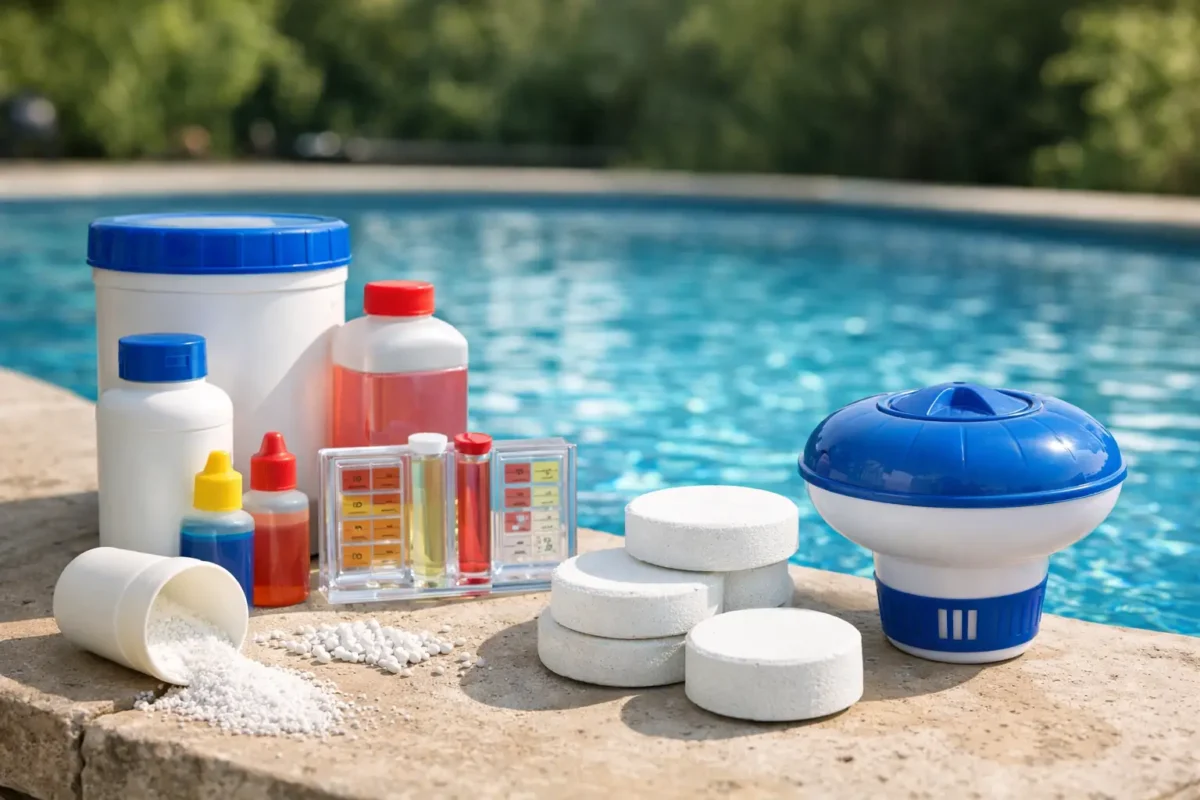
A premium pool can lose its appeal quickly when the water turns cloudy, develops scale along the tile line, or causes discomfort for swimmers. The answer to what pool chemicals are essential is not simply to buy every product on the shelf. It is to use the right chemistry, in the right order, based on accurate water testing and the specific demands of the pool.
For villas, hospitality properties, residential communities, and commercial facilities, water treatment protects more than appearance. Proper chemical control safeguards finishes, equipment, plumbing, and the people using the pool. In hot climates with high bather loads and strong sun exposure, a disciplined treatment plan is a core part of reliable pool operation.
What Pool Chemicals Are Essential?
Every well-maintained pool needs a sanitizer, pH control products, total alkalinity control, calcium hardness management, and a dependable water testing method. Most pools also benefit from routine shocking, while stabilizer, algaecide, clarifier, metal control, and specialty treatments should be selected according to the water source, pool finish, circulation system, and usage level.
The goal is balance, not excessive chemical use. Adding chemicals without testing can create a different problem from the one you intended to solve. For example, repeatedly adding chlorine to cloudy water may not restore clarity if the pH is too high, the filter is dirty, or calcium levels are out of range.
1. Sanitizer: The Foundation of Safe Pool Water
A sanitizer is non-negotiable. It controls bacteria, algae, and other contaminants introduced by swimmers, windblown debris, rain, and the surrounding environment. Chlorine remains the most widely used option because it is effective, economical, and suitable for a broad range of residential and commercial pools.
Chlorine may be supplied as liquid chlorine, granules, tablets, or through a salt chlorination system. Each format has a place. Tablets provide convenient, gradual dosing but can raise cyanuric acid over time. Liquid chlorine does not add stabilizer, making it useful where cyanuric acid is already elevated. Salt systems generate chlorine automatically, but they still require regular water testing and careful balancing.
Bromine is another sanitizer option, particularly for warm-water applications such as spas. It performs well at higher temperatures, although it is generally less common for large swimming pools. The right choice should account for pool volume, equipment compatibility, desired automation, and operating budget.
2. pH Increaser and pH Reducer
pH affects nearly every aspect of water quality. When pH is too low, the water becomes corrosive. It may irritate eyes and skin, damage metal components, etch plaster finishes, and shorten the service life of heaters and pumps. When pH is too high, sanitizer becomes less effective, water can appear dull, and scale may form on surfaces and inside equipment.
Most pools operate best with a pH of approximately 7.2 to 7.6. A pH increaser, commonly sodium carbonate, raises low pH. A pH reducer, often dry acid or muriatic acid, lowers high pH. These products should be dosed carefully, with circulation running, and never mixed together or combined directly with chlorine.
For high-value installations, gradual adjustment is preferable to aggressive correction. This reduces the risk of overshooting the target and helps preserve sensitive finishes such as natural stone, glass tile, and polished metal features.
3. Total Alkalinity Adjusters
Total alkalinity acts as a buffer for pH. If alkalinity is too low, pH can shift rapidly and become difficult to control. If it is too high, pH often drifts upward and becomes resistant to adjustment. Both conditions can affect sanitizer performance and the visual quality of the water.
An alkalinity increaser, typically sodium bicarbonate, is used when levels are low. Reducing alkalinity generally requires a controlled acid treatment, often performed in stages. The ideal range depends on the sanitizer system, water source, and finish, but many traditional chlorine pools are maintained around 80 to 120 ppm.
Alkalinity should be corrected before making major pH adjustments. This sequence produces more stable results and prevents unnecessary chemical consumption.
4. Calcium Hardness Treatment
Calcium hardness is especially relevant in regions where fill water has a high mineral content. Water with insufficient calcium can draw minerals from plaster, grout, and other cementitious finishes, contributing to surface deterioration. Excessive calcium can lead to scale formation on tile, fittings, heaters, salt cells, and filter equipment.
A calcium hardness increaser is used for low readings. When calcium is too high, dilution with appropriately balanced water is often the most effective long-term solution. A scale inhibitor may help manage the risk, but it does not replace proper water balance.
This is one area where professional assessment adds clear value. The recommended hardness level varies between plaster, tile, vinyl, fiberglass, and specialty finishes. It also changes based on water temperature and the overall balance of pH and alkalinity.
5. Pool Shock for Oxidation
Regular sanitizing does not always remove the organic waste that builds up in pool water. Sunscreen, body oils, cosmetics, leaves, and nitrogen-based contaminants can combine with chlorine and reduce its effectiveness. This is when pool shock becomes essential.
Shocking oxidizes this waste and restores the sanitizer’s ability to work efficiently. It is commonly needed after heavy use, a storm, visible algae, unusual odor, or a period of neglected maintenance. The correct frequency depends on the pool’s bather load, circulation performance, and exposure to heat and sunlight.
There are chlorine and non-chlorine shock treatments. Chlorine shock provides strong corrective action when water quality has deteriorated. Non-chlorine shock can be useful for routine oxidation and allows a faster return to swimming in many cases. Always follow the product instructions and verify that sanitizer levels are safe before reopening the pool.
Supporting Chemicals That May Be Needed
Not every pool needs every specialty chemical every week. These products are valuable when used for a specific, tested condition rather than as automatic additions.
- Cyanuric acid, or stabilizer, protects chlorine from rapid breakdown caused by sunlight. Too little can lead to high chlorine consumption, while too much can reduce chlorine effectiveness.
- Algaecide can support sanitation in pools with recurring algae pressure, shaded areas, warm water, or periods of low circulation. It is a preventive aid, not a substitute for proper chlorine levels.
- Clarifier gathers fine suspended particles so the filtration system can capture them more easily. It can improve mild cloudiness, but it will not solve a chemical imbalance or undersized filtration system.
- Metal sequestrant helps prevent staining and discoloration caused by iron, copper, or other metals in source water. It is particularly useful after filling a pool or when water testing identifies metal content.
- Scale and stain treatment may be required for mineral deposits, surface discoloration, or difficult water conditions. Product selection must match the pool finish to avoid damage.
Testing Is an Essential Part of the Chemical Program
Chemicals without testing are guesswork. A quality test kit or digital water testing system should measure free chlorine or bromine, pH, total alkalinity, calcium hardness, and cyanuric acid. Commercial pools and high-use hospitality facilities may require more frequent testing and documented readings to support consistent operating standards.
For a typical private pool, testing two to three times per week is a practical baseline during active use. Test more often during extreme heat, after gatherings, after heavy rainfall, or when the water appearance changes. Pools with automated dosing systems still need manual verification because sensors, feeders, and salt cells require calibration and maintenance.
Keep records of results and chemical additions. A simple log makes recurring problems easier to identify, whether the cause is high evaporation, a failing feeder, inadequate circulation, or an imbalance in the source water.
Safe Handling Protects People and Equipment
Store pool chemicals in their original labeled containers in a cool, dry, ventilated area away from direct sunlight, fuel, fertilizer, and other household products. Chlorine and acid must be stored separately. Never mix chemicals, never add water to acid, and never use a wet scoop in a chemical container.
When adding treatment products, run the circulation system and follow the manufacturer’s dosage instructions for the actual pool volume. Add one correction at a time when possible, then retest. This measured approach protects premium surfaces and avoids wasting product through overcorrection.
For complex pools, fountains, salt systems, heat-cool pumps, or commercial installations, a professional water analysis can prevent costly equipment issues before they become visible. Aquatic Pools and Fountains can support the selection of quality chemicals, testing systems, and maintenance solutions matched to the demands of your installation.
Clear water is the result of controlled chemistry, effective filtration, and regular technical attention. Treat the numbers before treating the symptoms, and your pool will remain safer, more elegant, and better prepared for daily use.