
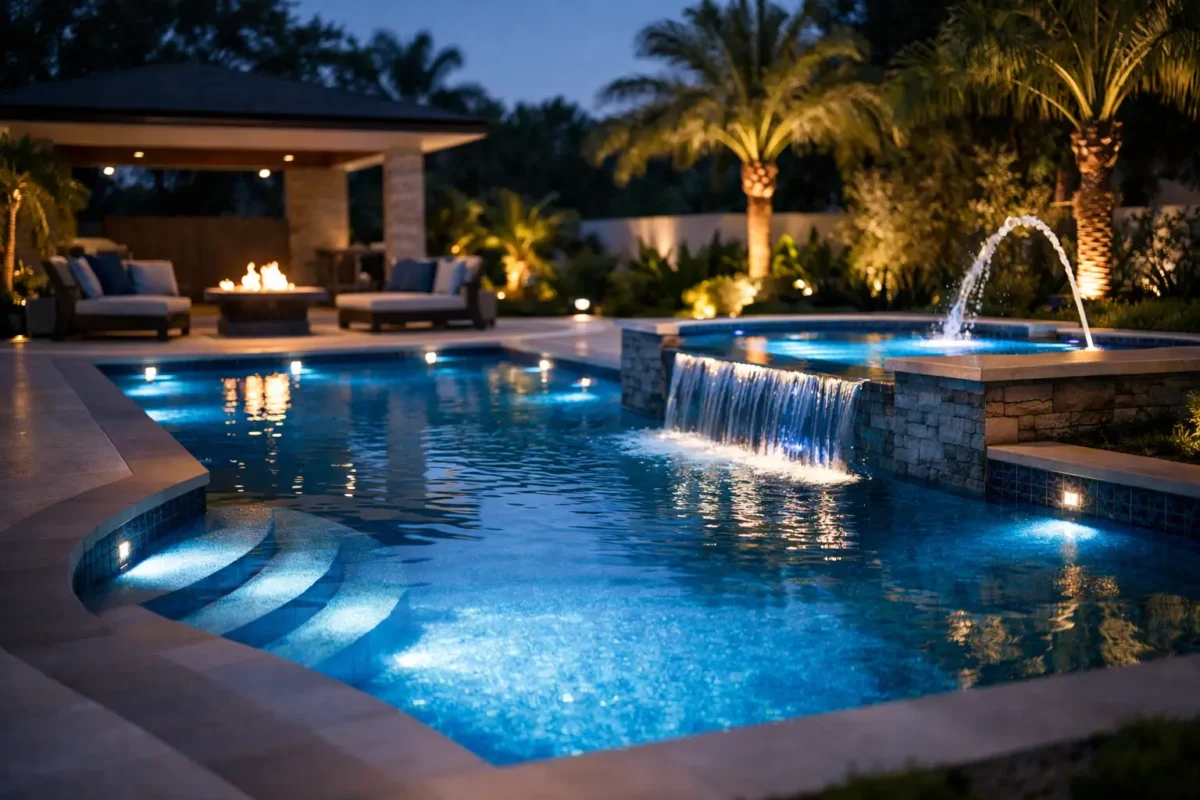
A pool can look perfectly finished in daylight and feel unfinished after sunset. The difference is rarely the pool tile or landscaping alone. It is the lighting plan. This pool lighting design guide is built for villa owners, hospitality teams, developers, and facility managers who want an aquatic environment that remains safe, elegant, and visually controlled after dark.
For premium installations, pool lighting is not a final accessory decision. Fixture selection, placement, wiring routes, controls, water features, and maintenance access should be considered early in the project. The right system brings out the depth of the water, defines the pool’s architecture, supports safe circulation, and adds value to the entire outdoor setting.
Start With the Pool’s Purpose After Dark
The most effective lighting scheme begins with a simple question: how will the pool area be used at night? A private villa pool intended for quiet family use requires a different result from a hotel pool deck hosting guests, events, and late-evening dining.
For residential pools, the priority is usually calm, glare-free illumination that makes the water inviting without flooding the garden with brightness. Commercial pools need more consistent visibility across larger water surfaces, walkways, steps, and access points. In both cases, lighting should reveal the pool’s form rather than compete with it.
Consider the complete nighttime view. Look from the main living room, terrace, garden seating area, arrival drive, and upper floors. A light that appears attractive from inside the water may create uncomfortable glare from a nearby lounge or dining space. This is why a lighting layout should be reviewed from multiple viewing angles before installation begins.
Choose the Right Pool Light Technology
LED pool lights are the preferred choice for most modern projects because they provide long service life, low energy use, and excellent color control. They are available in white-light and RGB or RGBW versions, allowing the atmosphere to shift from refined everyday illumination to a more expressive setting for an event.
Warm white lighting can complement beige stone, timber decking, and soft landscape planting. Cool white may suit contemporary architecture, blue or gray finishes, and crisp waterline tile. Neither is automatically better. The pool interior finish strongly affects the final appearance: a white or light-colored surface reflects more light, while dark mosaic, deep blue tile, and black finishes absorb more light and often require a more deliberate fixture layout.
Color-changing systems should be selected with restraint. They offer flexibility for hospitality venues and entertaining spaces, but the best premium designs do not rely on constantly changing colors. A clean white scene is often the most elegant default, with programmable color scenes reserved for celebrations, branded events, or seasonal use.
Quality matters beyond appearance. Specify purpose-built underwater fixtures with durable housings, reliable seals, correctly rated niches, and compatible low-voltage transformers or drivers. In Dubai and across the UAE, equipment must also withstand heat, humidity, pool chemicals, and the demanding duty cycles of commercial facilities.
Pool Lighting Design Guide: Plan the Layout First
A common mistake is placing lights symmetrically without considering sightlines. Symmetry can work well, but it is not the same as good design. The fixture layout should create an even wash of light through the water while directing the source away from principal viewing areas.
For a rectangular pool, lights are often positioned along one long wall so they shine across the pool rather than directly toward the house, terrace, or seating area. This reduces glare and lets the water surface carry the reflected light. If the main viewing location is on one side of the pool, placing fixtures on the opposite wall is usually the stronger choice.
Freeform pools, L-shaped pools, and pools with tanning ledges need a more tailored approach. Curves may require additional fixtures to prevent dark pockets, while deep ends need adequate coverage without making shallow lounging zones excessively bright. The objective is visual continuity, not a grid of visible points of light.
Depth also changes the result. A deep pool naturally appears darker, particularly with a dark interior finish. Instead of simply choosing brighter fixtures, assess beam spread, fixture position, and the reflective qualities of the selected finish. Excessive output can create hot spots and make the water feel harsh rather than luxurious.
Steps, ledges, and entry points
Steps and shallow ledges deserve dedicated attention because they are the points where users enter, exit, and change depth. A separate low-level light or carefully aimed fixture can make step edges legible without producing glare at eye level. This is particularly valuable for children, older users, hotel guests, and evening gatherings.
Do not depend on a single main pool light to illuminate every safety feature. Integrated spa benches, sun shelves, beach entries, handrails, and transition zones should each be evaluated in the design phase. A pool that looks dramatic but leaves its entry points unclear is not a successful installation.
Water features need their own lighting strategy
Bubblers, deck jets, cascades, waterfalls, and fountains can become signature visual elements after dark, but they should not be lit as an afterthought. A waterfall may benefit from a fixture aimed across its falling sheet of water, while bubblers often look best when lit from below with compact, focused fittings.
The trade-off is maintenance and visibility. Lighting every feature can create visual clutter, especially in smaller villa pools. Select the elements that deserve emphasis and allow the rest of the composition to remain quiet. For commercial and hospitality spaces, feature lighting can also be programmed as a separate zone, allowing operators to adjust the setting for daily operation, events, or cleaning.
Coordinate Pool, Landscape, and Architectural Light
Underwater lighting is only one layer of the nighttime environment. Landscape uplights, path lights, wall sconces, and terrace lighting all influence how the pool reads after sunset. If every element is bright, the water loses depth and the space can feel more like a parking area than a retreat.
Keep the pool as the visual focal point, then use surrounding light to define circulation and architectural edges. Soft pathway lighting improves safety around wet surfaces. Controlled planting lights add depth beyond the pool perimeter. Gentle illumination on a feature wall or pergola can frame the water without shining directly into it.
Avoid placing powerful landscape fixtures where they reflect sharply on the water surface or expose the faces of people in the pool. Likewise, avoid excessive downlighting over the pool. Reflections and ripples are part of the experience, but uncontrolled glare is not.
Specify Safe Electrical Systems and Accessible Service Points
Pool lighting is a specialized electrical installation. The system should be designed and installed in accordance with applicable local regulations, using appropriately rated equipment, low-voltage supply where required, correct earthing and bonding practices, protected cable routes, and accessible junction or service points.
For property owners and project managers, the practical requirement is clear: never choose lighting based on appearance alone. Confirm that fixtures, transformers, controllers, niches, conduits, and cables are compatible as a complete system. Mixing components without technical verification can affect performance, warranty support, and future maintenance.
Service access is especially important for large villas, rooftop pools, hotels, and high-occupancy residential properties. Drivers and control equipment should be located where qualified technicians can inspect them without disrupting finished landscaping, ceilings, or pool coping. A well-designed system should make replacement and troubleshooting straightforward years after handover.
Use Controls That Suit Daily Operation
The controls should match the people operating the pool. A private homeowner may prefer a simple wall switch, remote control, or mobile app with a few reliable scenes. A hotel or facility manager may require centralized timers, zone control, automation integration, and preset schedules that align with operating hours.
At a minimum, separate the pool lights from landscape and feature lights. This gives the owner more freedom to create the right balance without running every fixture at once. Dimming capability is valuable where compatible, particularly for dining terraces and event spaces where the preferred light level changes during the evening.
Choose controls that remain intuitive. A sophisticated system has limited value if staff cannot confidently select a standard operating scene or identify a fault. Clear labeling, documented settings, and professional commissioning protect the investment from the first night of operation.
Avoid the Design Decisions That Age Poorly
Overlighting is the most frequent issue in premium pool environments. More fixtures and higher output do not automatically create a better result. They often increase glare, reveal every imperfection in the finish, and flatten the atmosphere that owners hoped to create.
Another avoidable error is selecting lights late, after the shell, coping, and electrical routes are complete. Late decisions can limit placement options and force compromises in conduit routing, niche locations, or service access. Coordinate the pool contractor, electrical contractor, landscape designer, and lighting specialist early.
Finally, plan for the real environment. Water chemistry, frequent operation, coastal conditions, heat, and cleaning routines all affect equipment life. Premium fixtures and correct installation cost more upfront, but they reduce disruption, protect visual quality, and support dependable operation over time.
A well-lit pool should feel effortless to use and impressive to look at. When the design is shaped around architecture, safety, water finish, and long-term serviceability, the result is more than a brighter pool – it is an outdoor asset that continues to perform with distinction after sunset.