
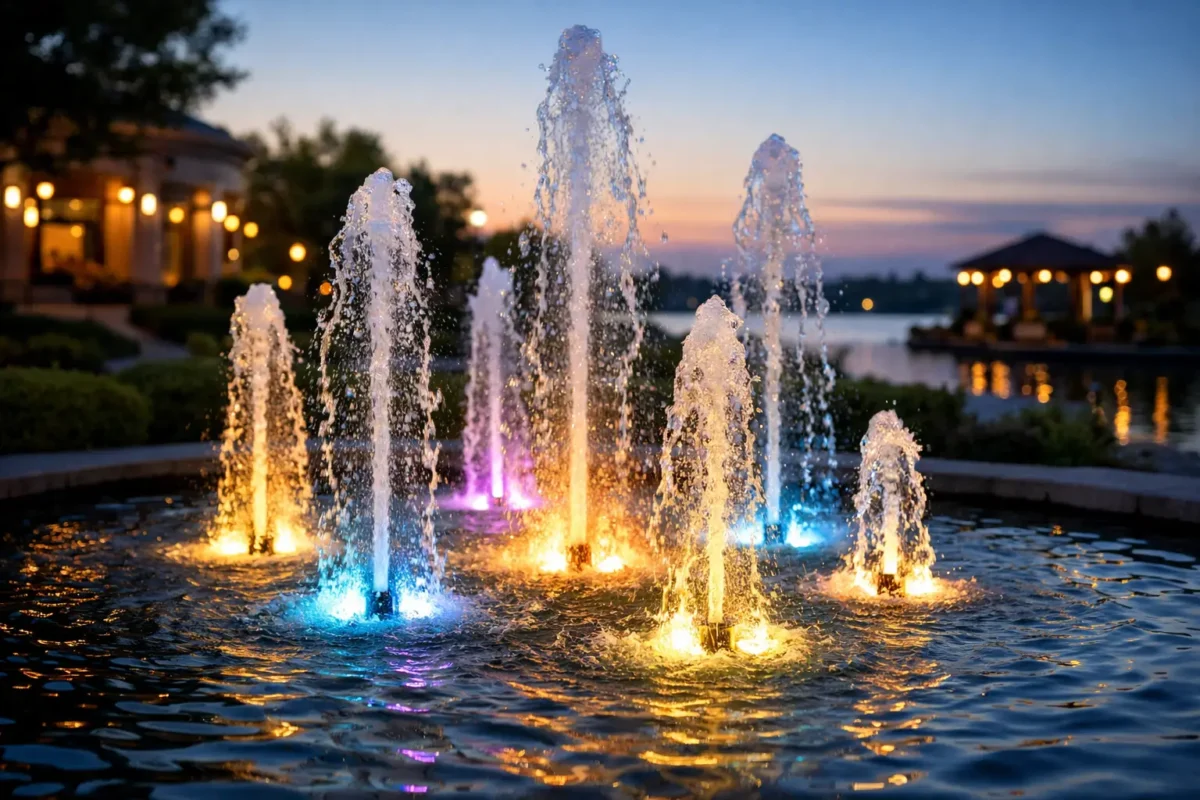
A fountain can look impressive in daylight and disappear completely after sunset. That is usually not a design problem. It is a lighting problem. The right fountain lights turn moving water into a focal point, define the architecture around it, and give the entire installation a more premium presence at night.
For luxury villas, hospitality properties, residential towers, and commercial developments, lighting is not a finishing touch added at the end. It is part of the fountain’s performance. When specified correctly, it supports visual clarity, creates atmosphere, improves perimeter visibility, and helps the feature deliver value long after dark. When chosen poorly, even an expensive fountain can look flat, uneven, or difficult to maintain.
Why fountain lights matter more than most buyers expect
Water changes the way light behaves. It refracts, reflects, distorts, and amplifies. That means fountain lighting is not the same as standard landscape lighting or general outdoor illumination. The beam angle, fixture placement, housing material, and cable protection all affect the final result.
A small nozzle with a clean laminar arc calls for a different lighting strategy than a multi-jet display fountain in a hotel forecourt. A quiet ornamental feature inside a residential courtyard needs a different mood than a statement installation at the entrance of a mixed-use development. In each case, the fountain lights must match the water effect, the surrounding finishes, and the operating demands of the site.
This is where technical judgment matters. A fixture that looks suitable on paper may not hold up in chlorinated water, may create glare from the wrong angle, or may produce an underwhelming effect once installed below the nozzle line. Premium outcomes depend on selecting the correct equipment, not simply adding more fixtures.
Choosing fountain lights for performance and appearance
The best lighting plans start with one question: what should the fountain look like at night? Some clients want a crisp, elegant white light that highlights water movement with minimal distraction. Others want a richer visual experience with programmable color change for hospitality, event, or branding purposes. Both approaches can be effective, but they serve different goals.
White light for architectural elegance
Static white lighting remains the preferred option for many high-end residential and commercial projects. It gives fountains a clean, refined appearance and complements stone, metal, and glass finishes without making the installation feel theatrical. Warm white can soften the scene in intimate settings, while cool white often works well in contemporary exteriors where sharper definition is preferred.
White light is also the easier option when long-term consistency matters most. If the goal is timeless presentation rather than frequent visual changes, quality white fixtures often provide the most controlled and sophisticated result.
RGB and color-changing systems for dynamic impact
Color-changing fountain lights are ideal when the fountain is expected to act as a feature element rather than background architecture. Hotels, public spaces, branded developments, and entertainment-led environments often benefit from programmable scenes that shift according to time, event schedules, or festive requirements.
That said, color systems require more planning. Control compatibility, driver quality, programming logic, and maintenance access all become more important. If these details are overlooked, the installation may look inconsistent or become difficult to service. The visual reward can be significant, but only when the system is engineered properly from the start.
What separates premium fountain lighting from standard fixtures
Not all underwater lights are built for fountain applications. Buyers sometimes assume any submersible fixture will perform adequately, but fountains create a demanding environment. Constant water exposure, pressure variation, chemicals, heat, and vibration can shorten the life of low-grade products very quickly.
Fixture body material is a major factor. Stainless steel housings are widely preferred for durability and corrosion resistance, especially in premium projects where reliability and appearance are equally important. Lens quality matters as well. Poor optics produce uneven output, while better-designed fixtures create cleaner beam control and stronger visual definition.
Ingress protection and sealing quality are equally critical. A fountain light is only as dependable as its internal protection against water intrusion. Once moisture reaches the electronics, performance drops and failures become expensive. In commercial and hospitality settings, that is not simply a maintenance issue. It becomes a presentation issue.
Cable quality, power supply stability, and niche or bracket design also deserve attention. These are not glamorous specifications, but they often determine whether the system remains dependable over time. In a premium installation, details behind the scenes are what protect the appearance clients actually see.
Placement is where fountain lights succeed or fail
Even excellent fixtures can produce disappointing results if they are placed poorly. Lighting must work with the nozzle arrangement, fountain depth, viewing angle, and surrounding architecture. A common mistake is positioning the lights so that the beam shoots directly into the eyes of viewers rather than through the water effect.
For smaller decorative fountains, a subtle approach often performs best. One or two well-placed fixtures can create better definition than a crowded layout with too much brightness. In larger synchronized systems, lighting should be planned as part of the hydraulic layout so that jets and illumination complement each other rather than compete.
The depth of installation matters too. Fixtures that sit too low may lose intensity before reaching the main water action. Fixtures placed too close to the surface may create hotspots and glare. The right balance depends on the fountain type, water clarity, and intended nighttime effect.
Fountain lights in villas, hotels, and commercial properties
A villa fountain usually prioritizes elegance, visual calm, and architectural integration. The lighting should support the landscape and exterior design, not overpower it. In these settings, owners often prefer discreet fixtures, warm or neutral white tones, and clean beam distribution that highlights movement without visual clutter.
Hotel and hospitality projects tend to demand more. The fountain may be part of the guest arrival experience, a central courtyard feature, or a signature element near dining and leisure spaces. Here, lighting must combine visual impact with long operating hours and dependable serviceability. The fixtures need to perform consistently night after night, not only during special occasions.
Commercial and mixed-use developments often place equal importance on durability, brand image, and maintenance efficiency. Facility managers need systems that are attractive, but they also need lighting components that can be inspected, replaced, and managed without repeated disruption. This is why product quality and technical support should never be separated in the buying decision.
Installation and maintenance are part of the product value
Fountain lighting is one category where supply alone is rarely enough. Proper installation affects waterproof integrity, beam direction, cable protection, and long-term safety. A premium fixture can still underperform if mounted incorrectly or connected to unstable power conditions.
Maintenance planning should also happen early. Can the fixture be accessed without draining the entire feature? Are spare components available? Is the control system straightforward for the operator? These are practical questions, but they directly affect operating cost and service continuity.
For buyers managing high-visibility properties, downtime is expensive. A poorly maintained light does not just reduce brightness. It changes the entire appearance of the fountain and, by extension, the impression of the property around it. Working with a supplier that understands equipment, installation standards, and ongoing support is simply the smarter commercial decision.
Aquatic Pools and Fountains supports this category with premium equipment selection, technical guidance, and service capability designed for both residential and commercial water features where presentation and reliability must go together.
How to evaluate the right system before you buy
The most effective way to choose fountain lighting is to assess the project as a whole rather than compare fixtures in isolation. The water feature type, operating hours, water chemistry, design intent, and maintenance expectations all influence the right specification.
A buyer focused only on upfront cost may end up replacing inferior lights far earlier than expected. A buyer focused only on visual effect may choose a complex control system that exceeds the site’s actual operational needs. The best specification usually sits in the middle – strong visual performance, durable materials, serviceable design, and dependable technical support.
If the fountain is central to the identity of the property, investing in higher-grade equipment is usually justified. Better optics, stronger housings, and more reliable electrical components produce a cleaner result and protect the installation over time. If the feature is simpler and used for ambient enhancement, a more restrained lighting plan may still deliver an excellent outcome when it is properly designed.
A well-lit fountain does more than decorate a space. It extends the value of the feature into the evening, strengthens the look of the property, and reinforces the standard of the environment around it. When fountain lights are selected with the same care as the fountain itself, the result feels complete, confident, and built to last.