
A pool that looks impressive on day one can become a maintenance problem very quickly if the filtration system is undersized, mismatched, or chosen on price alone. If you are deciding how to select pool filter equipment for a villa, hotel, residential tower, or commercial property, the right choice comes down to more than brand preference. It starts with water volume, bather load, operating hours, and the performance standard you expect over time.
For premium residential and commercial pools, the filter is not a background component. It is one of the core systems that determines water clarity, chemical efficiency, equipment lifespan, and the overall user experience. A well-selected filter keeps circulation stable, reduces stress on the pump, and supports cleaner, more polished water with less operational disruption.
How to Select Pool Filter Based on Pool Type
The first mistake many buyers make is treating all pools the same. A private villa pool used by a family has very different filtration demands from a hotel pool, competition pool, rooftop amenity pool, or high-traffic community facility. The correct filter must match the real operating environment, not just the pool’s dimensions on paper.
For a residential pool, priorities usually include quiet performance, easy maintenance, reliable water clarity, and equipment that fits neatly into a compact plant room. For hospitality and commercial settings, the focus shifts toward heavier bather loads, more frequent circulation cycles, stronger debris handling, and serviceability under continuous use.
This is why filter selection should begin with application. The same tank size or media type that performs well in a low-use backyard pool may struggle in a commercial setting where oils, sunscreen, fine particles, and daily turnover rates place far greater demands on the system.
Start With Flow Rate and Turnover Time
If you want to know how to select pool filter systems correctly, start with hydraulics. The filter must be sized to handle the required flow rate without forcing the system to operate under unnecessary pressure. That means looking at the pool volume, desired turnover time, and the pump’s actual performance curve rather than choosing a filter by visual size alone.
Turnover time refers to how long it takes for the full volume of pool water to pass through the filtration system. Residential pools often allow more flexibility, while commercial pools typically require stricter circulation targets based on local operating standards and usage patterns. A filter that is too small may technically function, but it will often create higher pressure, shorter cleaning cycles, and more wear across the equipment set.
Oversizing can also be smart when done intentionally. A larger filter generally offers better dirt-holding capacity and lower operating pressure, which can improve efficiency and reduce maintenance frequency. The trade-off is a higher upfront cost and, in some cases, a larger installation footprint. In premium projects, that trade-off is often worth it because the long-term performance is more stable.
Choosing Between Sand, Cartridge, and DE Filters
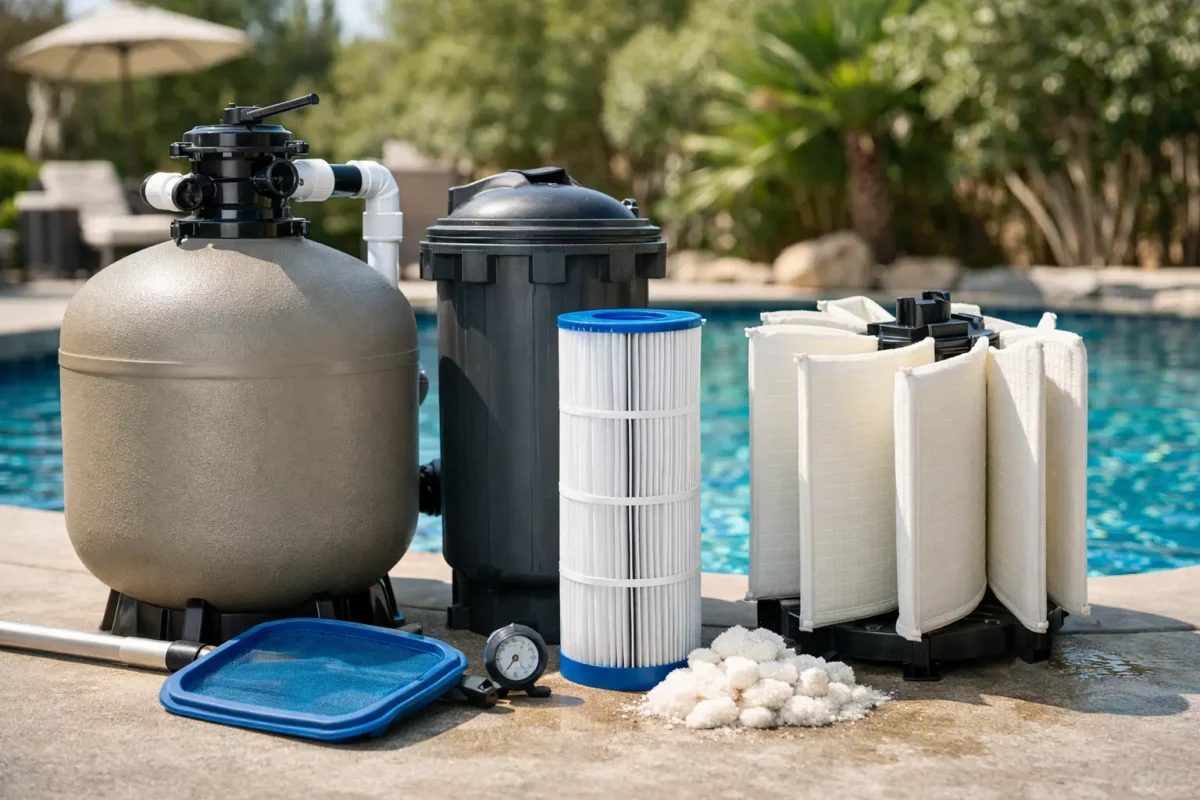
Most pool filter decisions come down to three main types: sand, cartridge, and diatomaceous earth, often called DE. Each has strengths, and the right option depends on water quality goals, maintenance preferences, and how intensively the pool will be used.
Sand filters remain a popular choice because they are dependable, straightforward, and well suited to a wide range of residential and commercial pools. They are especially practical where durability, simple backwashing, and proven operation matter most. For larger properties and service-managed facilities, sand filtration often provides an excellent balance of performance and ease of operation.
Cartridge filters can offer finer filtration than standard sand systems and usually do not require backwashing, which helps conserve water. That can be attractive for certain residential installations. However, they require manual cartridge cleaning and replacement, so they are not always the best fit for high-use commercial sites where maintenance teams need faster service routines.
DE filters are known for very fine particle removal and can produce exceptional water clarity. They are often considered where visual finish is a top priority. The trade-off is that they are generally more maintenance-intensive and may not be the preferred choice for every operator or every regulatory environment.
For many premium pools in the UAE climate, sand filters with the correct media grade, proper sizing, and professional setup remain a strong solution because they combine resilience, consistent throughput, and manageable servicing.
Filter Media Matters More Than Many Buyers Expect
The filter tank is only part of the equation. The media inside it has a direct impact on how effectively particles are captured and how often the filter needs cleaning. Standard silica sand is widely used and performs well when the system is sized correctly and maintained properly. Glass media is another option that some buyers consider for improved filtration efficiency and lower channeling risk.
Media choice should not be made in isolation. It needs to be compatible with the filter design, operating pressure, and expected maintenance schedule. A premium installation benefits from matching the vessel, media, and hydraulic design as one system. That is where technical guidance becomes valuable, especially on high-end projects where water quality expectations are non-negotiable.
Consider Installation Space and Service Access
A filter may look ideal on a specification sheet and still be the wrong choice if it does not suit the plant room. Access for installation, backwashing, valve operation, media replacement, and routine servicing all matter. In compact equipment rooms, vertical clearance and pipe layout can limit your options more than expected.
This becomes especially important in villas with tight service areas or in commercial developments where multiple systems share the same back-of-house space. Choosing a filter without considering maintenance access can create avoidable service delays and higher labor costs later.
At Aquatic Pools and Fountains, this is one of the areas where professional equipment planning makes a measurable difference. The best filter is not only the one that performs well on paper, but the one that can be installed cleanly, serviced efficiently, and supported over the long term.
Match the Filter to Water Conditions and Usage
Not all water challenges come from debris. Fine dust, body oils, cosmetics, sunscreen, landscaping contamination, and heavy swimmer loads all affect filtration performance. In hot climates and luxury outdoor environments, pools may also deal with more frequent dust exposure and higher evaporation-related chemical fluctuations.
That means selecting a pool filter should reflect actual water conditions, not just generic assumptions. A lightly used plunge pool has a different profile from an infinity pool at a high-end villa, and both differ significantly from a hotel or wellness facility with continuous traffic.
If your goal is polished, crystal-clear water with fewer interruptions, a properly sized filtration system with the right media and valve setup is essential. In many cases, spending more on the correct specification at the start reduces service complications and operating costs later.
What to Look for in Build Quality
In premium projects, build quality should be evaluated carefully. The filter tank material, corrosion resistance, pressure rating, valve construction, internal laterals, and manufacturer reputation all matter. Lower-grade components may reduce initial cost, but they often show their weakness under heat, pressure fluctuations, and repeated service cycles.
For residential buyers, this can mean premature wear and more maintenance calls. For commercial operators, it can mean downtime, guest complaints, and higher replacement costs. A high-quality filter should be designed for durability, stable hydraulic performance, and dependable operation over years, not just one season.
This is why experienced buyers often prioritize globally trusted brands and properly supported products over the cheapest available option. Long-term value comes from performance consistency, spare parts availability, and technical support as much as from the filter itself.
How to Select Pool Filter Without Overbuying or Undersizing
The smartest filter choice usually sits between two mistakes: buying too small to save money or buying purely by maximum size without considering the full system. The right specification balances pool volume, pump output, usage intensity, maintenance resources, and space constraints.
If the pool is residential and designed for elegance, quiet operation and low-maintenance performance may be the deciding factors. If the pool is commercial, reliability under load and service practicality often carry more weight. In both cases, the filter should be part of a coordinated equipment package rather than a standalone purchase.
A filter does not work alone. Its performance depends on how it integrates with the pump, valves, pipe sizing, water treatment system, and the overall circulation design. When these elements are aligned, water quality improves and operations become more predictable.
The best approach is to treat filter selection as a technical decision with visible results. Clear water, efficient circulation, and dependable maintenance do not happen by accident. They come from choosing equipment that fits the project precisely, performs under real conditions, and supports the standard of pool experience you want to maintain. When you select with that level of care, the filter stops being just another component and becomes part of the property’s long-term value.