
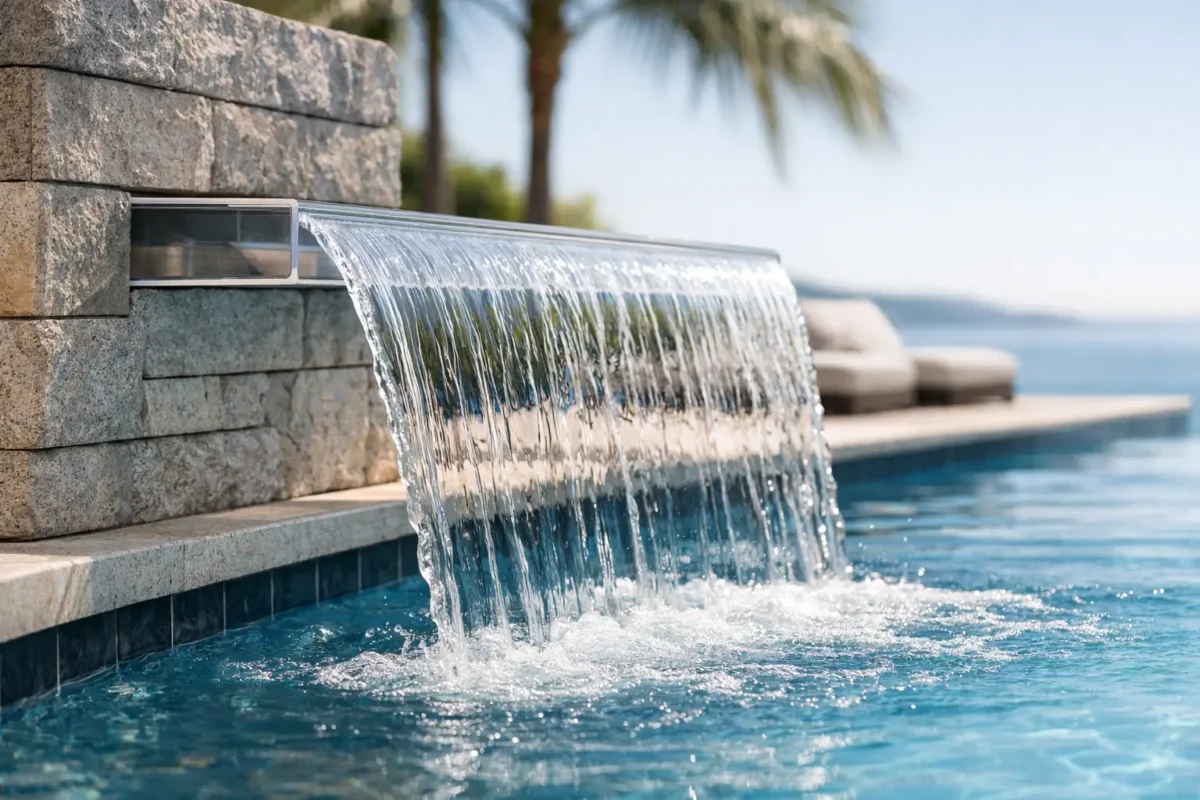
A well-designed acrylic spillway waterfall can turn a still pool wall into a statement feature. The clear body creates the impression that water is emerging from light itself, while a properly engineered spillway produces a smooth, controlled sheet rather than an uneven cascade. For luxury villas, hotel pools, residential developments, and commercial landscapes in Dubai and across the UAE, that distinction is what separates a premium feature from an attractive idea that does not perform as intended.
The visual appeal is immediate, but the specification deserves equal attention. Water flow, spillway width, wall construction, lighting, pump capacity, and access for maintenance must work together from the start. A quality installation should look refined on opening day and continue to deliver a clean water blade through demanding heat, high use, and regular pool operation.
Why an Acrylic Spillway Waterfall Stands Apart
Traditional stainless steel spillways offer a timeless architectural look. Acrylic spillways take a more contemporary direction. Their transparent housing reveals the movement of water inside the unit and creates a distinctive illuminated effect after dark. When integrated with LED lighting, the feature can appear to float above the pool surface or emerge directly from a finished stone, tile, or cladding wall.
This is especially effective where the pool is visible from an entertaining area, lobby, terrace, courtyard, or guest arrival zone. During the day, the acrylic complements clean-lined modern architecture without adding visual weight. At night, it becomes a focal point that gives the pool area a more dramatic and carefully finished presence.
The feature is not limited to large pools. A single compact spillway can add a strong design detail to a villa pool, plunge pool, or indoor water feature. Wider units and multiple coordinated spillways are often specified for hospitality projects, podium pools, residential towers, and formal fountain installations where scale and visual rhythm matter.
The Water Blade Depends on Correct Hydraulics
A spillway is only as elegant as the water it delivers. The goal is generally a continuous, even sheet of water with no gaps, heavy sections, or splashing at the point where it meets the pool. Achieving that result requires more than selecting a width and connecting a pipe.
The pump must provide the required flow rate at the actual operating head of the system. Pipe diameter, pipe length, fittings, elevation changes, valves, and filtration configuration all influence pressure at the spillway. If flow is insufficient, the water may break into separate streams. If it is excessive, the sheet can become turbulent, noisy, and prone to overshooting the intended landing area.
A dedicated feature pump is often the preferred choice for premium projects. It allows the acrylic spillway waterfall to operate independently of the main filtration cycle and gives the owner better control over sound, energy use, and operating hours. In some smaller installations, the feature may share equipment with the pool circulation system, but this needs a careful hydraulic review. A shared system can be practical, although it may limit control and complicate future adjustments.
The water landing zone also matters. A fall that drops too far into the pool creates more noise and splash. A shorter drop can produce a softer, more architectural effect. There is no single ideal dimension because the right result depends on spillway width, flow volume, surrounding finishes, and whether the feature is intended to be heard from nearby seating areas.
Choosing the Right Acrylic Spillway Waterfall
Selection should begin with the project rather than the product catalog. The most suitable unit depends on the pool width, wall proportions, desired visual impact, and available equipment space. A narrow spillway may serve as a precise accent beside a sun shelf or spa. A wider feature can anchor a central pool wall, provided the wall has enough visual mass to support it.
Width, placement, and proportion
Placement should feel intentional. Centering a spillway on a feature wall can create formal symmetry, while an offset arrangement may better suit a contemporary landscape design. Multiple units can be installed in a line, but their spacing should be coordinated with wall joints, lights, steps, planters, and surrounding architectural elements.
The spillway opening must also be level. Even a minor installation error can affect the water sheet, causing it to favor one side. This is a detail that should be checked during installation, not corrected later through higher pump output.
Lighting and control options
Integrated LED lighting is one of the main reasons clients choose acrylic. White light delivers a crisp, understated effect that suits minimalist villas and formal hospitality settings. Color-changing LED systems offer more flexibility for events, branded environments, and residential entertaining areas.
Control should be considered early. A timer, remote control, wall switch, or automation system can be selected based on how the property is used. For commercial locations, programmed schedules help maintain a consistent visual presentation while controlling operating costs. For private properties, simple control is usually more valuable than an overly complex system that is rarely used.
Material quality for outdoor conditions
Clear acrylic must be specified for its intended environment. Outdoor installations in the UAE face intense sun, heat, dust, and chemically treated water. Product quality, UV resistance, sound internal construction, and compatible seals are essential. The surrounding wall finish must also be installed to accommodate the spillway correctly, without placing stress on the acrylic body or obstructing the outlet.
A premium installation does not rely on appearance alone. It considers how the material, fittings, cables, plumbing connections, and support structure will perform over time.
Installation Details That Protect the Finish
The cleanest installations are planned before wall cladding and final finishes begin. The spillway body, water line, electrical connection, and mounting provisions should be coordinated with the pool contractor, landscape team, electrician, and tile or stone installer. Retrofitting is possible in some projects, but it usually involves more visible compromises and higher labor requirements.
The feature should be securely supported within the wall structure, with service access for connections and future inspection. Acrylic surfaces should be protected during construction, particularly while stone cutting, grouting, painting, and final cleaning are underway. Fine dust and abrasive materials can damage clear finishes if the unit is exposed before handover.
Waterproofing around penetrations is another critical point. A feature wall may look complete from the front while concealed moisture issues develop behind it. Proper pipe sleeves, sealing methods, pressure testing, and coordinated waterproofing reduce this risk substantially.
For illuminated units, electrical work must follow suitable safety practices for wet environments. Drivers, junctions, and control components should be positioned where they can be inspected and serviced without opening finished walls. Access panels can be discreet, but they should never be omitted simply to preserve a cleaner elevation.
Maintenance Keeps the Waterfall Clear and Consistent
An acrylic spillway needs regular care, though the requirements are straightforward when included in the pool maintenance plan. Water balance has a direct effect on the appearance and long-term condition of the feature. Excessive calcium hardness can leave scale along the outlet and water path, while poor chemical control may affect fittings, seals, and nearby finishes.
The outlet should be inspected for debris, scale, and uneven water distribution. If the water blade begins to separate or pull to one side, the cause may be buildup at the lip, a blocked line, a low water level, an air issue in the plumbing, or an incorrect valve setting. Increasing pump power is rarely the first or best solution.
Clear acrylic should be cleaned with appropriate non-abrasive materials. Harsh pads, aggressive solvents, and unsuitable chemical cleaners can dull the surface or create fine scratches that become more noticeable under LED lighting. Professional maintenance is particularly valuable for commercial assets, where a poorly performing feature is immediately visible to guests, tenants, and visitors.
A Feature That Should Be Designed as a System
An acrylic spillway waterfall is not a decorative accessory added at the final stage of a pool project. It is a coordinated water feature with architectural, hydraulic, electrical, and maintenance requirements. When these elements are handled as one system, the result is quiet confidence: an even water blade, clear illuminated acrylic, protected finishes, and dependable operation.
Aquatic Pools and Fountains supports premium pool and fountain projects with the equipment expertise, technical guidance, installation coordination, and service capability needed for this level of detail. Before selecting a model, confirm the intended visual effect, available wall space, hydraulic capacity, lighting control, and maintenance access. Those decisions will determine whether the feature simply looks impressive in a rendering or remains a defining part of the property for years to come.