A pool can look perfectly clear in the morning and still have a pH problem developing beneath the surface. If you are asking why pool pH keeps rising, the answer is rarely that the pool simply needs more acid. Repeatedly lowering pH without identifying the source can create a costly maintenance cycle, affect swimmer comfort, and gradually put premium finishes, equipment, and water chemistry out of balance.
For villas, hospitality properties, residential towers, and commercial facilities, stable water chemistry protects far more than appearance. It supports effective disinfection, helps preserve tile, grout, plaster, heaters, pumps, and dosing equipment, and keeps the water inviting for every user. The right solution begins with understanding what is pushing the pH upward.
Why Pool pH Keeps Rising
A pH reading measures how acidic or alkaline pool water is. Most pools perform best with pH maintained between 7.2 and 7.6. Once it climbs above that range, chlorine becomes less effective, scale formation becomes more likely, and water may feel less comfortable on the skin and eyes.
The most common reason for rising pH is carbon dioxide leaving the water. This process, known as outgassing, is natural. When dissolved carbon dioxide escapes into the air, the water becomes more alkaline and pH rises. In an active pool environment, several conditions can speed up that process.
Aeration and water movement
Water features are a defining element in many premium UAE pool installations, but they can also influence chemistry. Spillover spas, deck jets, waterfalls, fountains, bubblers, infinity edges, and strong return jets all increase contact between water and air. The more turbulence there is, the faster carbon dioxide can leave the water.
This does not mean an elegant water feature is a problem or should be switched off permanently. It means the pool should be designed and maintained with its operating conditions in mind. A hotel pool with an infinity edge running for long hours will need a different chemical-management approach than a quiet residential pool with limited circulation.
Total alkalinity is too high
Total alkalinity, often called TA, is one of the most important factors behind persistent pH rise. It acts as a buffer, helping prevent sudden pH changes. However, when alkalinity is excessively high, it provides more dissolved carbonate material for carbon dioxide to outgas from the water. The result is a recurring upward pH drift.
Many pool owners add acid, bring the pH down briefly, then find it high again a day or two later. In these cases, the underlying alkalinity has often not been adjusted correctly. For many pools, a total alkalinity range around 80 to 120 ppm is appropriate, although the ideal target depends on the sanitizer system, surface type, calcium level, and equipment configuration. Saltwater pools frequently benefit from a lower, carefully controlled alkalinity target.
Salt chlorine generators naturally raise pH
Salt chlorine generators are popular because they provide consistent sanitation and reduce the need for manual chlorine additions. They also tend to raise pH as part of normal operation. The generation process produces tiny hydrogen bubbles, which aerate the water and encourage carbon dioxide to escape.
A gradual pH increase in a saltwater pool is therefore expected. The goal is not to eliminate it entirely, but to manage it efficiently. Correct total alkalinity, properly sized equipment, accurate testing, and a dependable acid-dosing strategy can significantly reduce manual intervention.
Fill water and evaporation in hot climates
In Dubai and across the UAE, high temperatures and evaporation place added demands on pool balance. Evaporation does not remove minerals. As water evaporates, calcium, alkalinity, salt, and other dissolved materials remain behind and become more concentrated. Replacing that water with fresh fill water may introduce additional alkalinity or calcium, depending on the local supply.
This is why a pool can develop rising pH, scale at the waterline, or cloudy water even when the regular treatment routine has not changed. High bather loads, frequent top-ups, and intense circulation periods can amplify the issue in commercial settings.
New plaster, grout, or cement-based finishes
Newly finished or recently renovated pools may experience elevated pH for weeks or months. Fresh plaster, cementitious grout, and certain render finishes release alkaline compounds as they cure. This is normal during the early life of the surface, but it requires attentive testing and controlled correction.
Aggressive chemical treatment is not the answer. New surfaces need a disciplined start-up procedure that considers pH, alkalinity, calcium hardness, sanitizer level, and brushing requirements. Poor start-up practices can leave lasting marks, scale, or surface discoloration on an otherwise high-quality installation.
The Hidden Cost of High pH
When pH rises too far, chlorine loses a portion of its sanitizing efficiency. That can lead operators to add more chlorine than necessary, increasing chemical consumption without addressing the real balance problem. It can also allow algae risk to rise, particularly in warm water and high-use pools.
High pH also increases the risk of calcium scale. White deposits may appear on tile lines, fittings, heaters, salt cells, and water features. Over time, scale can restrict circulation pathways, reduce heat-transfer efficiency, and create unnecessary service costs. On a luxury pool or a prominent fountain installation, it can quickly affect the clean, refined finish owners expect.
Water balance should be viewed as a complete system, not a single reading. A technically sound assessment considers pH alongside total alkalinity, calcium hardness, cyanuric acid, temperature, total dissolved solids, and sanitizer levels. The relationship among these factors determines whether water is likely to be corrosive, balanced, or scale-forming.
How to Stop pH From Climbing Repeatedly
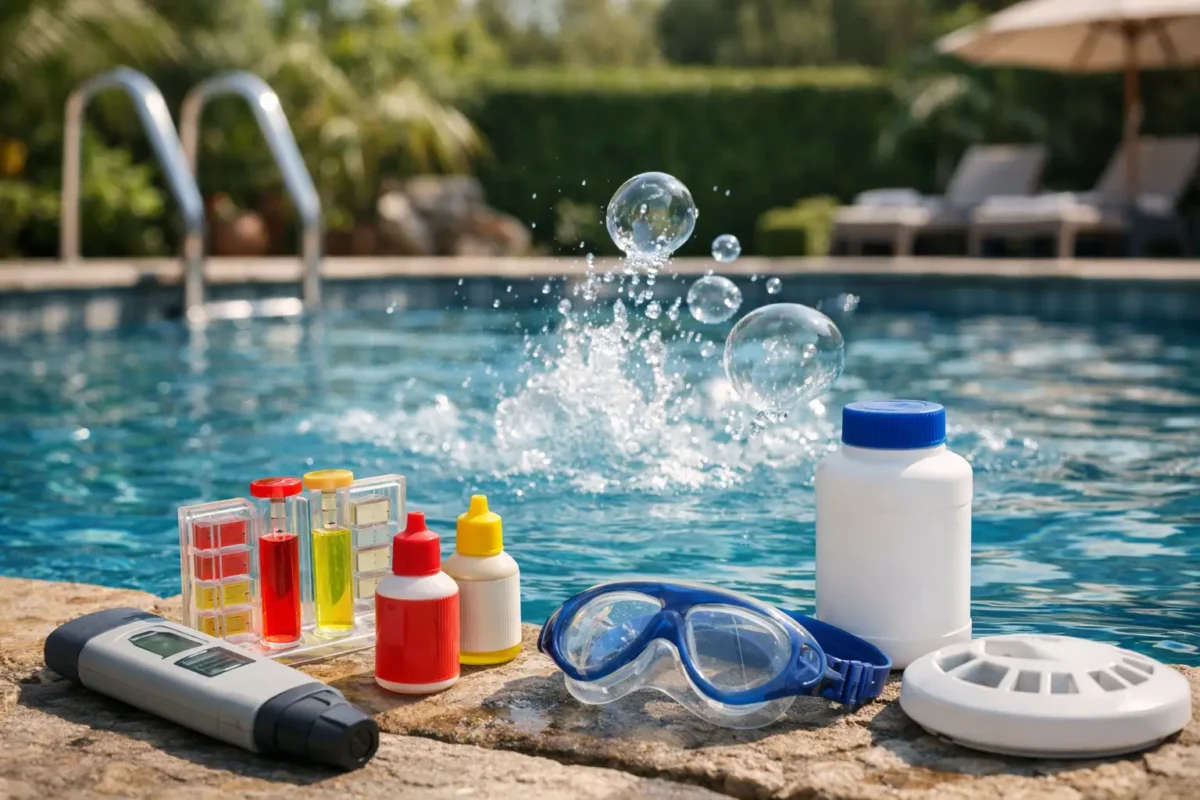
The most reliable approach is to correct the cause of the rise, then establish a routine that matches the pool’s design and use. Start by testing with a dependable, properly calibrated testing system. Test strips can provide a quick indication, but a quality drop-test kit, photometer, or automated controller offers better precision for premium residential and commercial pools.
First, verify the pH reading and test total alkalinity before adding any corrective chemical. If alkalinity is high, reduce it gradually under professional guidance. This normally involves controlled acid treatment combined with circulation and, in some cases, purposeful aeration to bring pH back into the operating range while lowering alkalinity over time. Adding a large amount of acid at once can create an unstable swing and may damage finishes or equipment.
Next, inspect the pool’s operating conditions. Check whether fountains, spillovers, jets, or air blowers are running longer than necessary. These features may be essential to the visual design, especially at hospitality and luxury residential sites, but their schedules can often be optimized. Running decorative features only during selected presentation hours may reduce pH drift while maintaining the intended visual impact.
For saltwater pools, inspect the generator output, salt concentration, cell condition, and controller settings. A scaled or poorly maintained cell can affect system performance. The correct answer may be a lower alkalinity target, a revised production schedule, or automated pH control rather than frequent manual dosing.
Finally, test fill water periodically. If source water is high in alkalinity or calcium, every top-up changes the chemistry. A professional service team can recommend whether controlled dilution, treatment adjustments, or equipment upgrades are appropriate for the property.
When Automated pH Control Makes Sense
For a busy villa, a large residential development, hotel, health club, or commercial aquatic facility, manual testing alone may not offer the consistency required. Automated monitoring and dosing systems continuously measure water conditions and add the required correction in small, controlled quantities. This is particularly valuable where water features, salt chlorination, heat-cool pumps, or high bather loads create frequent chemical changes.
Automation has a clear trade-off: it requires quality equipment, professional installation, regular calibration, and routine inspection. However, when selected correctly, it can reduce chemical waste, protect high-value equipment, improve consistency, and give facility teams stronger control over water quality.
Aquatic Pools and Fountains supports premium pool environments with water-testing systems, disinfection equipment, chemical solutions, and technical service tailored to the installation. For properties where pH rises repeatedly, a full water-balance review is often more valuable than another round of temporary chemical correction.
A stable pool is not achieved by chasing one number on a test kit. It comes from matching the chemistry, circulation, equipment, water features, and maintenance schedule to the way the pool is actually used. Once the reason behind the pH rise is identified, the right adjustments can keep the water clear, comfortable, and ready to perform at the standard your property demands.