
A fountain can look exceptional in daylight and still fail to make an impression after sunset if its lighting connections are poorly protected. Fountain junction boxes provide the controlled, serviceable connection point that keeps underwater and landscape lighting systems operating safely, cleanly, and reliably. For luxury villas, hotels, residential communities, and commercial developments, this small component has a direct effect on performance, maintenance costs, and the long-term finish of the entire water feature.
Why Fountain Junction Boxes Matter
A fountain lighting system works in a demanding environment. Moisture, heat, chlorinated or chemically treated water, vibration from pumps, and routine cleaning all place pressure on electrical connections. A junction box is designed to house and protect cable connections between fountain lights, transformers, control equipment, and the incoming electrical supply.
The right box helps prevent moisture ingress, cable damage, loose terminations, and difficult troubleshooting. It also creates a defined access point for technicians, rather than leaving critical joins concealed within paving, planting areas, or inaccessible fountain structures.
For premium projects, visual quality and technical quality must work together. Lighting fixtures may be selected for their beam angle, color temperature, or RGB control capability, but their performance depends on the reliability of the connection system behind them. A high-specification light connected through an unsuitable enclosure is still a weak installation.
Selecting Fountain Junction Boxes for the Site
The correct specification depends on where the box will be installed, the voltage of the lighting circuit, the number of fixtures served, and the environmental exposure it will face. There is no single box that suits every fountain project.
Indoor, Outdoor, and Wet-Zone Placement
An indoor decorative fountain may require a different solution from a large outdoor water wall or a hotel entrance fountain. Boxes placed in dry service areas have less exposure than those installed near splash zones, below grade, inside fountain basins, or within landscape areas subject to irrigation.
For exterior installations in Dubai and across the UAE, sun exposure and high ambient temperatures deserve particular attention. Materials should resist UV degradation and maintain their integrity through demanding weather conditions. Where a box is likely to encounter water directly, its ingress-protection rating, cover seal, cable glands, and mounting position all need to be evaluated as one system.
A waterproof enclosure alone does not guarantee a waterproof connection. Incorrect cable entry, an improperly tightened gland, or a damaged gasket can compromise the entire assembly. Professional installation matters as much as the box itself.
Low-Voltage Lighting Requirements
Many fountain lighting systems use low-voltage fixtures because they are well suited to wet environments and modern LED technology. However, low voltage does not remove the need for careful electrical design. Cable sizing, transformer capacity, voltage drop, load distribution, and connection quality remain essential.
A junction box should have sufficient internal space for the required terminal blocks, cable bends, and service access. Overcrowding a small enclosure can strain cables and make future maintenance unnecessarily difficult. On projects with multiple lights, color-changing controls, or separate fountain zones, a larger or purpose-configured box can offer a much better long-term result.
Material Quality and Corrosion Resistance
Not all enclosures are intended for aquatic use. Plastic, thermoplastic, stainless steel, and specialized composite housings all have appropriate applications, but the material must match the environment.
In and around fountains, corrosion resistance is a major consideration. Chemical treatment, humidity, salt exposure near coastal properties, and metal-to-metal contact can all affect component life. Premium installations should use materials and fittings selected for their expected exposure, not simply the lowest initial purchase price.
The same principle applies to screws, cable glands, terminals, and seals. A junction box is only as dependable as its weakest component.
Design Details That Protect the Installation
A properly selected junction box should support both safe operation and efficient service. The best results come from considering access, cable routing, drainage, and equipment coordination before finishes are completed.
Accessible Does Not Mean Visible
Technicians need practical access to inspect wiring, test circuits, and replace components. Yet access points should not detract from the architecture, paving pattern, or landscape design. Experienced fountain planning finds the right balance: boxes are located where they remain reachable without becoming an unwanted visual feature.
For example, a box may be installed in a concealed service chamber, an adjacent equipment room, or a landscaped area with a suitable access cover. Positioning it correctly from the start avoids the costly need to lift stonework, drain the fountain, or disturb finished landscaping later.
Cable Entry and Strain Relief
Cable entry points deserve close attention. Each cable should enter through an appropriate gland or sealing system sized for that cable diameter. This helps maintain the enclosure rating while providing strain relief, so tension is not transferred to the electrical termination.
Cables should also be routed with enough length for future servicing. Excess cable should be managed neatly rather than sharply bent or compressed. Clear labeling is equally valuable, particularly in commercial fountains with multiple lighting zones, pumps, nozzles, and automation controls.
Separation From High-Voltage Equipment
Fountain systems often include several electrical components: circulation pumps, filtration equipment, heaters, controllers, dosing systems, and lighting transformers. These circuits should be planned with proper separation and protection according to the applicable project requirements and local electrical standards.
Lighting junction boxes should not become catch-all enclosures for unrelated wiring. Keeping circuits organized simplifies diagnostics and reduces the risk of errors during maintenance. It also gives facility teams a clearer understanding of how the feature is arranged.
Common Mistakes That Create Expensive Repairs
Water features are frequently completed under tight construction schedules, when electrical details can be treated as a minor finishing item. That approach often leads to preventable failures.
One common issue is selecting a general-purpose electrical box without confirming its suitability for wet or outdoor use. Another is locating the box in a position that becomes inaccessible once tile, stone cladding, decking, or landscape finishes are installed. Poor-quality cable joints, undersized enclosures, missing labels, and incompatible metals are also recurring causes of callouts.
There is also a tendency to focus on the lighting fixture while overlooking the transformer and connection network. If the transformer is overloaded, cable runs are too long, or voltage drop is not addressed, LED lights can appear uneven, dim, or unstable. Replacing the fixture may not solve the underlying issue.
For commercial properties, these problems carry a larger cost. A fountain at a hotel entrance, in a retail destination, or within a residential tower is part of the property experience. Unreliable lighting and repeated shutdowns affect presentation as well as maintenance budgets.
Professional Installation and Commissioning
A premium fountain requires coordinated work between electrical, mechanical, waterproofing, and finishing teams. Junction box placement should be confirmed before final construction stages, with cable paths and equipment locations documented clearly.
During installation, technicians should inspect seals, verify terminations, confirm that glands are tightened correctly, and ensure that the enclosure cover closes securely. After the system is energized, testing should include lighting operation, control response, circuit protection, and access for future servicing.
For complex fountains, commissioning should also verify how lighting responds alongside pumps and programmed water effects. A color-changing feature, for instance, may require control wiring or specific communication connections that must be protected and organized with the same care as the power supply.
Aquatic Pools and Fountains supports clients with premium fountain equipment, technical guidance, installation support, and maintenance planning for residential and commercial projects. Selecting the right connection components early helps protect the visual investment made in high-quality lights, nozzles, finishes, and controls.
Maintenance That Extends Service Life
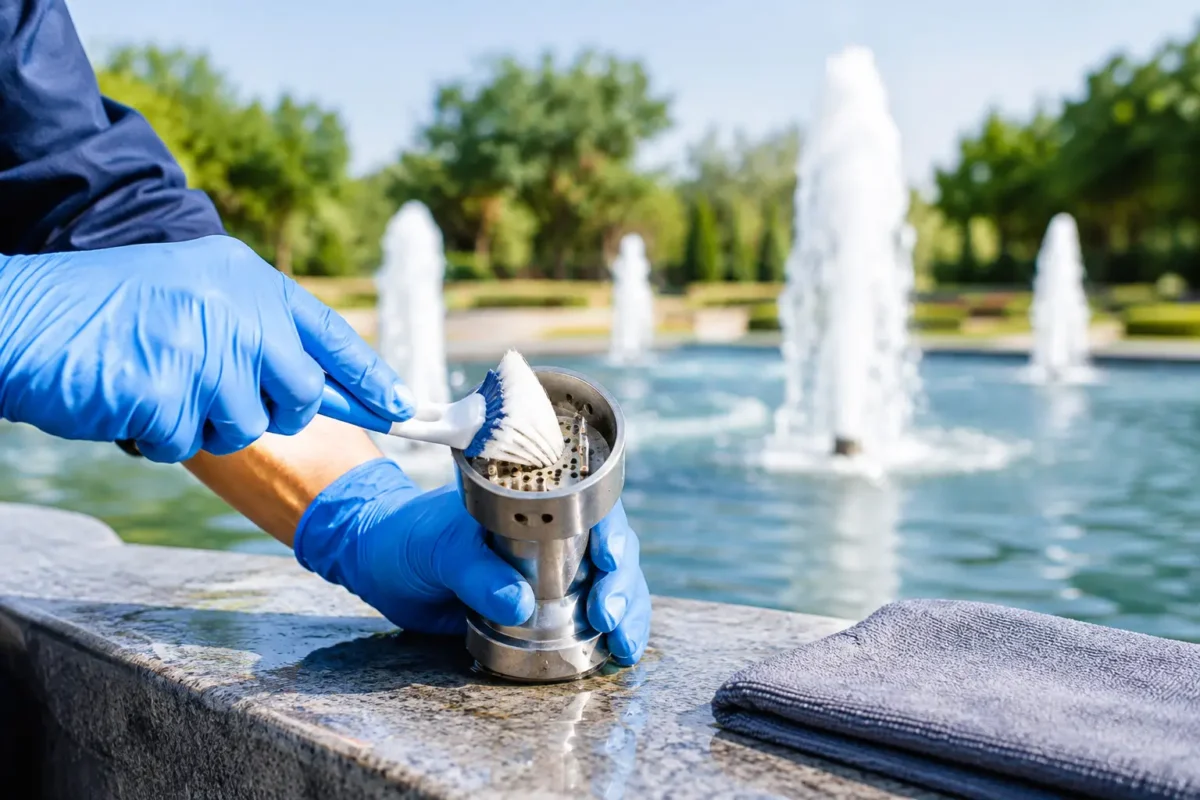
Junction boxes should be included in scheduled fountain maintenance, not ignored until a fault occurs. Periodic inspections can identify cracked covers, aging gaskets, corrosion, loose glands, condensation, or damaged cables before they become a larger electrical issue.
The inspection frequency depends on the location and operating conditions. An exposed outdoor feature near the coast may need more frequent attention than a protected indoor installation. Fountains with heavy public use, frequent chemical treatment, or complex lighting controls also benefit from regular professional checks.
A clean, dry, well-labeled connection point makes maintenance faster and more accurate. That is especially valuable when a property needs to restore its fountain quickly before an event, guest arrival, handover inspection, or peak operating period.
The most effective time to specify fountain junction boxes is before the fountain is finished, when access, routing, and enclosure protection can be designed properly. Treat them as a core part of the electrical system, and the result is a water feature that continues to look refined and perform confidently long after installation.