A hotel pool can lose guest confidence long before the water looks visibly unclean. A slight chemical odor, cloudy edges, a noisy pump room, or uneven circulation signals that standards are slipping. This commercial pool maintenance guide is designed for facility managers, hospitality operators, developers, and property owners who need their aquatic assets to perform safely, efficiently, and at a premium level in the UAE.
Commercial pools carry a heavier operational burden than private pools. High bather loads, intense sun, airborne dust, elevated water temperatures, and long operating hours all place pressure on water balance and equipment. The correct approach is not occasional cleaning. It is a disciplined maintenance program supported by quality pumps, filters, disinfection systems, testing equipment, and trained technical oversight.
Start With Water Quality, Not Appearances
Clear water is only one measure of a well-maintained pool. Water can appear clean while its sanitizer level, pH, alkalinity, or calcium balance is outside the acceptable operating range. In a commercial environment, that creates avoidable risks for swimmers, surfaces, and equipment.
Testing should be performed at defined intervals throughout the day, particularly for pools with heavy guest or resident use. At a minimum, operators should monitor disinfectant residual, pH, total alkalinity, calcium hardness, cyanuric acid where applicable, total dissolved solids, and water temperature. Testing records should be documented, not treated as informal notes. A consistent log gives facility teams evidence of control and helps technicians identify recurring issues before they become expensive repairs.
The ideal chemical program depends on the pool type, bather load, filtration design, source water, and chosen disinfection method. Chlorine remains widely used because it is effective and familiar, while salt chlorination, UV systems, and ozone can reduce chloramine formation and improve the swimmer experience when correctly specified. These systems complement a complete sanitation program; they do not remove the need for measured chemical control.
Balance Protects the Entire Installation
Poor pH control is one of the most common causes of discomfort and premature equipment wear. Water that is too acidic may corrode metal components, damage finishes, and shorten the life of heaters and pumps. Water that is too alkaline can cause scaling, cloudy water, and reduced sanitizer effectiveness.
In Dubai and across the UAE, high temperatures and mineral content in source water make balance especially significant. Calcium scale can form on tile lines, heat-exchange surfaces, salt cells, and internal pipework. Treating scale after it develops is more disruptive than preventing it through regular testing, appropriate dosing, and professionally selected chemical products.
Build a Commercial Pool Maintenance Schedule
A commercial pool needs a schedule that reflects how it is actually used. A residential tower pool open for limited hours requires a different service level than a resort pool operating from morning through late evening. Still, every commercial site should separate daily operating tasks from weekly inspections and planned preventive maintenance.
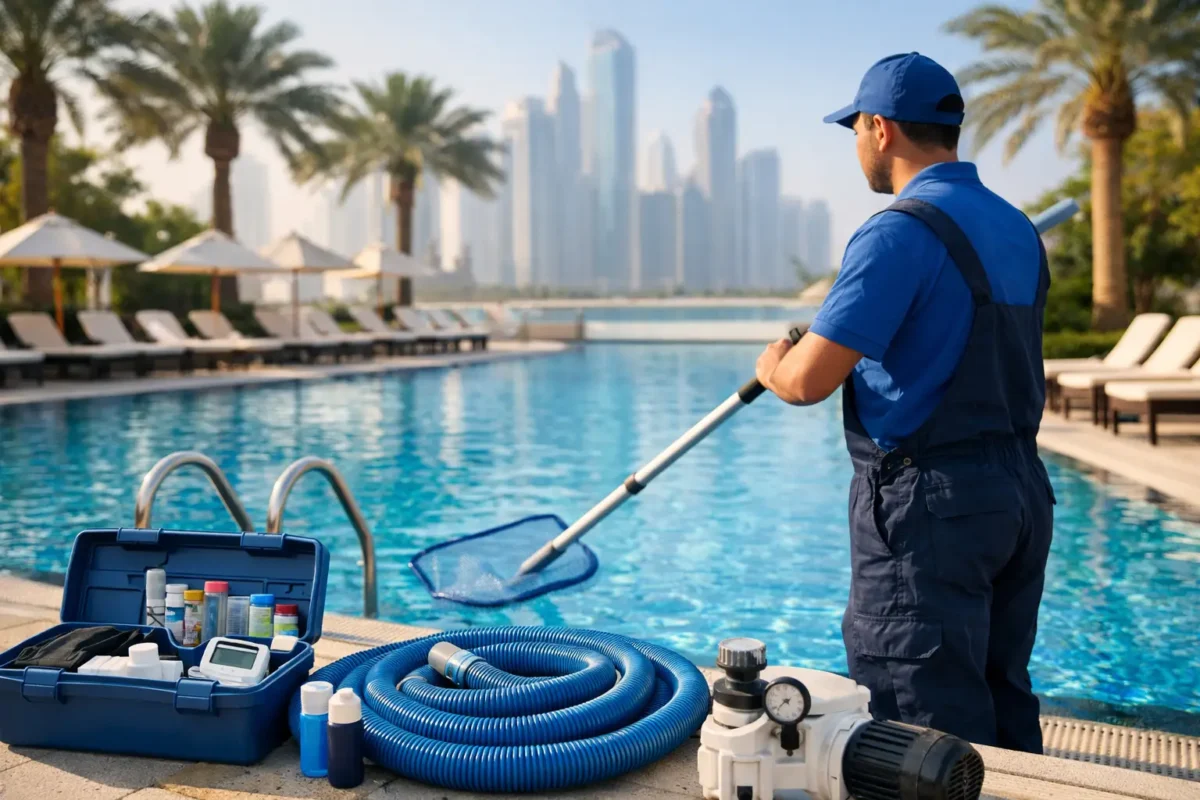
Daily work should include visual water checks, testing and adjustment, skimming, vacuuming as needed, emptying skimmer and pump baskets, checking water level, and inspecting deck conditions. Staff should also listen for unusual pump noise, watch for leaks, and confirm that safety equipment is present and accessible.
Weekly attention should move deeper into the system. This includes inspecting filter pressure, backwashing or cleaning filters according to manufacturer guidance, brushing walls and steps, checking return fittings, examining grates and covers, and reviewing chemical consumption. Sudden increases in chemical demand often point to a circulation, contamination, or water-balance problem.
Monthly and quarterly visits should focus on planned technical inspections. Pumps, valves, electrical connections, timers, control panels, heat-cool pumps, automatic dosing systems, lights, and disinfection equipment all require professional review. A premium installation deserves more than reactive repair after a failure occurs.
Keep Circulation and Filtration at Full Performance
Water treatment begins in the plant room. If the circulation system is undersized, poorly configured, clogged, or running for too few hours, chemical treatment cannot compensate for it. Every part of the pool should receive properly filtered and disinfected water, with no stagnant areas around steps, corners, spas, or shallow ledges.
Facility teams should understand the pool’s turnover requirement – the time needed to circulate the full water volume through the filtration system. The correct runtime depends on pool volume, occupancy, local requirements, and hydraulic design. Reducing pump hours to save energy may look attractive on a utility report, but it can lead to cloudiness, algae growth, extra chemical use, and guest complaints. Variable-speed pumps can provide an efficient alternative when selected and programmed around the actual hydraulic demand.
Filter pressure is a useful operational indicator, but it should not be read in isolation. High pressure may signal that the filter needs cleaning, while unusually low pressure can indicate a blockage, air leak, or pump issue. Sand, glass media, cartridge, and diatomaceous earth filters each have distinct cleaning and service needs. The filter manufacturer’s operating parameters should guide decisions rather than a fixed calendar routine.
Do Not Neglect the Pump Room
A clean, organized pump room makes maintenance safer and faster. Chemical containers should be correctly stored and clearly labeled. Pipework, valves, dosing lines, and electrical panels should remain accessible. Water leaks, corrosion, vibration, and poor ventilation should be addressed immediately.
The pump room also benefits from clear labeling. When isolation valves, suction lines, return lines, and equipment controls are identified, staff can respond more confidently during an incident and technicians can complete service work without unnecessary downtime.
Protect Surfaces, Decks, and Guest-Facing Details
Commercial pool maintenance is not limited to the water. Guests judge the entire environment: tile lines, coping, drainage channels, handrails, ladders, lights, grilles, and surrounding deck surfaces. A technically sound pool can still undermine a luxury property if finishes look stained, worn, or poorly maintained.
Brush pool walls and waterlines regularly to prevent biofilm, scale, and cosmetic buildup. Use cleaning products suited to the finish. Aggressive chemicals or unsuitable tools can damage mosaics, natural stone, grouting, stainless steel, and coated fixtures. The right method depends on whether the pool has porcelain tile, glass mosaic, plaster, exposed aggregate, or a specialty finish.
Drain covers, grates, and handrails need close inspection because they directly affect safety. Loose fittings, sharp edges, cracked covers, and slippery deck areas should trigger immediate corrective action. Lighting should also be checked for water ingress, failed seals, and inconsistent illumination. For hotels and high-visibility developments, well-maintained LED lighting supports both safety and the visual impact of the property after dark.
Plan for Heat, Dust, and Heavy Usage
UAE conditions require a maintenance plan that is responsive, not static. Fine dust can enter the pool and place additional load on skimmers and filters. Intense sunlight accelerates chlorine consumption. Warm water encourages algae growth and can make water balance more difficult to control.
During periods of high occupancy, increase testing frequency and inspect baskets, filters, and water level more often. After events, storms, landscaping work, or unusually high bather loads, assess the pool before returning to normal operation. A timely shock treatment, extended filtration cycle, or filter clean may prevent a larger water-quality issue the following day.
Seasonality still matters, even in a warm climate. Outdoor pools may see changing use patterns, while temperature-controlled pools and spas need particular attention to heating, cooling, circulation, and evaporation. The most efficient plan adapts to operating data rather than relying on assumptions.
Use Professionals for Technical and Compliance-Critical Work
On-site teams can perform routine checks effectively when trained and equipped, but commercial assets also require specialist support. Electrical faults, pump and filter repairs, automation programming, leak detection, media replacement, chemical-system calibration, and major water corrections should be handled by qualified pool technicians.
This is where a full-scope service partner adds value. The right provider can supply compatible replacement parts, diagnose the underlying cause of recurring failures, and recommend upgrades that improve reliability instead of repeatedly repairing an aging component. Aquatic Pools and Fountains supports commercial clients with premium equipment, technical guidance, and maintenance solutions selected for demanding aquatic environments.
A preventive service agreement is often more cost-effective than emergency callouts. It creates predictable inspection intervals, reduces unplanned closures, and helps protect capital equipment such as pumps, filters, heat-cool pumps, automatic dosing units, and disinfection systems. For facilities with multiple pools, fountains, or water features, centralized maintenance planning also improves consistency across the portfolio.
A Commercial Pool Maintenance Guide for Better Asset Value
The strongest commercial pool maintenance programs treat the pool as a valuable operating asset, not a decorative amenity that only needs attention when something goes wrong. Consistent testing, disciplined circulation, clean finishes, reliable equipment, and documented preventive service protect guest safety and preserve the polished appearance expected from premium properties.
When maintenance decisions are based on water data, equipment condition, and actual usage, facility teams can avoid many of the failures that lead to downtime. The result is a pool environment that remains inviting for guests, dependable for operators, and worthy of the property it represents.