
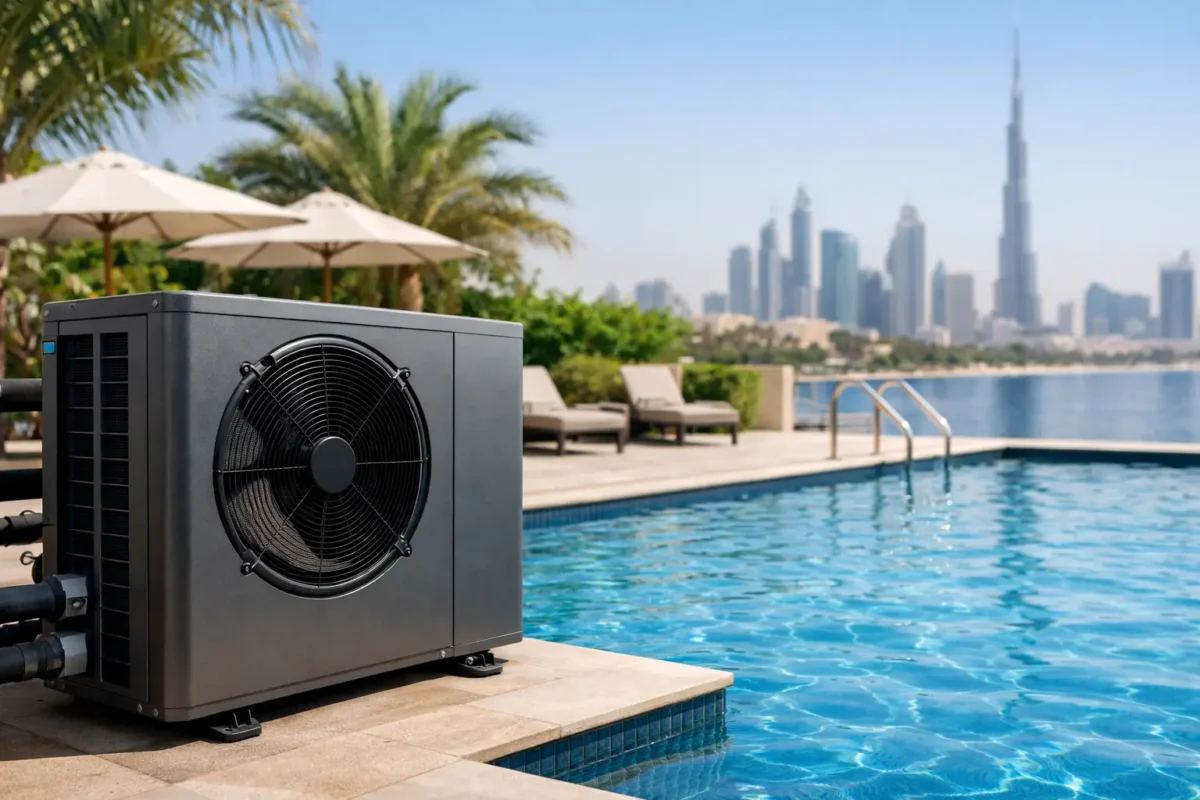
A pool in Dubai can become too warm to enjoy long before summer reaches its peak. At the same time, cooler winter evenings can make an otherwise beautiful pool feel underused. A heat cool pump gives property owners control over both conditions, maintaining a more inviting water temperature across a much longer portion of the year.
For luxury villas, hotels, residential developments, and high-traffic commercial facilities, temperature control is not a minor upgrade. It protects the value of the pool environment, supports guest comfort, and helps ensure an aquatic installation performs to premium expectations every season.
What a Heat Cool Pump Does for a Pool
A heat cool pump is designed to heat or cool pool water by transferring heat rather than relying solely on direct electric heating. In heating mode, it captures available warmth from the surrounding air and transfers it into the pool water. In cooling mode, it removes excess heat from the water, helping prevent the pool from becoming uncomfortably warm during extended periods of intense sun and high ambient temperatures.
This dual-purpose operation is particularly valuable in the UAE. Conventional pool heaters address cooler weather, but they do not solve the challenge of overheated water in summer. A properly selected heat-cool unit offers year-round temperature management from one piece of equipment.
The result is a pool that remains more consistent, comfortable, and usable. For hospitality properties, this can improve the guest experience. For villa owners, it creates more opportunities to enjoy the pool at the time of day that suits the household. For developers and facility managers, it supports a more refined amenity standard.
Why Cooling Capacity Matters in Dubai
Pool heating is familiar to many buyers, but cooling performance deserves equal attention in a Gulf climate. Water absorbs heat continuously from sunlight, hot air, surrounding paving, and warm winds. Shallow pools, infinity pools, rooftop pools, and pools with large exposed surface areas can gain heat especially quickly.
When water temperature rises too high, swimming can feel less refreshing and more tiring. High water temperatures may also increase evaporation and place additional pressure on water chemistry management. While a heat-cool pump is not a substitute for correct circulation, filtration, and chemical treatment, it can help create more stable operating conditions for the entire pool system.
Cooling requirements vary significantly between properties. A shaded indoor pool may need little or no cooling support, while an exposed villa pool in Dubai may require a system selected specifically for high outdoor temperatures. The right answer depends on the pool’s size, location, operating schedule, and desired set temperature.
Selecting the Right Heat Cool Pump Capacity
The most common mistake is choosing a unit based only on pool volume. Pool volume is essential, but it is only one part of accurate sizing. Premium results require a complete assessment of the installation and how the pool will actually be used.
A technical evaluation should consider the water volume, surface area, depth profile, exposure to direct sun, wind conditions, surrounding materials, and whether a pool cover will be used. The expected operating hours also matter. A private pool used mainly on weekends has different recovery requirements than a hotel pool expected to remain ready every day.
Consider the Pool’s Real Operating Conditions
A larger capacity is not automatically the best investment. An oversized system can increase upfront cost and may cycle inefficiently under certain conditions. An undersized system, however, can run for extended periods without reaching the required temperature, increasing energy use and frustrating users.
The best approach is to select capacity based on site conditions and performance expectations. For example, a villa owner may prioritize quiet operation and gradual temperature maintenance. A hotel may prioritize fast recovery, continuous demand, and compatibility with a building management strategy. Commercial pools may also need a more resilient equipment configuration to support long operating hours and heavy bather loads.
Match the Unit to the Circulation System
A heat-cool pump must work correctly with the pool’s pump, filter, pipework, valves, and flow rate. Inadequate water flow can trigger operational faults or reduce heat-transfer efficiency. Excessive flow may also affect performance and equipment longevity.
This is why professional installation is more than connecting inlet and outlet pipes. The equipment layout must allow proper bypass control, service access, drainage, electrical protection, and stable circulation. For a high-value pool installation, the heat-cool unit should be planned as part of the complete mechanical system rather than treated as an isolated add-on.
Features That Define a Premium Pool Unit
Not all pool temperature-control systems are built for demanding UAE conditions. Quality equipment should combine efficient performance with components designed to withstand heat, humidity, outdoor exposure, and regular use.
Inverter technology is one of the most valuable features to consider. Instead of operating only at full output, an inverter-driven unit can adjust its output according to demand. This can improve temperature stability, reduce noise during maintenance operation, and help control energy consumption once the pool reaches the desired temperature.
A corrosion-resistant heat exchanger is equally important, particularly for pools using salt chlorination or operating with demanding water conditions. The cabinet, fan components, internal controls, and electrical connections should also be selected for outdoor durability. A premium unit should offer clear controls, reliable safety protections, and a design that technicians can access for routine maintenance.
Noise is another practical consideration. Equipment rooms and remote plant areas reduce noise concerns, but many villa pools are close to outdoor seating, bedrooms, or neighboring properties. Selecting a quiet model and locating it carefully can preserve the calm atmosphere expected from a luxury pool environment.
Installation Decisions That Affect Performance
Even the best heat cool pump will not perform at its best if it is installed in the wrong location. The unit needs sufficient airflow around the fan and discharge area. Restricting airflow with walls, dense landscaping, decorative screens, or tight equipment enclosures can reduce efficiency and cause the system to work harder.
The equipment base must be level, stable, and capable of managing drainage. During cooling operation, condensation is normal, and water must be directed appropriately. Electrical installation should be completed by qualified professionals with the necessary protection and isolation measures for a pool environment.
For new-build villas, hotels, and residential developments, temperature control should be included early in the equipment-room design. This allows enough space for pipework, servicing, ventilation, and future access. Retrofitting is possible, but early planning generally produces a cleaner installation and a more dependable result.
Efficient Operation Is a System-Wide Practice
A heat-cool pump works most efficiently when the pool itself is managed correctly. A quality pool cover can reduce heat gain, heat loss, evaporation, and the amount of time the unit needs to operate. Good circulation ensures water passes through the system at the correct rate, while balanced chemistry protects equipment and supports safe swimming conditions.
Setpoints should be realistic. Trying to maintain very cold water during the hottest part of summer may require substantial energy, especially for an exposed pool. A modest reduction from the naturally elevated water temperature can often make a significant difference to swimmer comfort without creating unnecessary operating costs.
Maintenance should include checking water flow, cleaning the surrounding area to keep airflow clear, inspecting electrical connections, and confirming that the system is operating within its intended parameters. Professional servicing also helps identify early signs of scale, corrosion, sensor issues, or circulation problems before they affect performance.
A Better Standard for Year-Round Pool Comfort
A temperature-controlled pool feels considered. It reflects the same attention to detail as premium lighting, efficient filtration, elegant finishes, and well-designed water features. For properties where the pool is a central lifestyle or hospitality asset, it is an investment in usability rather than a seasonal convenience.
Aquatic Pools and Fountains supports homeowners, developers, and commercial operators with quality pool equipment, technical selection, professional installation, and ongoing maintenance guidance. The right solution begins with understanding the site, the pool system, and the comfort standard the property is expected to deliver.
When selecting a heat-cool pump, prioritize correct sizing, durable components, expert installation, and service support that remains available after commissioning. Those decisions are what turn temperature control into dependable comfort throughout the year.