
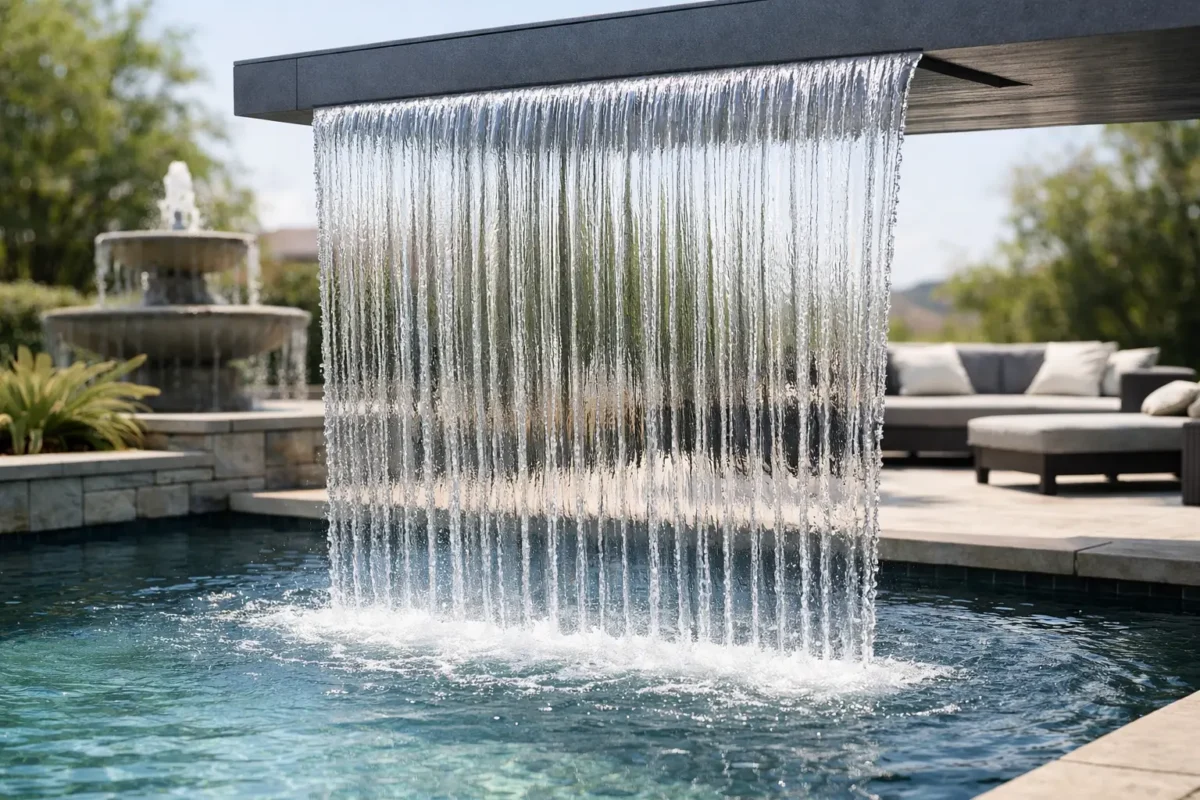
A waterfall curtain changes the character of a pool deck, entrance feature, courtyard, or hotel lobby the moment it starts flowing. Unlike a conventional fountain jet, a waterfall curtain creates a continuous sheet or closely spaced strands of water that can frame an architectural wall, fall into a pool, or become the centerpiece of a dedicated fountain. For villas, hospitality spaces, and high-visibility commercial properties, it delivers movement, sound, and a refined visual signature without requiring an oversized footprint.
The result, however, depends on far more than selecting an attractive water feature. Flow rate, outlet design, basin depth, pump capacity, drainage, finish materials, and lighting all determine whether the installation looks precise and elegant or uneven and difficult to maintain. A premium waterfall curtain should be specified as part of a complete water system, not treated as a decorative accessory added at the end of construction.
What Defines a Premium Waterfall Curtain?
A waterfall curtain is produced when water is distributed evenly through a purpose-built spillway, weir, or multi-nozzle outlet. The water then descends in a controlled plane into a receiving basin, pool, channel, or drainage trough. Depending on the design, the effect may be a clear glass-like sheet, a fuller cascade, or a series of fine illuminated streams.
For modern villas, the feature is often installed along a boundary wall, beneath a pergola, at the edge of an infinity pool, or between indoor and outdoor living areas. In hotels, residential towers, restaurants, and corporate developments, it can establish a memorable arrival experience while masking background noise from roads, plant rooms, or neighboring activity.
The cleanest results come from consistent water distribution. A properly engineered outlet creates an even fall across its full width, with no dry areas, excessive splashing, or irregular breaks in the water sheet. This is where product quality and technical installation matter most. The visible water is only the final expression of the pumps, piping, leveling, filtration, and controls behind it.
Selecting the Right Waterfall Curtain Style
The best design starts with the intended visual effect and the conditions around the feature. A wide waterfall blade can create a dramatic architectural statement over a pool wall, while a narrow curtain may be better suited to an intimate courtyard or spa zone. A feature designed for a quiet indoor lobby also requires a different approach from one positioned beside an active family pool.
Sheet waterfall or rain curtain
A sheet waterfall uses a linear outlet to form a broad, continuous fall. It is particularly effective against stone, porcelain, textured tile, or a dark feature wall because the contrast makes the water more visible. This style creates a stronger visual mass and can produce a more pronounced water sound, making it well suited to outdoor leisure areas and commercial focal points.
A rain curtain uses multiple closely spaced nozzles or fine outlets to produce individual streams. It feels lighter and more contemporary, especially when integrated into a ceiling, canopy, or freestanding frame. With LED lighting, each stream can be defined clearly after dark. The trade-off is that rain curtains demand exact alignment and regular attention to nozzle cleanliness to preserve a uniform pattern.
Pool-integrated or standalone installation
When a waterfall drops directly into a swimming pool, it can become part of the overall pool circulation design. This can reduce the need for a separate catch basin, but the fall height and splash zone must be carefully controlled. Excessive aeration may affect water balance, increase evaporation, and make the pool area less comfortable when wind is present.
A standalone fountain curtain offers more freedom in placement and operation. It can run on a dedicated pump and filtration line, allowing facility teams to control it separately from the pool. This arrangement is often preferred for hotel entrances, residential lobbies, and commercial landscapes where the decorative feature needs its own maintenance schedule and operating hours.
Engineering the Water Flow Behind the Visual Effect
An elegant curtain begins with hydraulic calculations. The pump must provide sufficient flow at the required operating pressure after accounting for pipe length, elevation, bends, valves, filters, and the outlet itself. An undersized pump produces a weak, broken fall. An oversized pump can cause excessive splash, noise, water loss, and unnecessary energy consumption.
The width of the spillway, desired thickness of the water sheet, and fall height should be assessed together. A short waterfall can use a gentler flow and still look substantial. A taller fall may require a stronger, more stable sheet, yet it also needs a larger receiving area to contain splash. In exposed outdoor locations across Dubai and the UAE, prevailing wind direction is especially relevant. Water that looks controlled during testing can drift significantly under real operating conditions.
Proper leveling is equally critical. Even a high-quality waterfall blade will appear uneven if it is installed out of level by a small margin. The support structure must also remain stable through temperature changes, building movement, and the normal vibration created by water circulation equipment.
For premium projects, variable-speed pumps and automated controls are valuable additions. They allow the feature to operate at a lower, quieter flow during the day and increase visual impact for evening events or guest arrival periods. Timers, remote controls, and integration with broader pool automation can improve efficiency without compromising presentation.
Materials That Withstand Demanding Conditions
Waterfall outlets, fittings, and visible trim must be selected for both appearance and long-term exposure. Marine-grade stainless steel is a strong choice for many luxury installations because it offers a clean finish and good corrosion resistance. Its performance still depends on water chemistry, the surrounding environment, and regular cleaning. Coastal properties or features exposed to airborne salt require particularly careful material selection and maintenance planning.
Acrylic components can be effective where a transparent, contemporary visual is desired, while high-quality PVC and engineered plastics are often used in concealed hydraulic sections. Natural stone, porcelain tile, glass mosaic, and composite cladding can all complement the falling water, but the finish needs to be chosen with its wet appearance in mind. Some materials darken dramatically when saturated, and highly textured surfaces can increase splash.
The receiving basin should include reliable waterproofing, accessible drainage, and a finish that is safe around wet areas. Where guests or residents can approach the feature, slip resistance and safe edge detailing should be treated as core design requirements, not afterthoughts.
Lighting Makes the Feature Work After Sunset
A waterfall curtain is often most striking in the evening, provided the lighting is positioned correctly. Underwater LED fixtures in the basin can illuminate the water from below, while concealed linear lighting can define the outlet or the wall behind the fall. White light produces a crisp architectural effect; color-changing LEDs can support event settings, hospitality branding, or seasonal programming.
Light placement should avoid direct glare toward seating areas, entrances, or nearby apartments. It should also allow for service access. A beautiful lighting scheme quickly loses value if replacing a fixture requires dismantling finished stonework or draining an entire fountain.
Electrical equipment must be properly rated for wet environments and installed with the required protective systems. This is a specialist area where professional design and installation protect both the visual investment and the people using the space.
Maintenance Protects the Finish and Performance
A water curtain is a living system. As water evaporates, minerals become more concentrated; as dust and debris enter the feature, filters and outlets can become restricted. In the UAE’s hot climate, routine water treatment and inspection are essential for preserving clarity, protecting equipment, and preventing scale buildup on stainless steel or nozzles.
A practical maintenance program should include water testing, chemical balancing, filter cleaning, pump inspection, and periodic cleaning of the spillway or nozzle outlets. The exact frequency depends on whether the feature is indoors or outdoors, its operating hours, bather exposure, local dust conditions, and the size of its water volume. A feature connected to a busy pool will have different treatment demands from a low-use lobby fountain on a dedicated circuit.
Access is one of the strongest indicators of a well-planned installation. Pumps, valves, filters, control panels, and lighting connections should be reachable without damaging finishes or interrupting building operations. For commercial assets, this reduces downtime and protects the property’s presentation.
Why Professional Specification Matters
The most expensive waterfall curtain problems are rarely visible at the point of purchase. They appear later as uneven flow, corroded finishes, leaks behind cladding, noisy pumps, weak lighting, or difficult maintenance access. A complete specification addresses the feature outlet, circulation equipment, filtration, drainage, waterproofing, electrical controls, and service requirements as one coordinated system.
Aquatic Pools and Fountains supports premium residential and commercial projects with quality water-feature equipment, technical guidance, installation expertise, and ongoing maintenance support. This full-scope approach is particularly valuable when a waterfall feature must coordinate with existing pool systems, architectural finishes, or demanding operational standards.
A well-designed waterfall curtain should look effortless, but its performance is never accidental. Give the feature the right engineering, durable materials, and a service plan from the beginning, and it can remain a defining part of the property long after the first impression becomes everyday use.