
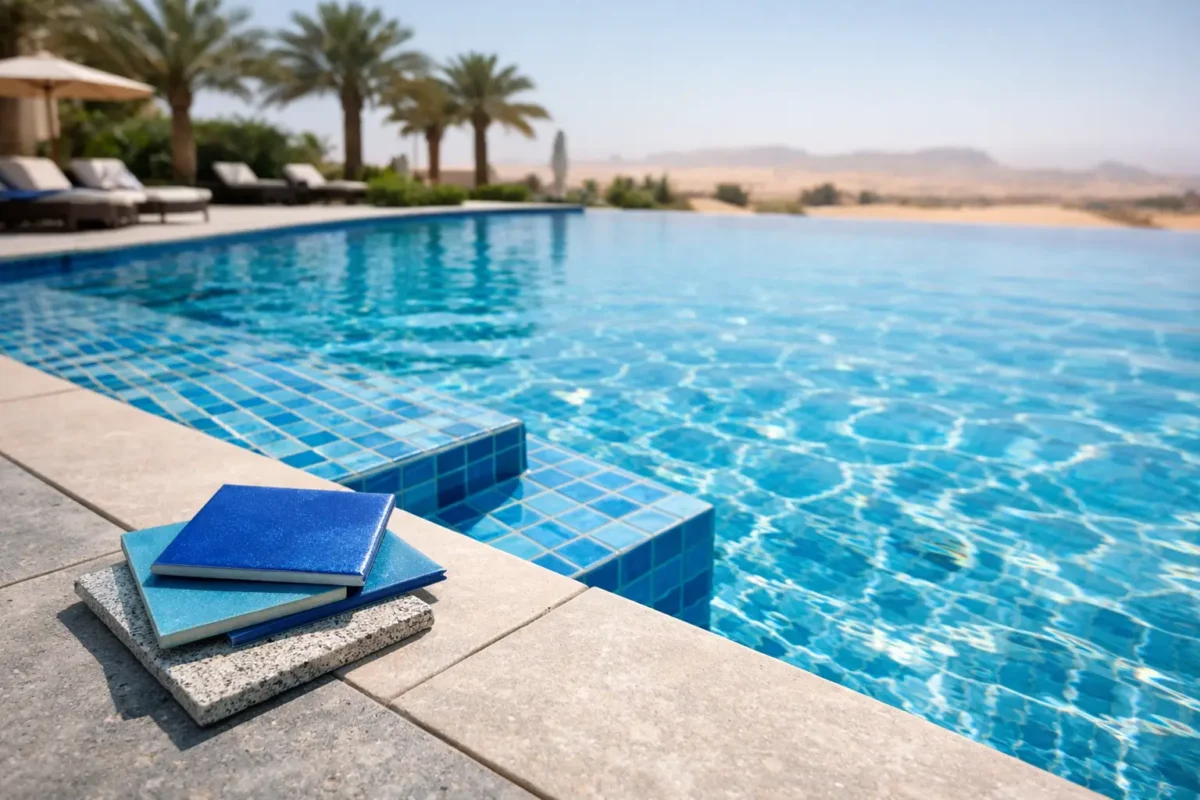
A pool finish can look exceptional on handover day and lose its appeal far too quickly when material selection, installation, or water chemistry is treated as an afterthought. In Dubai and across the UAE, swimming pool tiles must do more than create a striking blue surface. They must withstand intense sun, high water temperatures, cleaning chemicals, frequent use, and the demanding standards of premium residential and commercial properties.
For villa owners, developers, hotels, and facility managers, the right tile specification protects both the visual character and long-term value of the aquatic installation. The goal is not simply to choose a color. It is to select a system of tile, adhesive, grout, waterproofing, and maintenance practices that performs as one.
Why Swimming Pool Tiles Need a Higher Specification
A pool is a constantly wet, chemically treated environment. Tiles are exposed to water pressure, heat expansion, UV radiation, body oils, sunscreen, cleaning products, and repeated brushing. In an outdoor UAE installation, the surrounding deck and pool shell can also experience significant temperature changes between day and night.
That is why standard wall tiles are not a suitable substitute for purpose-selected pool tiles. A premium installation requires low water absorption, reliable bonding, chemical resistance, and a finish appropriate for the pool zone. The same project may require different tile types for the waterline, interior basin, steps, overflow channel, spa, and surrounding areas.
The consequences of poor selection are familiar: faded finishes, cracked grout, loose tiles, sharp edges, staining, or a waterline that becomes difficult to clean. Correcting these issues later can mean draining the pool, removing failed materials, and disrupting property operations. A well-planned tile package is the more efficient investment from the start.
Choosing the Right Pool Tile Material
The ideal material depends on the design intent, budget, usage level, and maintenance plan. Each option has a place in a professionally specified pool.
Porcelain Tiles for Strength and Consistency
Porcelain remains a leading choice for pool interiors, coping zones, and waterlines because it offers low porosity, dependable durability, and a broad range of colors and finishes. It can achieve a refined stone, concrete, or contemporary blue appearance while providing consistent sizing for clean installation lines.
For high-use pools in residential towers, hotels, and commercial facilities, porcelain is often a practical choice. Its performance is reliable when paired with pool-rated adhesive and grout, and it is generally easier to maintain than more delicate finishes. Always confirm that the selected porcelain is rated for submerged use, rather than assuming any exterior porcelain will perform inside a pool.
Glass Mosaic for Light, Depth, and Luxury
Glass mosaic is a signature finish for luxury villas, spas, infinity edges, fountains, and feature walls. Its reflective surface responds beautifully to natural light, underwater illumination, and moving water. A carefully chosen mosaic blend can make water appear brighter, deeper, calmer, or more dramatic depending on the project concept.
The trade-off is that glass mosaic demands greater installation precision. The substrate must be properly prepared, the adhesive must be compatible, and coverage behind each sheet needs close attention. Premium glass mosaics are highly durable, but successful performance depends on experienced workmanship and correct movement-joint planning.
Natural Stone for Selective Applications
Natural stone brings distinction to pool decks, coping, and water features, especially in properties designed around organic architecture or resort-inspired landscaping. However, not every stone is suitable for constant submersion or saltwater exposure. Some materials are porous, prone to discoloration, or vulnerable to chemical attack.
Stone works best when it is selected for the correct location, sealed where required, and maintained to the manufacturer’s recommendations. It is often more appropriate around a pool than throughout the submerged interior. A technical review before purchase avoids a visually appealing selection becoming a long-term maintenance concern.
Color and Finish Shape the Water Itself
Pool tiles do not merely decorate the shell. They influence how the water appears. A pale blue or white finish typically creates a fresh, bright look, particularly in smaller pools and shaded courtyards. Deep cobalt, navy, and charcoal tones can create a richer, more reflective effect, while mixed mosaics add movement and visual depth.
The final water color also depends on pool depth, sunlight, landscaping, interior lighting, and the color of the surrounding structure. A tile sample viewed indoors may look very different once installed beneath several feet of water. For high-value projects, reviewing samples outdoors and under proposed lighting conditions is a sound decision.
Finish is equally important. Glossy tiles maximize reflection and are popular for interiors and decorative water features. Matte or textured surfaces may be better suited to steps, ledges, beach entries, and wet areas where additional slip resistance is needed. Too much texture inside the main pool can make routine cleaning more difficult, so the finish should match the function of each surface.
The Installation Details That Protect the Finish
Even the best swimming pool tiles can fail when installed over an unsuitable substrate or with general-purpose materials. Tile selection and technical execution must be considered together.
The pool shell should be stable, properly cured, and prepared with a compatible waterproofing system before tiling begins. Any cracks, uneven areas, or moisture-related concerns should be addressed at this stage. Skipping preparation to accelerate the schedule may create expensive failures later.
Adhesive selection is critical. Pool applications require a flexible, water-resistant adhesive designed for submerged use and suitable for the selected tile material. Glass mosaic, large-format porcelain, and stone can each have different bonding requirements. Full adhesive coverage is essential, particularly on large tiles and pool steps, where voids can create weak points.
Grout is not a minor finishing detail. It affects water resistance, chemical resistance, appearance, and ease of cleaning. High-performance cementitious grout may suit many installations, while epoxy grout is often chosen for demanding commercial pools, spas, waterlines, and areas exposed to frequent chemical cleaning. Epoxy can offer excellent stain and chemical resistance, although it requires skilled application and careful cleaning during installation.
Movement joints also deserve attention. Pool structures and finishes expand and contract. Properly placed joints help manage this movement and reduce the risk of cracking or debonding. They should be included according to the project design and sealed with a compatible flexible material.
Waterline Tiles Deserve Special Attention
The waterline is one of the most visible and heavily maintained areas of any pool. It collects mineral deposits, oils, sunscreen residue, and airborne dust. A narrow band of suitable waterline tile makes cleaning easier while giving the pool a defined, finished appearance.
For properties in areas with hard water or frequent dust exposure, darker or patterned waterline tiles can conceal minor marks between cleaning cycles. That said, a darker tile may still show calcium buildup if water balance is neglected. The best solution is a combination of durable tile, consistent water testing, correct chemical dosing, and professional cleaning.
Matching Tile Choices to the Property Type
A private villa pool allows greater freedom to prioritize a distinctive finish, custom mosaic artwork, or a dramatic infinity-edge detail. The owner may accept more specialized maintenance in exchange for a particular visual effect.
A hotel, residential tower, school, or leisure facility has different priorities. These projects often need high-slip-resistance zones, easy cleaning, readily available replacement stock, and materials that stand up to heavy bather loads. Standardizing key tile lines can make future repairs faster and preserve visual consistency across a large site.
For fountain installations, tile requirements can be equally exacting. Constant water movement, exposure to sun, and decorative lighting place high demands on adhesion and finish quality. Mosaic and porcelain can both be excellent choices, provided the system is designed for the fountain’s operating conditions.
Maintenance Keeps a Premium Tile Finish Premium
Tile maintenance begins with balanced water. When pH, alkalinity, calcium hardness, and disinfectant levels are poorly controlled, deposits and surface dullness can develop faster. Excessively aggressive chemical treatment may also affect grout and sealants over time.
Routine brushing, skimming, filtration, and periodic waterline cleaning prevent buildup from becoming difficult to remove. Avoid abrasive tools or harsh acids unless they are appropriate for the specific tile and grout system. A professional pool service team can identify whether a mark is a removable surface deposit, a grout issue, or a more serious installation concern.
Aquatic Pools and Fountains supports premium aquatic projects with tile-related technical guidance alongside pool equipment, water treatment, lighting, maintenance, and installation support. This broader approach helps ensure the visible finish works reliably with the systems operating behind it.
The strongest pool tile choice is the one that suits the property’s architecture, use level, water-treatment approach, and maintenance capability. When those decisions are made together, the result is not just an attractive pool, but a finish that continues to represent the property at its best for years to come.