
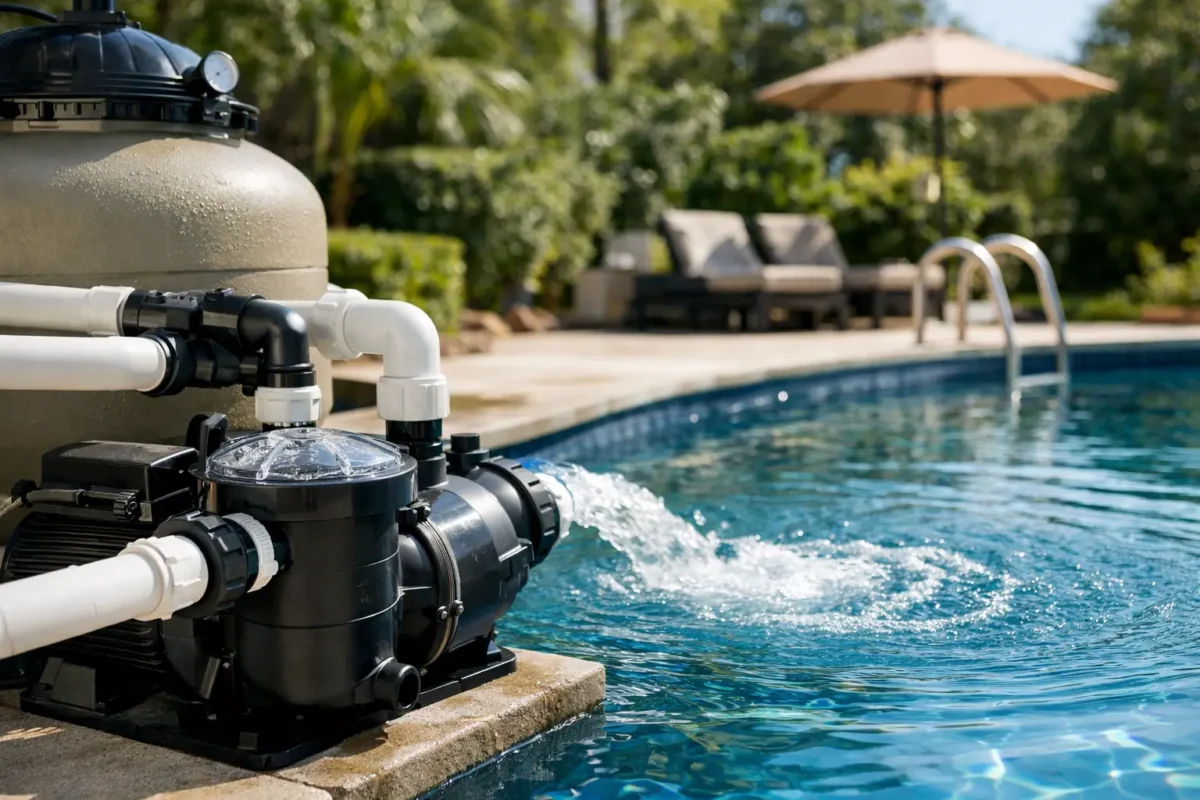
A pool can look immaculate at sunrise and still struggle with cloudy water, weak skimming, algae at the steps, or uneven chemical readings by afternoon. In Dubai’s high temperatures and frequent pool use, circulation equipment has little margin for error. Knowing how to upgrade pool circulation starts with treating the system as a complete hydraulic design, not simply replacing the pump with a larger model.
The best upgrades move water consistently through the skimmers, drains, filter, heater or heat-cool pump, sanitization equipment, and return inlets. Done correctly, they improve water clarity, reduce chemical waste, protect premium finishes, and make daily maintenance more predictable for villas, hotels, residential towers, and commercial facilities.
Start With a Hydraulic Assessment
Poor circulation is often blamed on an aging pump, but the real cause may be undersized plumbing, a restrictive filter, blocked baskets, incorrect valve positions, or return jets aimed in the wrong direction. Installing a powerful pump into a poorly designed system can increase energy use, create excessive filter pressure, and place unnecessary stress on pipework and equipment.
A professional assessment begins with the pool volume, desired turnover period, bather load, water features, equipment location, pipe diameter, and elevation changes. A large family pool with a spa, infinity edge, and deck jets has different hydraulic demands than a compact residential pool. A hotel pool with extended operating hours and heavier swimmer loads requires a more conservative, commercial-grade approach.
Technicians should also record the operating pressure at the filter, verify suction performance at skimmers and main drains, inspect for air leaks, and check whether water is reaching every area of the pool. Dead zones commonly develop on steps, benches, shallow ledges, and around decorative features. Those are the areas where debris settles and algae can gain a foothold.
Choose the Right Pump, Not the Biggest Pump
The circulation pump is the center of the system, but capacity alone is not a measure of quality. The correct pump must match the pool’s required flow rate against its total dynamic head, which accounts for pipe resistance, fittings, filters, heaters, chlorinators, and elevation. That calculation determines whether the pump can deliver the necessary water flow efficiently.
For many premium residential and commercial projects, a variable-speed pump is the most valuable circulation upgrade. It allows the pool to run at a lower speed for routine filtration and increase output when vacuuming, operating water features, heating, or managing high bather demand. Lower-speed operation can significantly reduce energy consumption and noise while maintaining steady filtration.
However, variable speed does not mean a pump should run slowly at all times. If the speed is too low, the skimmers may not pull surface debris effectively, sanitization devices may receive insufficient flow, and heat equipment may not operate within its specified range. Programming must be based on measured flow, equipment requirements, and the pool’s actual conditions.
Single-speed pumps can still be appropriate for selected systems, particularly where operating requirements are simple and the equipment has been correctly sized. Yet for properties seeking better control, quieter operation, and long-term efficiency, variable-speed technology is often the stronger investment.
Match Filtration Capacity to Water Demand
A pump can only circulate as effectively as the filter allows. If the filter is too small, clogged, or poorly maintained, resistance rises and flow falls. The result is often poor water quality paired with higher electricity use, because the pump works harder without delivering the circulation the pool needs.
Sand and glass-media filters remain a reliable choice for many residential and commercial pools because they offer durable performance and straightforward maintenance. Cartridge filters can provide finer filtration and reduce backwash water use, making them attractive where water conservation is a priority. The best selection depends on the pool’s size, local operating practices, available service access, and the owner’s maintenance preference.
When upgrading, check the filter’s maximum design flow rate against the selected pump. The pump should never force more water through the filter than it is built to handle. It is also wise to install accurate pressure gauges and establish a clean-filter baseline. Once the normal pressure rise is known, maintenance teams can clean or backwash based on performance rather than guesswork.
Improve Suction, Returns, and Pipework
Water must enter and leave the pool in a deliberate pattern. Skimmers should draw floating debris toward the collection points, while return inlets should create a broad, circular movement that carries contaminants toward the skimmers and drains. A return jet pointed straight across the surface may look active while leaving much of the pool poorly circulated.
Adjustable return fittings are a practical upgrade for correcting flow patterns. In many pools, directing the returns slightly downward and across the pool helps move lower-water debris without creating uncomfortable currents for swimmers. Exact positioning depends on the pool shape, depth transitions, steps, and the location of skimmers.
Pipe diameter is equally important. Narrow lines, excessive elbows, old valves, and long equipment runs create friction loss that limits flow. During a renovation or equipment-room upgrade, increasing pipe size in critical sections can improve hydraulic performance more effectively than increasing pump horsepower. This is particularly relevant for villas with equipment rooms positioned far from the pool or properties with multiple water features connected to the same system.
Main drains and suction outlets also require careful attention. They must be code-compliant, securely covered, and designed to reduce entrapment risk. Safety and hydraulic performance should always be addressed together, especially in hospitality and multi-residential environments.
Separate Water Features From Core Circulation When Needed
Sheer descents, fountains, spa spillways, waterfalls, and deck jets elevate the visual appeal of a property, but they can disrupt efficient filtration when all equipment shares one undersized pump. Features may demand high flow for a short period, while the pool itself benefits from lower, continuous circulation.
A dedicated feature pump or a properly designed secondary circuit can keep the filtration system stable while allowing the feature to perform at its intended visual standard. This approach also gives owners more control. The water feature can operate during entertaining hours or scheduled periods without forcing the main circulation pump to run at maximum speed.
For commercial landscapes and luxury villas, separating these functions usually delivers a cleaner equipment layout, easier maintenance, and more consistent water quality.
Add Controls That Protect Performance
Modern automation turns an equipment upgrade into a managed operating system. Timers, variable-speed controllers, flow sensors, remote monitoring, and automated valves can coordinate filtration, heating, lighting, sanitization, and water features with far greater precision than manual switching.
For example, the system can run a higher filtration speed during peak use, transition to an efficient maintenance speed overnight, and increase circulation automatically when heating equipment requires it. Alerts for abnormal pressure, low flow, or pump faults allow facility teams to respond before a minor issue affects water clarity or causes equipment damage.
Automation should support good maintenance, not replace it. Pump baskets still need cleaning, filters need scheduled service, and water chemistry must be tested and balanced. In warm climates, poor chemistry can quickly create scale, corrosion, or algae that restricts flow and shortens equipment life.
When an Upgrade Is Worth Prioritizing
Consider a circulation upgrade when the pool repeatedly develops cloudy water, the skimmers collect poorly, filter pressure rises quickly, operating costs are climbing, or different sections of the pool show uneven water quality. Persistent air bubbles at the returns, noisy pump operation, frequent chemical correction, and recurring algae are also signs that the system should be evaluated.
For older pools, the strongest result may come from combining a variable-speed pump, properly matched filter, upgraded valves and fittings, better return placement, and automation controls. For new construction, designing these elements together from the start prevents expensive corrections after finishes and landscaping are complete.
Aquatic Pools and Fountains can help property owners and project teams select premium circulation equipment, assess hydraulic requirements, and implement solutions suited to demanding residential and commercial environments. A properly designed circulation system protects more than water quality – it protects the comfort, appearance, and long-term value of the entire aquatic installation.
Before selecting any replacement equipment, request measured flow and pressure data from the existing system. Those figures turn a costly guess into a circulation upgrade built for dependable performance.