
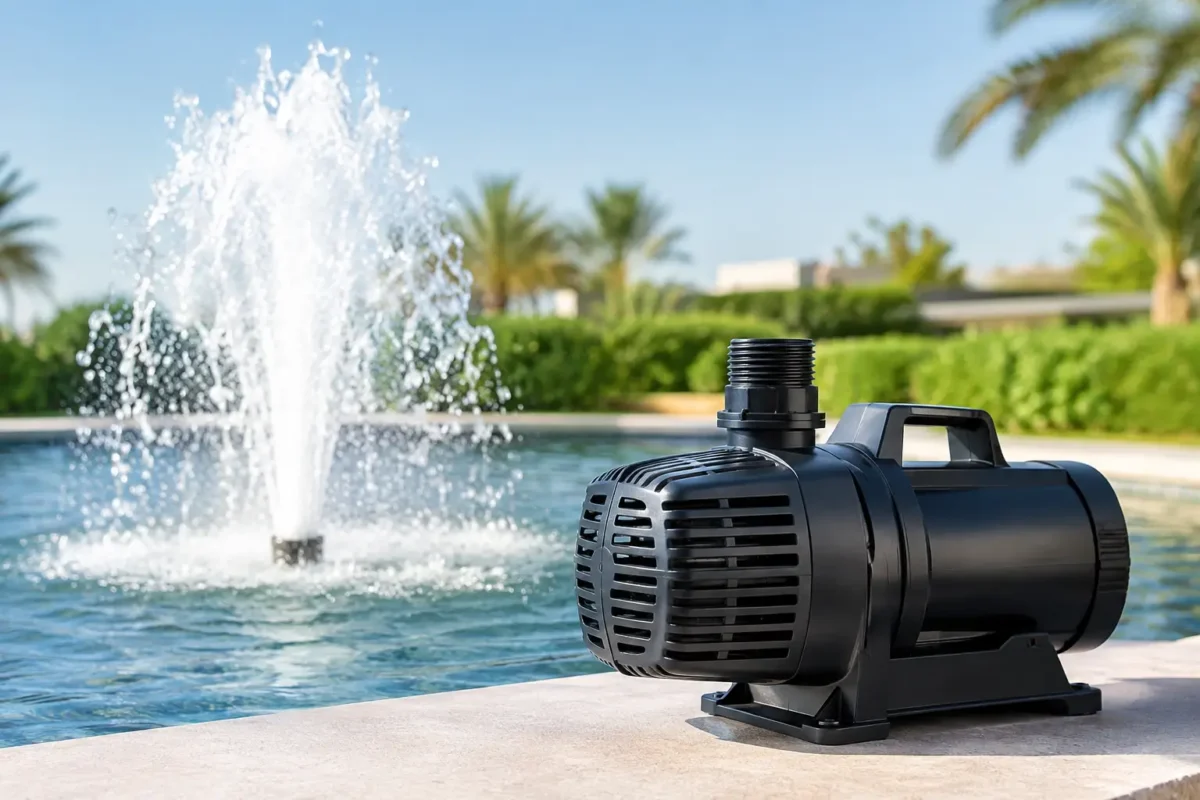
A fountain can look perfectly composed in an architectural drawing and disappoint the moment water starts moving. The usual reason is not the nozzle or the basin finish. It is pump selection. hqb-5500 fountain pumps from sunsun are a practical option for decorative features that need dependable circulation, visible water movement, and a compact submersible configuration. For villas, landscape fountains, courtyard features, and selected commercial displays, the right installation approach matters as much as the pump itself.
The HQB-5500 should be assessed as part of a complete hydraulic system. Its stated flow capacity is only one part of the decision. Pipe diameter, vertical lift, fountain nozzle design, filtration, water quality, control requirements, and maintenance access all affect the final visual result. A pump that is suitable for a low, wide water feature may not produce the pressure needed for a tall central jet.
Where SunSun HQB-5500 Fountain Pumps Fit Best
The SunSun HQB-5500 is generally considered for medium-duty decorative water circulation where a submerged pump is preferred over an external pump arrangement. Its compact format can simplify installation inside a fountain reservoir, balance tank, or protected pump chamber. This is particularly valuable where equipment must remain out of sight to preserve a clean landscape or architectural finish.
For a residential villa, the pump may suit wall spouts, bubbling urns, sheet-water details, small cascades, or a modest multi-nozzle feature. In commercial settings, it can be considered for reception fountains, retail landscape displays, and ornamental water elements with a carefully calculated duty requirement. The decisive factor is not the size of the property. It is the required flow at the actual operating head.
A low-head circulation application and a high-jet fountain are very different assignments. As the water must travel higher or through longer pipe runs, the available flow declines. Elbows, valves, undersized fittings, UV units, filters, and decorative nozzles also introduce resistance. Selecting a pump only by its maximum flow figure can leave a feature underpowered once all these losses are included.
Flow, Head, and the Fountain Effect
A fountain pump is selected against its performance curve, not its headline capacity. The performance curve shows how much water the pump can deliver at different head heights. This information allows a technician to match the unit to the desired fountain pattern with greater accuracy.
Start with the required visual effect. A gentle spillway needs a consistent volume of water across its width. A vertical jet requires pressure as well as flow. A tiered fountain needs enough water to fill each level evenly without excessive splash. Then calculate the vertical distance from the reservoir water level to the discharge point and add friction loss from the pipe route and accessories.
Pipe sizing deserves particular attention. A pipe that is too small restricts flow and increases system resistance, forcing the pump to work harder for a weaker result. An appropriately sized pipe supports more efficient movement and helps reduce unnecessary noise. In premium projects, this detail protects both presentation and long-term equipment performance.
If a feature includes multiple outlets, each outlet must receive a balanced share of water. This may require a manifold, individual control valves, or a different pump configuration. A single HQB-5500 may be suitable for several small outlets, but it should not be expected to perform like a dedicated high-pressure fountain pump for a large public display.
Match the Pump to the Nozzle
Nozzles shape the water, but they also create resistance. Foam jets, bell nozzles, spray rings, and laminar-style effects each have different hydraulic demands. A nozzle with a refined visual profile may require more pressure than a simple open outlet.
For this reason, a pump should never be chosen separately from the nozzle schedule. The best result comes from checking the nozzle manufacturer’s flow and pressure requirement, then confirming that the HQB-5500 can meet that requirement at the calculated total dynamic head. Where the feature must perform consistently for guests, tenants, or hotel visitors, this calculation should be completed before construction is finalized.
Installation Standards That Protect Performance
Submersible fountain pumps need clean, stable operating conditions. The pump should sit on a level support and remain fully submerged during operation. It should not be placed directly on loose sediment, decorative gravel, or basin debris, as these materials can obstruct the intake and accelerate wear.
A protected pump chamber or raised base is often the better approach. It allows water to enter around the pump while keeping leaves, silt, and larger debris away from the intake. This is especially relevant for outdoor fountains in Dubai, where windblown dust and landscape debris can quickly affect circulation if a basin is not maintained properly.
The electrical installation must also be designed for wet-area safety. Use a properly rated power connection, correct grounding, and suitable protective devices in accordance with local electrical requirements. Cable joints should not be improvised inside the basin. For premium residential and commercial installations, electrical work should be coordinated by qualified professionals who understand both fountain equipment and site safety expectations.
It is also wise to include an isolation valve and a union fitting on the discharge line. These small additions make future maintenance far easier because the pump can be removed or serviced without dismantling the complete pipe route. If flow adjustment is needed, use a valve on the discharge side only. Restricting the intake is not an acceptable way to control performance.
Water Quality Is Part of Pump Care
A fountain pump operates in the same water that defines the appearance of the feature. If that water becomes contaminated with debris, scale, algae, or chemical imbalance, the pump and fountain finish are both affected. Poor water quality can clog intake screens, reduce water clarity, stain surfaces, and impair moving components over time.
Regular basin cleaning and water treatment are therefore not cosmetic extras. They protect circulation equipment. The required maintenance frequency depends on whether the fountain is indoors or outdoors, exposed to trees or dust, and operated continuously or on a timer. High-visibility features at hospitality and commercial properties should follow a preventive service schedule rather than waiting for flow to weaken.
Where a fountain uses treated water, confirm that the pump materials and surrounding components are compatible with the intended water chemistry. Avoid excessive chemical dosing. A correctly managed system protects the pump, preserves the finish of nozzles and stonework, and keeps the water feature aligned with the quality expected of the property.
When the HQB-5500 May Not Be the Right Choice
The HQB-5500 is not automatically the best answer for every fountain. Large architectural water walls, tall jets, extensive pipe networks, and heavily programmed commercial displays can require higher-head equipment, multiple pumps, variable-speed control, or a purpose-built fountain pump system. A pump that runs near its limit may still move water, but it may not deliver the consistency or visual strength a signature installation requires.
Likewise, projects with complex lighting, synchronized water effects, automatic level control, and filtration should be planned as integrated systems. The pump is one component among many. The most elegant installations are engineered so that hydraulics, electrical controls, water treatment, access panels, and finishes work together from the beginning.
For straightforward decorative circulation, the HQB-5500 can offer a practical balance of performance and installation convenience. For higher-demand applications, a technical review avoids costly revisions after the fountain is complete.
Professional Support for Fountain Equipment in Dubai
Aquatic Pools and Fountains supports villa owners, developers, facility teams, and hospitality properties with equipment selection and technical guidance for fountain systems. The right recommendation starts with the feature’s dimensions, nozzle type, pipe routing, desired water effect, operating schedule, and maintenance access – not a one-size-fits-all product choice.
Before purchasing, confirm the expected flow at operating head, the power supply requirements, the available basin depth, and the service plan for the feature. A well-selected pump should disappear into the background while the fountain delivers the movement, sound, and visual elegance the space was designed to achieve.