
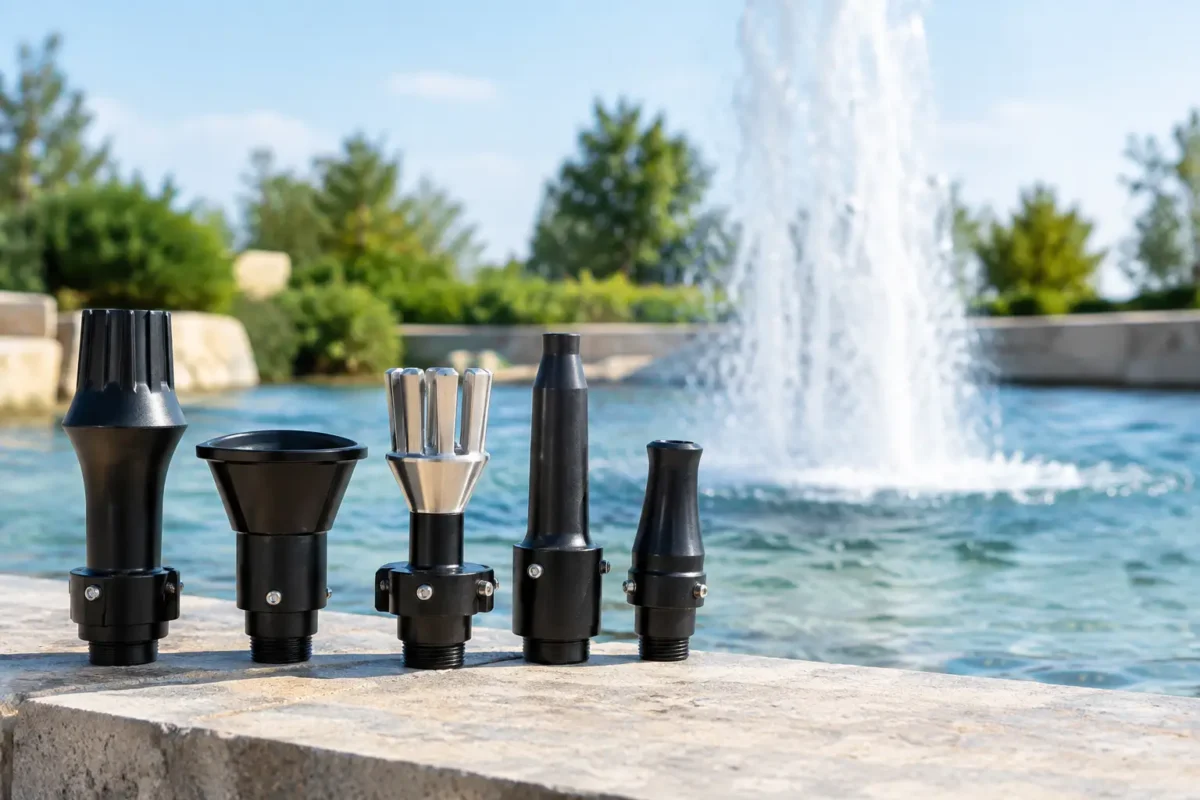
A fountain should look composed, not merely active. The right foam nozzle produces a dense, white-water column with a clean, architectural presence – a strong choice for villa entrances, hotel courtyards, residential developments, and commercial landscapes where the water feature must perform as well as it presents.
Unlike a conventional spray nozzle, which breaks water into visible streams or fine droplets, a foam nozzle aerates and shapes the flow into a solid-looking plume. The effect can be bold and sculptural, yet it is also practical: the water generally stays closer to the intended display area, helping designers manage splash in compact basins and high-traffic settings.
What a Foam Nozzle Does Differently
A foam nozzle blends water and air within its internal chamber before the flow leaves the outlet. That aeration creates the familiar bright, opaque appearance associated with foaming fountain jets. Rather than a transparent arc, the nozzle delivers a defined column that catches light exceptionally well, particularly when paired with properly positioned underwater LED lighting.
This makes it a versatile feature for contemporary projects. A single vertical plume can create a focal point in a formal reflecting pool. A row of matched nozzles can add rhythm along a resort walkway or within a commercial entrance fountain. In a larger installation, foam jets can balance more delicate effects, such as fan sprays or laminar streams, by introducing visual weight and movement.
The appearance is not identical in every application. Water pressure, pipe sizing, nozzle diameter, wind exposure, and water quality all affect the final result. A premium installation begins with the expected visual effect, then selects equipment capable of delivering it consistently.
Selecting the Right Foam Nozzle for the Project
Nozzle selection should never be based on outlet size alone. A component that looks appropriate in a product image may deliver an underwhelming plume, excessive splash, or inconsistent height if the hydraulic conditions are not matched to the design.
Start with the required jet height and shape
The first question is what the water feature needs to communicate. A low, broad foam jet can suit an intimate courtyard fountain where guests stand nearby. A tall, concentrated jet may be better for a grand entrance, podium deck, or open landscape where the fountain must remain visible from a distance.
Jet height is affected by available pressure and flow rate, but it should also be considered alongside basin dimensions. Higher displays need adequate fall distance and a basin designed to contain the water on windy days. In exposed UAE locations, a slightly lower and denser plume may provide a better real-world result than a dramatic jet that loses definition in the wind.
Match the nozzle to pump performance
Every foam nozzle operates within a specific flow and pressure range. If the pump is undersized, the jet may appear weak, uneven, or lower than expected. If it delivers too much flow, the display can become turbulent and produce unwanted splash.
Pump selection must account for more than the nozzle requirement. The calculation should include friction losses through pipework, valves, filters, fittings, elevation changes, and any treatment equipment in the fountain system. This is where professional technical guidance protects the finish of the project as well as the equipment investment.
Variable-speed pumps can be particularly valuable where the desired fountain effect changes by time of day or event. A hospitality property may run a calm daytime display, then increase the feature’s presence for evening operation when lighting is active. The system must still remain within the nozzle’s recommended operating range at each setting.
Consider material for water conditions and service life
For premium fountain projects, material selection is a long-term decision. Stainless steel foam nozzles are widely specified for their refined appearance, strength, and resistance to corrosion. High-grade stainless steel is especially appropriate where the nozzle will remain visible above the waterline or where the installation calls for a polished architectural finish.
Brass and engineered plastics may also be suitable depending on the water chemistry, budget, and intended setting. The key is compatibility. Chlorinated water, saline environments, and chemically treated fountain systems each place different demands on metal components, seals, and fittings. Selecting a quality nozzle without reviewing the full water environment can shorten its working life.
For outdoor installations in Dubai and across the UAE, heat, dust, sun exposure, and demanding operating schedules also matter. Durable materials and correctly specified fittings help reduce premature wear and make routine maintenance more straightforward.
Design for lighting, sound, and surrounding finishes
A foam jet has a strong visual relationship with light. Its aerated, white-water texture reflects illumination differently than a clear stream, often creating a brighter, more dramatic night-time effect. For the best presentation, lighting should be planned with the nozzle location, water depth, viewing angles, and intended jet height already defined.
Sound deserves equal attention. Foam nozzles create a fuller water sound than certain precision jet types, which can be an advantage in a lobby approach, garden, or leisure area where the goal is to soften surrounding noise. In a quiet residential setting, however, excessive height or flow may create more sound than the owner expects. Scale the effect to the environment rather than assuming bigger is better.
The finish of the basin should also be considered. Dark stone, tile, and mosaic can make the white plume stand out sharply. Lighter finishes create a softer, more understated visual result. Both can be elegant when the fountain is designed as a complete composition.
Installation Details That Protect Performance
Even the highest-quality nozzle depends on correct installation. The nozzle must be level, securely mounted, and supplied through properly sized pipework. A slight misalignment can be obvious in a vertical display, especially when several jets are installed in a line.
A regulated valve arrangement is typically needed to fine-tune each effect during commissioning. This is particularly valuable in multi-nozzle fountains, where small variations in pipe length or hydraulic resistance can cause one jet to rise higher than another. Proper balancing gives the finished feature its disciplined, premium appearance.
Filtration is another essential part of the specification. Debris, scale, and sediment can obstruct internal passages, distort the plume, and reduce performance over time. A well-designed fountain system includes suitable filtration, access for cleaning, and a maintenance plan that reflects the operating environment.
Water level management should not be overlooked. If the pump draws air because the basin level falls too low, the foam effect can become unstable and the pump may be damaged. Automatic top-up systems, level sensors, and appropriate suction design help maintain reliable operation, especially in outdoor installations affected by evaporation.
Common Mistakes in Foam Jet Applications
The most frequent issue is specifying a nozzle before the system hydraulics are finalized. A fountain is not a collection of separate components. The nozzle, pump, pipework, filtration, water treatment, lighting, basin, and control system must work together.
Another mistake is overlooking splash behavior. Foam nozzles can be more controlled than wide spray patterns, but they are not splash-free. A shallow basin, narrow catch area, or tall jet in a windy location can lead to water loss and wet surrounding surfaces. This is a design issue, not simply a nozzle issue.
Finally, some projects prioritize the initial visual effect while underestimating maintenance access. Nozzles should be reachable for inspection and cleaning without disrupting stonework, draining an oversized basin, or creating unnecessary downtime. This is especially relevant for hotels, residential towers, and commercial sites where the fountain is part of the property’s daily presentation.
A Better Approach to Fountain Nozzle Specification
The most reliable approach is to define the design intent first: desired height, density, sound level, lighting effect, setting, and viewing distance. From there, the fountain system can be engineered around verified flow and pressure requirements rather than assumptions.
Aquatic Pools and Fountains supports this process with quality fountain equipment, technical selection, professional installation support, and maintenance expertise for residential and commercial aquatic environments. For a single villa feature or a complex multi-jet display, the right specification creates a result that remains elegant long after commissioning.
A foam nozzle may be a small component within a larger fountain system, but it has a decisive role in the feature’s character. Choose it with the same care given to the basin finish, lighting, and pump system, and the water display will continue to look intentional, balanced, and worthy of the property around it.