
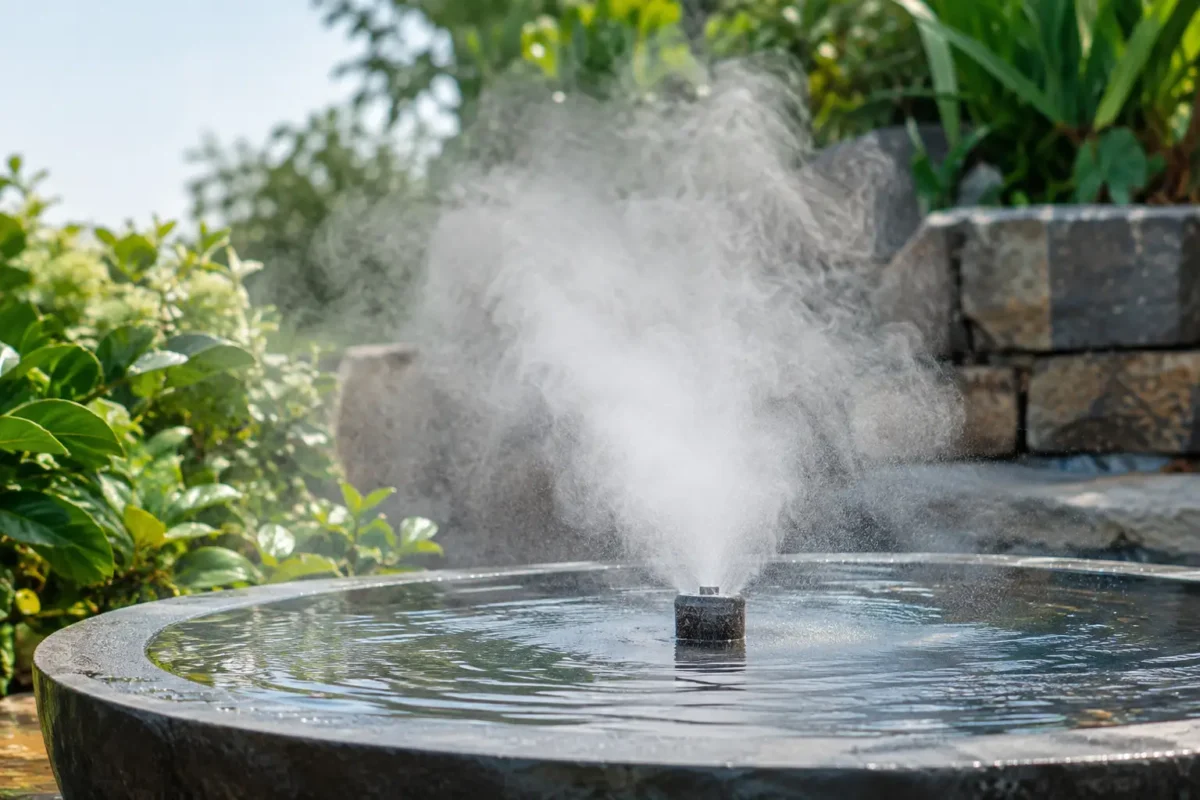
A still fountain basin can look elegant, but a controlled layer of cool mist gives it presence. The best fountain mist makers transform water features into immersive focal points, softening hard architectural lines, enhancing lighting effects, and creating the refined atmosphere expected in premium villas, hotels, reception areas, and commercial landscapes.
The right unit is not simply the one that produces the most fog. It must match the fountain’s dimensions, water depth, operating environment, control requirements, and maintenance plan. In Dubai and across the UAE, where high temperatures, wind exposure, dust, and continuous operation place real demands on equipment, selection should be based on engineering performance as well as visual impact.
What Makes a Fountain Mist Maker Effective?
Most decorative fountain mist makers use ultrasonic technology. A ceramic diaphragm vibrates at an extremely high frequency, breaking water into microscopic droplets that form a low-lying mist. Unlike a conventional spray nozzle, an ultrasonic unit creates atmosphere without projecting a visible stream of water into the air.
This effect is especially valuable when paired with underwater LED lighting. The mist catches the light above the basin, making a modest water feature appear deeper, more dramatic, and more luxurious after dark. It can also help create separation between a fountain and its surrounding hardscape, giving the feature a more tranquil, layered appearance.
However, output alone is not the measure of quality. A premium mist system needs stable fog production, dependable electrical protection, corrosion-resistant construction, accessible replacement components, and controls that avoid running the unit dry. A low-cost fogger may perform well during a short test, then lose consistency because of diaphragm wear, poor water-level management, or inadequate power equipment.
Best Fountain Mist Makers: The Main Types
There is no single best choice for every project. The best fountain mist makers are selected according to the scale and function of the water feature.
Single-Head Ultrasonic Mist Makers
Single-head units are suitable for small decorative bowls, tabletop fountains, compact indoor water features, and narrow reflecting basins. They provide a subtle mist effect and are often chosen where the design calls for a delicate visual accent rather than dense fog.
Their advantage is straightforward installation and lower initial cost. Their limitation is coverage. In an open outdoor location, even a light breeze can disperse the mist before it becomes visible. For a small sheltered fountain, they can be an excellent solution. For a hotel entrance or large villa courtyard, they are rarely sufficient as a stand-alone feature.
Multi-Head Ultrasonic Mist Makers
Multi-head units are the preferred option for medium and large fountains where consistent visual coverage matters. Available with several misting heads, these systems generate a fuller layer of fog across a larger surface area and can be configured in groups for broader basins.
They are particularly effective in reception fountains, restaurant terraces, landscaped courtyards, spa environments, and premium residential outdoor features. A multi-head system provides stronger visual performance, but it also requires careful electrical sizing, water-level control, and service access. The more heads operating, the more important it becomes to use quality transformers and properly protected cabling.
Industrial and Commercial Mist Systems
For large hospitality, retail, public-realm, and commercial installations, fountain misting is best treated as part of the complete water-feature system. Commercial-grade units may include higher-output foggers, central control panels, automatic filling arrangements, timed operation, low-water cutoffs, and integration with lighting or building automation.
These systems are built for longer operating periods and higher visibility applications. They demand professional planning because mist output needs to complement, not obstruct, circulation areas, signage, cameras, or nearby finishes. In a high-traffic environment, a beautifully designed mist effect must also remain safe, contained, and easy to maintain.
How to Size a Mist Maker for Your Fountain
Fountain size is a starting point, but basin geometry and exposure matter just as much. A shallow bowl may show mist quickly, while a deep or wide basin may require multiple units to create even coverage. Waterfall movement and strong jets can also disrupt the fog layer, so mist makers should be positioned away from aggressive turbulence whenever possible.
For sheltered indoor features, a lighter output can create a sophisticated effect without overwhelming the space. For outdoor fountains, especially in open villa gardens or hotel forecourts, stronger output or multiple units are often needed to compensate for heat and air movement. If the goal is a dramatic evening display, plan the mist system together with the lighting layout rather than adding it after installation.
The desired operating schedule also affects sizing. A mist maker running for short evening intervals faces different demands from one operating for many hours every day. Continuous use calls for a higher-quality diaphragm assembly, reliable cooling through adequate water depth, and a service plan that accounts for normal consumable replacement.
Technical Features That Protect Performance
A premium fountain mist maker should include or be paired with automatic water-level protection. Ultrasonic heads must remain at the correct depth to generate consistent mist and avoid damage. Float rings, water-level sensors, or dedicated controllers help maintain that operating range as evaporation occurs.
Power supply quality is equally critical. The mist maker, transformer, cables, and connectors should be specified for wet-area use and installed with proper protection. Electrical equipment should never be treated as an afterthought in a fountain project. Professional installation protects the equipment, supports reliable operation, and ensures the feature remains suitable for residential or commercial use.
Material quality deserves close attention as well. Fountain environments expose components to moisture, chemicals, heat, and sometimes saline conditions. Stainless steel housings, well-sealed connectors, durable ceramic diaphragms, and corrosion-resistant fittings provide better long-term value than units designed only for occasional indoor display use.
Water Quality and Maintenance Requirements
Mist makers operate directly in the fountain water, which means water quality affects their output and lifespan. Mineral scale can build up on ceramic diaphragms, reducing fog production. Dust, leaves, algae, and suspended debris can also interfere with operation, especially in outdoor basins.
Routine cleaning is therefore part of owning a high-performance mist feature. The basin should be kept clear of debris, diaphragms should be inspected regularly, and worn components should be replaced before output becomes uneven. The exact maintenance frequency depends on water chemistry, operating hours, and environmental exposure.
Chemical balance requires care. Standard fountain treatment may be necessary to control algae and maintain water clarity, but excessive chemical concentration can shorten the service life of delicate misting components. Saltwater or highly chlorinated features need equipment selected specifically for those conditions. This is one area where technical advice before purchase can prevent repeated replacement costs later.
Installation Details That Define the Final Result
Mist makers should be installed where they can be serviced without draining or dismantling the entire fountain. In a luxury installation, equipment access is often hidden from view, but it should never be inaccessible. A service technician must be able to inspect the unit, clean the basin area, replace diaphragms, and check electrical connections efficiently.
Water depth must also remain stable around the unit. A dedicated recessed section, suitable float assembly, or controlled water-level system can keep the fogger operating within its recommended range. Positioning the unit near a return flow or strong pump suction may cause unstable mist, so hydraulic layout should be considered before final placement.
For outdoor projects, wind is the deciding factor many buyers overlook. Mist that looks impressive in a covered showroom may disappear in an exposed courtyard. Strategic placement near walls, planting, architectural screens, or within a partially enclosed basin can preserve the intended visual effect without requiring excessive equipment capacity.
Choosing a Supplier for Premium Fountain Misting
The best product is only part of the investment. A fountain mist maker should be specified alongside compatible transformers, controls, water-treatment requirements, lighting, and maintenance access. This is particularly important for high-value villas, hospitality properties, and commercial developments where a non-functioning water feature affects the entire presentation of a space.
Aquatic Pools and Fountains supports this process with premium fountain equipment, technical guidance, installation support, and ongoing maintenance solutions for demanding aquatic environments. The objective is not simply to add fog to a basin, but to create a dependable feature that performs beautifully throughout its intended service life.
Choose the mist maker around the fountain’s real operating conditions, not just the visual effect seen on a product specification. When output, controls, water quality, and service access are planned together, mist becomes a lasting design feature rather than a short-lived accessory.