
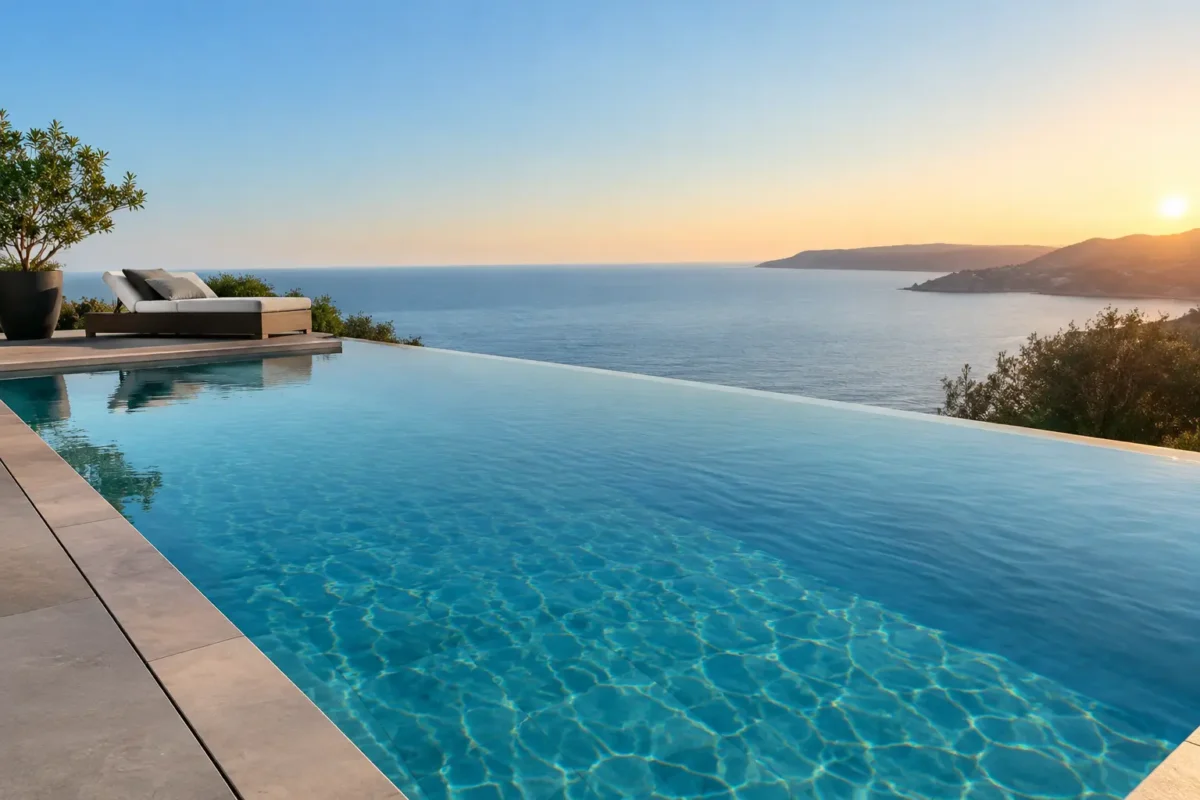
A well-executed infinity pool edge can make water appear to merge with the skyline, sea, garden, or surrounding architecture. That visual simplicity is the result of detailed engineering below the waterline. For villas, hotels, residential towers, and high-visibility commercial properties, the edge must perform as precisely as it looks – in intense sun, wind, heavy use, and changing water levels.
The defining feature is not simply an open side of a pool. It is a coordinated system of structure, waterproofing, tile or stone finishes, catch basin capacity, circulation equipment, and level control. When one element is undersized or poorly installed, the visual effect can be interrupted by uneven flow, exposed coping, water loss, noise, or persistent maintenance demands.
What Creates the Infinity Pool Edge Effect?
An infinity edge pool, also called a vanishing-edge or negative-edge pool, uses a lowered overflow wall on one or more sides. Water passes evenly over this wall into a concealed gutter or catch basin, then returns to the main pool through a separate circulation system. From the viewing side, the waterline appears to disappear.
The overflow wall must be level to an exceptionally fine tolerance. A variation that may seem minor during construction can produce a visibly heavier sheet of water at one end and a weak trickle at the other. This is why premium edge installations require careful setting-out, quality materials, and experienced technical supervision rather than a finish-first approach.
The view also matters. An infinity pool edge is most effective when it frames a deliberate focal point: a Dubai skyline, coastal horizon, landscaped garden, lower courtyard, or architectural water feature. On a site with no natural long view, a reflective edge can still create a refined visual plane, but the design should be adapted to the property rather than copied from a resort image.
Hydraulics Determine Whether the Edge Looks Premium
The visible sheet of water is only one part of the system. Behind it is a hydraulic design that has to manage constant overflow without compromising filtration, water quality, or energy efficiency.
Catch Basin Capacity and Water Balance
The catch basin, often located below or behind the overflow wall, receives water displaced by bathers and the continuous flow over the edge. Its capacity must account for the pool volume, bather load, surge volume, evaporation, and operational water level. A basin that is too small can overflow when the pool is busy. One that is poorly configured may allow the main pool level to drop, exposing the edge and breaking the intended effect.
Automatic level controls are particularly valuable for luxury residences and commercial facilities. They help maintain stable water levels despite evaporation and splash-out, which is especially relevant in the UAE climate. However, level control does not replace correct basin sizing or routine inspection of sensors, valves, and make-up water lines.
Pumps, Filtration, and Return Flow
An infinity edge normally requires dedicated circulation planning. The pump must provide enough flow to create a consistent water sheet, while the filtration system must still turn over the pool water effectively. Pump selection depends on edge length, pipe runs, elevation changes, friction losses, and desired visual flow. Oversizing can create excessive noise, turbulence, and unnecessary energy consumption. Undersizing produces a weak, inconsistent edge.
Variable-speed pumps are often a strong choice because they allow the system to operate at a higher visual-flow setting when the pool is in use and at an efficient maintenance setting during quieter periods. For hotels, apartment developments, and facilities with long operating hours, this flexibility can support both presentation and operating cost control.
Returns should be positioned to move water toward the overflow edge without creating disruptive surface patterns. Skimmer-style circulation logic does not automatically translate to a vanishing-edge pool. Proper hydraulic balancing is essential, especially where the pool has multiple edges, irregular geometry, or an attached spa.
Quiet Operation Is Part of the Luxury Standard
A premium pool should not announce its equipment operation through vibration or persistent mechanical noise. Equipment rooms need correct pump mounting, pipe support, valve access, and ventilation. Water entering the catch basin should be managed to avoid unnecessary splashing and resonance.
This detail is often underestimated. A silent-looking infinity edge paired with loud equipment or a noisy trough loses much of its appeal in a villa terrace, hotel deck, or private rooftop setting.
Materials and Finishes at the Waterline
The edge wall is constantly exposed to treated water, sunlight, temperature variation, and cleaning activity. Material selection must therefore balance appearance with durability.
Porcelain and glass mosaic are popular options because they offer color consistency and a polished waterline finish. Natural stone can create a more architectural result, but it requires careful selection, compatible sealing, and attention to porosity. Some stones can show mineral deposits, discoloration, or surface deterioration if the water chemistry is not controlled.
The edge itself must be finished with exceptional accuracy. Tile lines, grout joints, and coping details become more visible at the vanishing point than on a conventional pool perimeter. Dark finishes often enhance reflection and make the water appear deeper, while pale finishes can create a brighter resort character. Neither is universally better. The right selection depends on sun exposure, surrounding materials, desired water color, and the level of maintenance the owner is prepared to maintain.
Waterproofing beneath the finish is equally critical. The overflow wall, gutter, catch basin, and surrounding deck details must be treated as connected wet-area components. Cosmetic repairs after leakage appears are more disruptive and expensive than specifying a complete waterproofing and movement-joint system from the outset.
Designing for Dubai and UAE Conditions
An infinity pool edge in the UAE faces conditions that influence every technical decision. High temperatures increase evaporation and can affect water balance. Wind may push surface water unevenly across a long edge. Fine dust can accumulate in gutters, drains, and filters. Strong sunlight places added demands on finishes, sealants, and exposed equipment.
For outdoor pools, the drainage around the catch basin and deck should be planned to prevent stormwater, irrigation runoff, or debris from entering the pool system. Equipment selection should also consider heat load, accessibility for service, and protection from dust. A clean, well-designed plant room supports reliable performance far more than concealed equipment installed without maintenance access.
Commercial properties need additional consideration for bather load and operational consistency. A hotel pool can experience sudden surges in occupancy, while a residential tower may need the pool to remain visually perfect throughout the day. In these environments, basin capacity, automation, disinfection, water testing, and preventive maintenance should be specified as part of one operating strategy.
Maintenance That Protects the Visual Effect
An infinity edge needs regular attention, but maintenance should be planned rather than treated as a reaction to visible issues. The edge channel and catch basin should be checked for leaves, dust, scale, and debris. Filter pressure, water level, pump performance, and chemical readings should be monitored consistently.
Water chemistry has a direct impact on the appearance and service life of tiles, grout, stone, metal fittings, and equipment. Calcium buildup can dull the edge and restrict water flow. Unbalanced water can damage finishes or encourage staining. Automated dosing and reliable testing equipment help maintain consistency, but professional review remains valuable for identifying trends before they become costly repairs.
The pool’s visual flow should also be inspected from the main viewing position. If water is no longer passing uniformly over the edge, the cause may be as simple as a changed water level or dirty filter, or it may indicate a valve, pump, or structural-level issue. Early diagnosis protects both the aesthetic result and the wider circulation system.
Choosing the Right Delivery Partner
Infinity-edge projects benefit from one accountable technical partner across equipment supply, installation coordination, commissioning, and ongoing service. Separating these responsibilities without clear specifications can create gaps between structural work, waterproofing, finishes, and hydraulics.
Aquatic Pools and Fountains supports premium residential and commercial installations with quality pool equipment, technical guidance, and maintenance expertise. The objective is not only to create an impressive first view, but to ensure the edge continues to operate with dependable flow, controlled water quality, and durable finishes over time.
The most successful infinity pool edge is the one that appears effortless years after completion. That result comes from disciplined design, correctly matched equipment, and maintenance that respects the precision behind the view.