
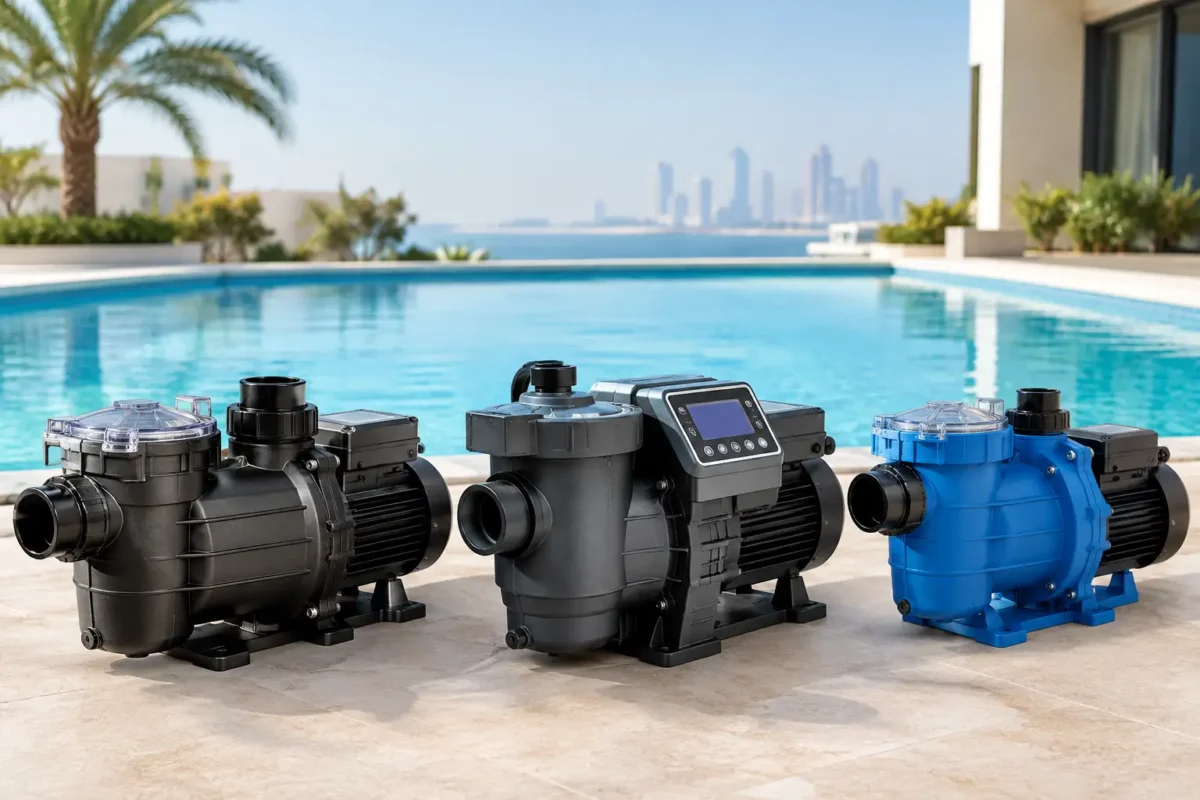
A pool pump that runs at one fixed, high speed may keep water moving, but it rarely reflects the way a premium pool is actually used. A thoughtful variable speed pump comparison looks beyond the purchase price to evaluate energy consumption, hydraulic performance, noise, control capability, and long-term service reliability. For villas, hotels, residential towers, and commercial facilities across the UAE, those details have a direct effect on operating costs and guest experience.
Variable-speed technology allows the motor to adjust its revolutions per minute to match the task at hand. Filtration, water features, vacuuming, backwashing, heating, and peak bather loads do not require the same flow rate. The right pump provides the required circulation while avoiding unnecessary energy use and excessive noise.
Why Variable-Speed Pumps Are a Premium Upgrade
Traditional single-speed pumps operate at one setting, often selected to meet the most demanding condition rather than the daily filtration requirement. That means the pump may run harder than necessary for many hours each day. A variable-speed pump can operate at a lower programmed speed for routine circulation, then increase output when a cleaner, spa jet system, heater, or water feature calls for more flow.
The energy advantage can be significant because pump power rises sharply as speed increases. Reducing speed modestly can reduce electrical demand far more than many owners expect. The actual savings depend on pool volume, pipework, operating schedule, local electricity rates, and the selected speed program, but variable-speed equipment is generally the stronger choice for pools with long daily run times.
Lower-speed operation also brings a quieter equipment area. This matters for luxury villas where the plant room sits near outdoor living space, and for hotels or residential communities where mechanical noise can affect guests and residents. The result is a more refined pool environment without compromising water quality.
Variable Speed Pump Comparison: What Matters Most
A meaningful comparison starts with the pool system, not the horsepower printed on the pump label. Two pumps with similar motor ratings may deliver very different results once plumbing resistance, filter condition, elevation, heaters, chlorinators, and feature lines are considered.
Flow Rate and Total Dynamic Head
Every pool requires a practical circulation rate based on its water volume and required turnover period. However, flow alone is not enough. The pump must produce that flow against the resistance created by the entire circulation system, known as total dynamic head.
Long pipe runs, undersized plumbing, multiple elbows, elevated equipment rooms, cartridge filters, sand filters, heaters, and salt chlorinators all influence head pressure. For a commercial pool or a large villa installation, selecting a pump solely by horsepower can produce weak circulation or an oversized unit that wastes power. A professional hydraulic assessment identifies the operating point where pump performance and system resistance meet.
Motor Efficiency and Speed Range
Not all variable-speed pumps offer the same efficiency across their operating range. Premium permanent-magnet motors are designed to deliver efficient, controlled performance at lower speeds, where a pool spends much of its operating time.
Look for a model with a broad and useful RPM range, clear programming options, and stable operation at low speed. A pump that only performs well near its maximum output will not provide the full value expected from variable-speed technology. The motor should also be suited to the site’s electrical supply and properly protected by the correct control panel, breaker, and grounding arrangement.
Programming and Automation Compatibility
A basic onboard keypad may be sufficient for a residential pool with one filtration schedule and occasional manual adjustments. For larger residences, hotels, compounds, and commercial properties, integration with automation can be more valuable. This allows the pump to respond to programmed schedules, heating demand, water-feature operation, cleaning cycles, or different occupancy periods.
The best choice depends on how the pool is managed. A facility manager may need locked settings, remote monitoring, and predictable daily programs. A homeowner may prefer simple controls with a dedicated higher-speed setting for vacuuming or spa use. Complexity is not automatically better. The controls should match the operational needs of the property and be easy for authorized users to manage.
Filter, Heater, and Water-Feature Requirements
The circulation pump must work as part of a complete system. A flow rate that is ideal for filtration may be too low for a heater or insufficient for a decorative cascade, fountain nozzle, or in-pool spa jets. Conversely, flow that is excessive for the filter can create high pressure, reduce filtration efficiency, and place unnecessary strain on fittings.
For pools with fountains and water features, separate pumps are often the better technical solution. This allows the filtration pump to run economically at low speed while the feature pump delivers the precise pressure needed for a consistent visual effect. Where one variable-speed pump serves several functions, controls and hydraulic balancing must be carefully designed so that one operating mode does not compromise another.
Build Quality and Service Access
A premium pump should be assessed for more than its advertised efficiency. Housing materials, seals, impeller design, ventilation, drive electronics, and the availability of replacement components all influence service life. In the UAE climate, equipment rooms can be exposed to high ambient temperatures, dust, humidity, and demanding operating schedules. Correct installation, ventilation, and protection from direct weather exposure are essential.
Choose equipment supported by dependable technical expertise and readily available parts. A lower initial price is rarely a saving if a critical component requires a long lead time or if local service support is limited. For high-visibility commercial properties, uptime has value that should be considered alongside energy savings.
How Variable-Speed Pumps Compare With Single-Speed Pumps
Single-speed pumps remain suitable in selected applications. A small, simple pool with limited operating hours and straightforward plumbing may not recover the higher initial cost of a variable-speed unit as quickly as a large, heavily used system. They are also simpler to operate and can be practical for dedicated duties that genuinely require one constant flow rate.
However, variable-speed pumps are usually the more capable long-term investment for premium residential and commercial pools. They offer flexible scheduling, quieter filtration, lower energy demand at reduced speeds, and better control over diverse pool functions. Their higher upfront cost should be evaluated against years of electrical consumption, reduced mechanical stress, and the improved ability to tailor operation to the property’s needs.
The comparison becomes especially clear when a pool operates eight, 12, or more hours per day. Hotels, apartment communities, schools, clubs, and villas with extensive water features are rarely best served by a pump that has only one operating mode.
Selecting the Right Size Without Oversizing
Oversizing is one of the most common pump-selection mistakes. More horsepower does not automatically mean better circulation. An oversized pump can create noisy operation, high filter pressure, accelerated wear, and needless energy use. It may also make water balance more difficult if high flow reduces effective contact time through treatment equipment.
Correct sizing begins with pool volume, desired turnover, pipe diameter, equipment layout, filtration type, and every secondary load on the system. The design should account for normal filtration as well as demanding functions such as vacuuming, backwashing, heating, and water-feature operation. Where these functions have conflicting flow needs, separate circuits or pumps may deliver better performance than one oversized unit.
For an existing pool, the assessment should include the condition of the filter, suction lines, valves, skimmers, and returns. Installing an advanced pump on restricted or deteriorated plumbing will not solve the underlying hydraulic issue. A complete equipment review protects the investment and helps ensure the new pump operates within its intended range.
Recommended Operating Approach for UAE Properties
In many UAE installations, the most efficient strategy is to run filtration at a lower speed for a longer, controlled period rather than at maximum output for a short period. This can maintain consistent circulation while reducing energy demand and noise. The final schedule should be based on water temperature, pool use, bather load, sanitizer system, and filtration performance.
A practical setup often includes a low-speed daily filtration program, a medium-speed period for stronger circulation or heating, and a high-speed mode reserved for cleaning, feature operation, or exceptional demand. After installation, the schedule should be reviewed using filter pressure, water clarity, chemical readings, and actual energy consumption. Fine-tuning is where variable-speed technology delivers its strongest value.
Aquatic Pools and Fountains can help property owners and project teams compare pump curves, specify compatible equipment, and install a system built for reliable long-term performance. The right pump is not simply the most powerful model available. It is the one engineered around the pool, the property, and the standards expected from a premium aquatic installation.