A straight fountain nozzle creates one of the most disciplined effects in water design: a clean vertical jet with a defined line, controlled height, and minimal visual distraction. For villas, hotel entrances, courtyards, retail developments, and formal landscape features, this clarity is precisely the appeal. The result can look simple, but the nozzle must be matched carefully to pump output, basin dimensions, wind exposure, water quality, and the design intent of the space.
A vertical jet that is too weak loses presence. One that is oversized can overspray paving, waste water, and create unnecessary operating cost. Premium fountain work depends on getting these technical details right before installation, not correcting them after the feature is live.
What Is a Straight Fountain Nozzle?
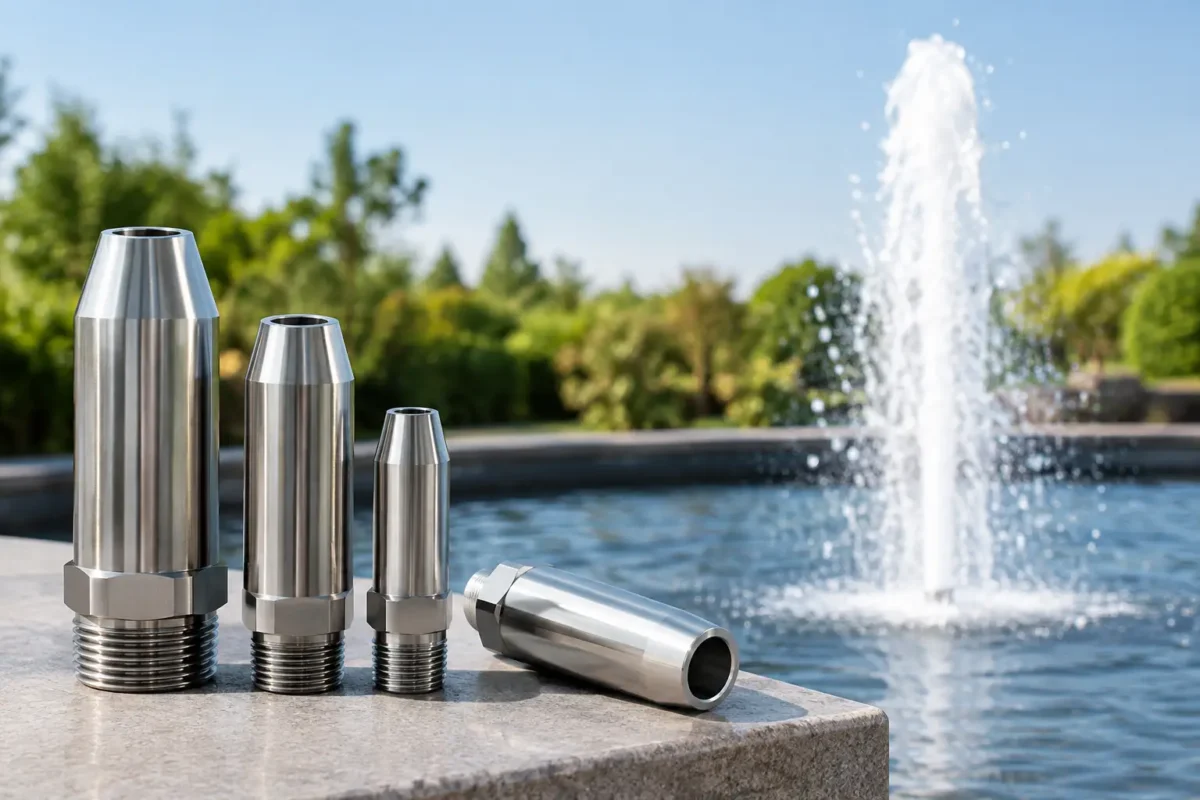
A straight fountain nozzle, often called a jet nozzle, forms a solid or near-solid vertical stream of water. Unlike spray rings, bell nozzles, or multi-tier effects, it does not rely on a wide fan pattern or dramatic turbulence. Its visual strength comes from precision.
The water exits through a carefully formed orifice and rises in a narrow column before returning to the basin. Depending on the nozzle design and operating conditions, the jet may appear glass-clear, smooth, aerated, or slightly textured. For a contemporary property, a crisp clear jet can provide a refined architectural accent. In larger commercial fountains, grouped vertical jets can establish rhythm, scale, and movement without overwhelming the surrounding landscape or building façade.
This effect works especially well where clean geometry matters. Think of a villa reflecting pool, a linear water feature at a corporate reception, or a hotel forecourt that needs an elegant focal point visible from a distance.
Straight Fountain Nozzle Performance Starts With Hydraulic Design
Nozzle selection should never begin with appearance alone. A fountain jet is the visible end of a hydraulic system, and its final height depends on the pressure available at the nozzle after losses through pipework, valves, filters, fittings, and elevation changes.
A manufacturer’s performance chart will typically show the flow rate and pressure required to achieve a stated jet height. Those figures provide a starting point, but site conditions determine the final result. Long pipe runs, undersized lines, restrictive fittings, and dirty strainers all reduce available pressure. A pump that performs well on paper may fail to deliver the intended display if these losses are ignored.
For this reason, the pump and nozzle should be selected as a working pair. The system must deliver the correct flow at the required total dynamic head, with a practical allowance for normal maintenance conditions. Variable-speed pump control can also be valuable for projects that need different fountain heights during daytime operation, evening events, or periods of high wind.
Jet height is not the same as basin depth
A common design error is to focus on how high the stream rises while overlooking where it lands. A vertical jet breaks up as it descends, particularly outdoors. The higher the effect, the wider the return pattern becomes.
The basin must therefore provide adequate freeboard and a suitable splash zone. In compact fountains, a modest jet height may deliver a more polished result than an ambitious jet that constantly wets coping, decking, furniture, or nearby walkways. In public spaces, overspray can also create slip risks and increase cleaning requirements.
Wind changes the equation further. Dubai and the wider UAE can experience conditions that push fine droplets well beyond the basin edge. Outdoor installations benefit from conservative jet heights, deeper basins where appropriate, wind-responsive controls, and nozzles selected for a more coherent stream rather than a highly aerated plume.
Water level control protects the display
A vertical nozzle needs a stable water level to maintain consistent pump operation. If the basin level falls, the pump may draw air, lose prime, or run under unfavorable conditions. The jet can pulse, collapse, or become uneven long before the issue develops into equipment damage.
An automatic fill arrangement, correctly positioned balance tank where required, and dependable level sensors help protect both the equipment and the visual standard of the fountain. For commercial properties and hospitality sites, these components are not minor additions. They support reliable daily presentation with less manual intervention.
Choosing Materials for UAE Conditions
Nozzles operate in a demanding environment. Continuous water contact, disinfectant exposure, mineral deposits, heat, and outdoor UV conditions all affect long-term performance. Material choice should reflect the water treatment method, operating environment, and expected service life.
Stainless steel is often preferred for premium installations because it offers a clean finish, strong mechanical performance, and excellent corrosion resistance when the correct grade is specified. In chlorinated, treated, or coastal environments, material selection deserves particular attention. Not all stainless steel performs equally in aggressive conditions, and a lower initial cost can lead to staining, corrosion, and early replacement.
Brass and engineered polymers may also be suitable for specific fountain systems. Brass can provide durable performance in compatible applications, while high-quality plastics offer corrosion resistance and economical options for lighter-duty features. The right answer depends on the chemistry of the water and the quality expected from the finished installation.
Beyond the nozzle itself, specify durable fittings, isolation valves, supports, and fasteners. A premium fountain is only as dependable as the components behind its visible water effect.
Installation Details That Preserve a Clean Jet
A straight jet reveals installation errors immediately. If the nozzle is not perfectly level, the stream will lean. If the pipework vibrates, the jet may flutter. If debris reaches the orifice, the water can split or distort.
The nozzle should be mounted on a rigid, adjustable support that permits precise leveling during commissioning. This is particularly important in tiled basins, stone features, and installations where finished surfaces make later adjustments more difficult. A dedicated isolation valve allows technicians to service or balance individual nozzles without taking the entire feature offline.
Water filtration is equally important. Even a small leaf fragment, construction residue, or scale deposit can interrupt a uniform stream. A correctly sized strainer and filtration arrangement help keep the nozzle clear, while accessible equipment layouts make routine servicing faster and more consistent.
For multi-nozzle displays, pipework balancing deserves careful attention. Jets installed along a long run may not perform evenly if branch sizes, line lengths, and valve settings are not engineered properly. The goal is not simply to make every nozzle operate. It is to make the complete arrangement look intentional from the viewer’s perspective.
Integrating Lighting With Vertical Jets
A straight jet can become far more dramatic after dark, but lighting needs to be planned with the water effect rather than added afterward. Underwater LED fixtures mounted near the nozzle base can illuminate the rising column and create a strong vertical presence without visible glare.
White light is a reliable choice for formal architecture and luxury residential settings because it preserves the clean character of the water. Programmable color lighting can suit entertainment venues, hotels, and event-focused spaces, though it should complement the property’s identity rather than turn a refined feature into visual clutter.
The fixture beam angle, mounting depth, and sightline all matter. Light aimed directly toward guests can create discomfort, while poor positioning may leave the jet looking bright at the base but dark above. Professional testing at night is the best way to confirm the intended effect.
Maintenance Keeps the Water Effect Precise
Straight nozzles are comparatively simple, but they are not maintenance-free. Their narrow openings and crisp visual output make small defects highly visible. A routine service plan should include nozzle inspection, cleaning, pump and strainer checks, water-level verification, and review of water chemistry.
Scale is a frequent concern in hard-water environments. As mineral deposits develop around the orifice, the jet may lose height, split into multiple streams, or spray unevenly. Cleaning should be carried out with methods appropriate to the nozzle material and the fountain’s treatment system. Abrasive tools can damage polished surfaces or alter the precise edge that shapes the stream.
Water chemistry also affects clarity, equipment life, and visitor experience. Balanced water reduces scaling and corrosion while supporting a more attractive display. For public and high-visibility properties, scheduled maintenance is a practical way to protect the investment and maintain the expected premium standard every day.
When a Straight Jet Is the Right Design Choice
This nozzle style is ideal when a project calls for formality, architectural order, and a strong upward focal point. It can work as a single centerpiece in a compact basin, a symmetrical pair at a property entrance, or a coordinated field of jets in a larger commercial water feature.
It may be less suitable for exposed sites where strong winds are unavoidable, shallow basins with limited splash tolerance, or designs seeking a soft, naturalistic water sound. In those situations, lower-profile effects or more sheltered nozzle types may deliver better long-term results.
Aquatic Pools and Fountains supports fountain projects with premium equipment selection, technical guidance, installation expertise, and ongoing maintenance capabilities. The most successful water features begin with a nozzle that suits the site, then build the hydraulic and service strategy around it. When those elements are aligned, a straight vertical jet delivers the controlled elegance that sophisticated properties expect.