
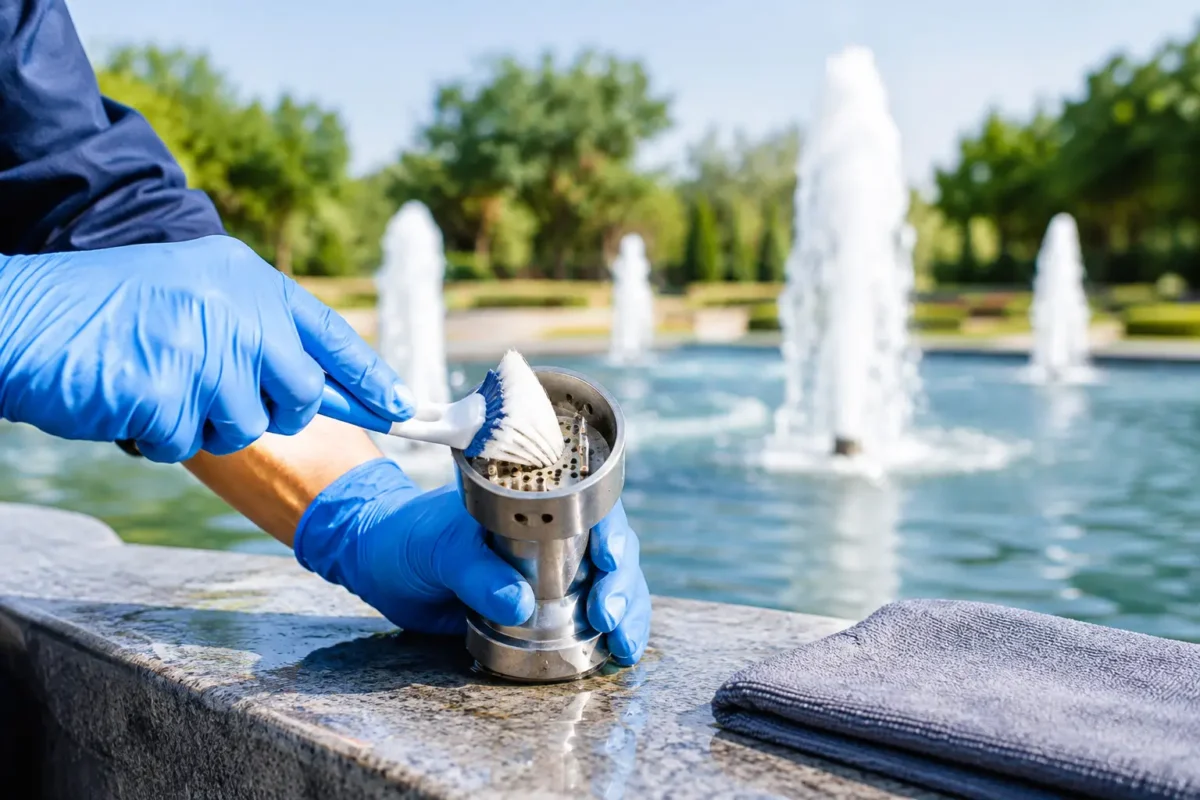
A fountain can have a premium basin, elegant lighting, and a high-performance pump, yet still look poorly maintained when one nozzle sprays unevenly or loses its shape. Knowing how to clean fountain nozzles correctly protects the visual impact of the feature while helping the circulation system operate as designed. For villas, hotels, residential towers, and commercial landscapes, nozzle maintenance is not a cosmetic afterthought. It is part of protecting a valuable aquatic installation.
Dubai and the wider UAE present particular challenges. Heat accelerates evaporation, airborne dust settles quickly, and mineral deposits can build up around small nozzle openings. The right cleaning method restores the water pattern without scratching precision components, enlarging orifices, or introducing debris into the fountain line.
Why Fountain Nozzles Lose Their Water Pattern
A fountain nozzle shapes water through carefully sized openings, internal channels, or deflectors. Even a thin layer of calcium scale, algae, sand, or construction dust can interfere with that design. The results are familiar: a jet that leans to one side, a fan spray with gaps, reduced height, splashing outside the basin, or an inconsistent display across multiple nozzles.
The visible issue is not always inside the nozzle itself. A blocked strainer, clogged pump basket, low water level, air entering the suction side, or a partially closed valve can also reduce flow. Before removing nozzles, compare the affected pattern with the others and check whether the issue is isolated or affecting the entire fountain.
This distinction matters. Cleaning a nozzle will not correct poor pump performance, while increasing pump output to compensate for a blocked nozzle can create unnecessary stress on the system.
Prepare the Fountain Before Cleaning
Switch off the pump and isolate electrical power at the appropriate control panel before touching any fountain component. This is essential around submerged equipment, lights, and automated controls. Allow the water movement to stop completely so debris does not circulate while you work.
Take clear photos of the nozzle positions, especially on multi-jet displays or programmable water features. Some nozzles have a specific orientation and height that creates the intended visual effect. Photographing the setup makes accurate reinstallation much easier.
Gather clean water, soft microfiber cloths, a soft nylon brush, a small nonmetallic cleaning pick, a bucket, and a mild descaling solution suitable for the nozzle material. If the system uses brass, stainless steel, chrome-plated finishes, or engineered plastics, confirm that the cleaner is compatible before application. Harsh acids may remove scale quickly, but they can discolor finishes, damage seals, or shorten the service life of premium components.
How to Clean Fountain Nozzles Step by Step
Inspect first, then remove carefully
Start with a visual inspection. Look for mineral crust around openings, trapped leaves, fine sand, algae film, damaged threads, or loose mounting hardware. If the nozzle can be cleaned in place without forcing tools into the opening, that is often the safest option.
For removable nozzles, loosen them by hand or use the manufacturer-recommended tool. Avoid gripping polished surfaces with pliers. If a nozzle is seized by mineral buildup, apply a compatible descaling solution around the threaded area, allow it to work for the recommended time, and try again gently. Forcing a stuck fitting can crack the body or damage the threaded connection below the waterline.
Remove loose debris with clean water
Rinse the nozzle with clean water to remove loose grit before brushing. This simple step reduces the risk of rubbing abrasive particles across decorative finishes. Flush water through the nozzle in the reverse direction of normal flow where practical. Reverse flushing helps push particles out rather than driving them deeper into the internal passages.
Use a soft nylon brush on external deposits. For narrow openings, use a soft nonmetallic pick with very light pressure. Never drill, ream, or push steel wire through an orifice. A tiny change in opening diameter can permanently alter the spray height, shape, and water consumption.
Treat mineral scale patiently
White or beige crust is commonly mineral scale left behind as water evaporates. Soak removable nozzles in a mild, material-safe descaling solution according to the product instructions. Do not extend the soak time on the assumption that stronger treatment is better. On plated, painted, or specialty finishes, excessive exposure can cause staining or surface damage.
After soaking, brush gently and rinse thoroughly with clean water. Repeat a mild treatment if scale remains rather than escalating immediately to an aggressive chemical. For fixed nozzles, apply the cleaner with a cloth or small brush, keeping it controlled and away from surrounding stone, tile, grouting, and plantings.
Clean the surrounding components
A clean nozzle can block again quickly if the fountain basin contains sediment. Remove leaves and larger debris, empty the pump basket, and inspect the strainer or filter. Check that the water level is adequate for stable suction and that the water treatment program is appropriate for the fountain design.
Where a fountain has multiple zones, inspect valves and manifolds for obstructions. If several nozzles have weak flow, the problem may be a shared filtration or circulation issue rather than individual scale buildup.
Reinstall, align, and test
Reinstall each nozzle without overtightening. Ensure threads are clean and properly seated, then return adjustable nozzles to their original direction and elevation. Restore power and run the fountain while observing the first few minutes of operation.
Look for a clean, even pattern with no unexpected side spray. If a jet remains distorted, switch the system off and inspect the nozzle again. Persistent distortion may indicate an internal obstruction, worn component, damaged nozzle insert, inadequate flow, or an alignment issue that requires professional service.
What Not to Use on Fountain Nozzles
Premium fountain hardware is designed for long-term outdoor performance, but the wrong cleaning approach can create costly damage. Avoid abrasive pads, steel wool, screwdrivers, drill bits, and stiff wire brushes. These tools scratch finishes and can alter precision openings.
Avoid using household acid cleaners without checking material compatibility. Products intended for bathroom fixtures or heavy construction residue may be too aggressive for fountain fittings, seals, stone surrounds, and basin coatings. Bleach should also be used cautiously and only when suitable for the fountain’s water-treatment plan, as it may affect metals, gaskets, and water balance.
Pressure washing is another common mistake. High pressure can force debris into nozzles, loosen fittings, and damage delicate spray components. A controlled rinse and gentle manual cleaning deliver better results for most decorative fountain nozzles.
Set a Maintenance Schedule That Fits the Installation
Cleaning frequency depends on the water source, location, usage, filtration quality, and fountain style. A sheltered indoor water feature with treated water may need only periodic inspection. An outdoor fountain near landscaping, roads, or active construction can require attention far more often.
For most luxury residential and commercial installations, inspect visible nozzles weekly and perform a more detailed check every month. In periods of heavy dust, high evaporation, or frequent events, increase inspection frequency. A regular service plan is more cost-effective than waiting for water patterns to fail, especially where the fountain is a focal point for guests, tenants, or visitors.
Water chemistry also has a direct effect on nozzle condition. Scale forms more readily when mineral levels, alkalinity, or pH are not managed correctly. Maintaining balanced water and effective filtration reduces cleaning demand and helps preserve the finish of stainless steel, brass, and decorative components.
When Professional Fountain Service Is the Better Choice
Call a qualified fountain technician when nozzles repeatedly block, water levels drop unexpectedly, pump pressure changes, or spray patterns remain uneven after careful cleaning. These signs can point to issues below the surface, including line obstructions, pump wear, faulty valves, leaks, or control-system problems.
Professional support is particularly valuable for synchronized displays, dry-deck fountains, high-pressure jets, and large commercial installations. These systems often include specialized nozzles, concealed manifolds, variable-speed pumps, and electrical controls that need precise adjustment. Aquatic Pools and Fountains provides equipment expertise and maintenance support for property owners and operators who require dependable performance from premium fountain installations.
A well-maintained nozzle should make the engineering behind it disappear. When every stream rises evenly, lands where it should, and catches the light with precision, the fountain delivers the elegance the property was designed to show.