
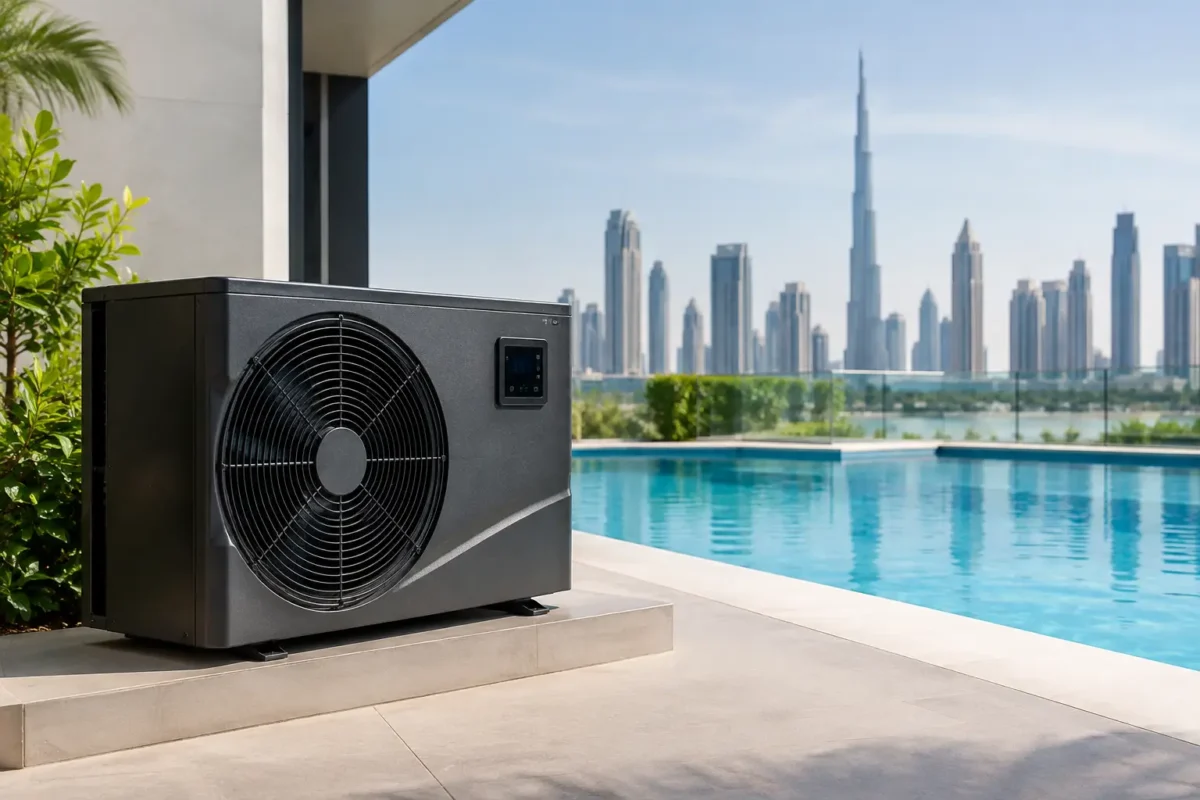
A pool in Dubai can be exposed to intense summer heat, cooler winter evenings, and wide temperature swings between day and night. AstralPool AHP Series heat cool pumps are designed to address that reality with controlled heating and cooling from one purpose-built system. For villa owners, hotels, residential communities, and commercial facilities, this means a more comfortable pool season, better guest experience, and a practical way to protect the value of a premium aquatic installation.
A heat-cool pump should not be selected as a standalone purchase. Its performance depends on pool volume, exposure to sun and wind, desired operating period, hydraulic design, electrical supply, and the condition of the existing equipment room. The right AstralPool AHP solution pairs dependable equipment with correct sizing, professional installation, and ongoing technical support.
Why pool temperature control matters in the UAE
Temperature management is often associated only with heating, but cooling can be just as valuable in the UAE. During peak summer, direct sunlight and high ambient temperatures can push pool water beyond the range many swimmers find refreshing. A properly selected heat-cool pump helps maintain a more usable water temperature, particularly in luxury villas, rooftop pools, hotel leisure areas, and facilities where pool comfort is part of the property experience.
In the cooler months, heating extends the practical swimming season. Rather than accepting that a pool will sit unused for much of the year, owners can set a target temperature appropriate for families, guests, training, or relaxation. This flexibility is especially valuable for properties that market lifestyle amenities, where an inviting pool contributes directly to resident satisfaction or hospitality standards.
The aim is not to force a pool to an extreme temperature at all times. It is to maintain a stable, appropriate range efficiently. That distinction affects both equipment sizing and operating cost.
What sets AstralPool AHP Series heat cool pumps apart
AstralPool is a recognized name in professional pool equipment, and the AHP Series is suited to projects where performance, reliability, and appearance all matter. These units provide reversible operation, allowing the system to heat or cool water according to seasonal conditions and user requirements. One system can therefore support year-round pool management without requiring separate heating and cooling equipment.
For property owners, the benefit is convenience. For facility managers, it is operational control. A unit selected for the project can work with the filtration system to circulate conditioned water throughout the pool, supporting a consistent environment instead of short-term, uneven temperature changes.
Energy efficiency is also central to the heat-pump approach. Rather than generating all heat through direct electric resistance, a heat pump transfers available heat energy through its refrigeration cycle. Actual efficiency will vary with outdoor temperature, water temperature, installation conditions, and operating schedule, but this method can be a more considered option for pools that require regular heating.
Cooling performance also deserves realistic expectations. A heat-cool pump can reduce excessive pool temperatures, but the result depends on factors such as pool surface area, solar exposure, bather load, water features, and the hours the equipment operates. An exposed infinity pool in full sun presents a different challenge from a shaded indoor pool. A technical assessment is the right starting point.
Selecting the right capacity for the pool
The most common mistake in pool climate control is choosing a unit based only on pool size. Water volume matters, but it is not the whole calculation. A large shaded pool may have lower heat gain than a smaller pool with dark finishes, unrestricted sunlight, and decorative waterfalls operating throughout the day.
A professional recommendation should consider the pool’s dimensions and volume, desired temperature range, geographic location, orientation, operating hours, and whether a cover is used. It should also account for the surrounding environment. Wind exposure increases evaporation and heat loss, while an enclosed pool space may retain heat and humidity differently.
For commercial projects, the assessment should go further. Hotels and residential towers may face variable bather loads, longer operating windows, and higher expectations for water comfort. Equipment should be selected for the real duty cycle, not simply for a best-case scenario. Under-sizing can lead to slow recovery, constant operation, and disappointing results. Over-sizing may increase upfront investment and require careful integration with the pool’s electrical and hydraulic infrastructure.
Aquatic Pools and Fountains supports clients with equipment selection based on site requirements rather than generic assumptions. This approach is especially important for high-value developments where the pool is a visible part of the property offering.
Heat, cool, or both?
For many UAE installations, a reversible heat-cool model is the most flexible choice. It allows the operator to respond to changing seasons and sudden weather conditions without altering the core equipment setup. This is ideal for villas used throughout the year and commercial properties where guest comfort cannot be limited to one season.
A heating-focused approach may suit a pool used mainly during cooler months, while cooling becomes more significant for pools that remain active through the height of summer. The correct decision depends on how the pool is actually used. A private family pool and a hotel pool may have very different priorities even when their dimensions are similar.
Installation quality protects performance
Even premium equipment cannot compensate for poor installation. The heat-cool pump must be positioned with suitable airflow, service access, drainage, and clearances. Restricting airflow around the unit can reduce efficiency and place unnecessary strain on components. Locating the unit without considering noise, vibration, and access can also create avoidable concerns for residents and maintenance teams.
Hydraulic integration is equally important. The system needs appropriate water flow through the heat pump, correct pipe sizing, properly placed bypass arrangements where required, and coordination with the filtration pump and treatment equipment. The goal is stable circulation without creating excessive resistance or compromising filtration performance.
Electrical requirements should be verified before installation, particularly on retrofit projects. A professional team will assess available power, isolation provisions, protective devices, cable routing, and control integration. This is not only a matter of performance. It supports safe, reliable operation over the life of the equipment.
For new builds, planning the heat-cool pump early allows the equipment room, pipe routes, electrical supply, and acoustic considerations to be designed properly. For existing pools, a site inspection identifies the practical modifications needed to add temperature control without disrupting the wider system.
Operating the system with greater efficiency
A heat-cool pump performs best when it is used as part of a disciplined pool-management plan. Set a sensible target temperature and allow the unit time to maintain it. Repeatedly changing the set point or expecting immediate changes in a large body of water can increase energy use and reduce comfort consistency.
A pool cover is one of the most effective companions to temperature-control equipment. It helps limit evaporation, heat loss at night, and heat gain from intense sunlight, depending on the cover type and operating conditions. It can reduce the load placed on the heat-cool pump while also helping conserve water and maintain chemical balance.
Filtration schedules should be coordinated with the pump’s operating requirements. The system needs adequate circulation to condition the full pool volume. Water chemistry also matters. Balanced water protects pool finishes, circulation components, and heat-exchanger surfaces, while poor chemical control can shorten equipment life and increase maintenance needs.
Routine maintenance should include cleaning external air paths, checking drainage, inspecting connections, reviewing water flow, and confirming that operating controls are functioning correctly. Service requirements vary by installation, but regular professional inspection is a sensible investment for high-use residential and commercial pools.
A premium addition to a complete pool system
AstralPool AHP Series heat cool pumps are most effective when considered alongside the rest of the pool system: circulation pumps, filters, automation, covers, sanitation equipment, and water-testing routines. A well-coordinated installation delivers more than warm or cool water. It provides a pool environment that looks refined, operates reliably, and remains ready for use when residents or guests expect it.
For a luxury villa, that may mean cooler afternoon swimming in summer and comfortable family use on winter evenings. For a hotel or residential development, it can mean a stronger amenity experience and fewer operational compromises across the year. The equipment choice should reflect the standard of the property and the level of service expected from it.
Before selecting a model, arrange a technical assessment of the pool, its equipment room, and its intended use. The best result comes from matching the AstralPool AHP Series unit to the conditions it will face, then giving it the installation and maintenance support required to perform at a premium standard.