
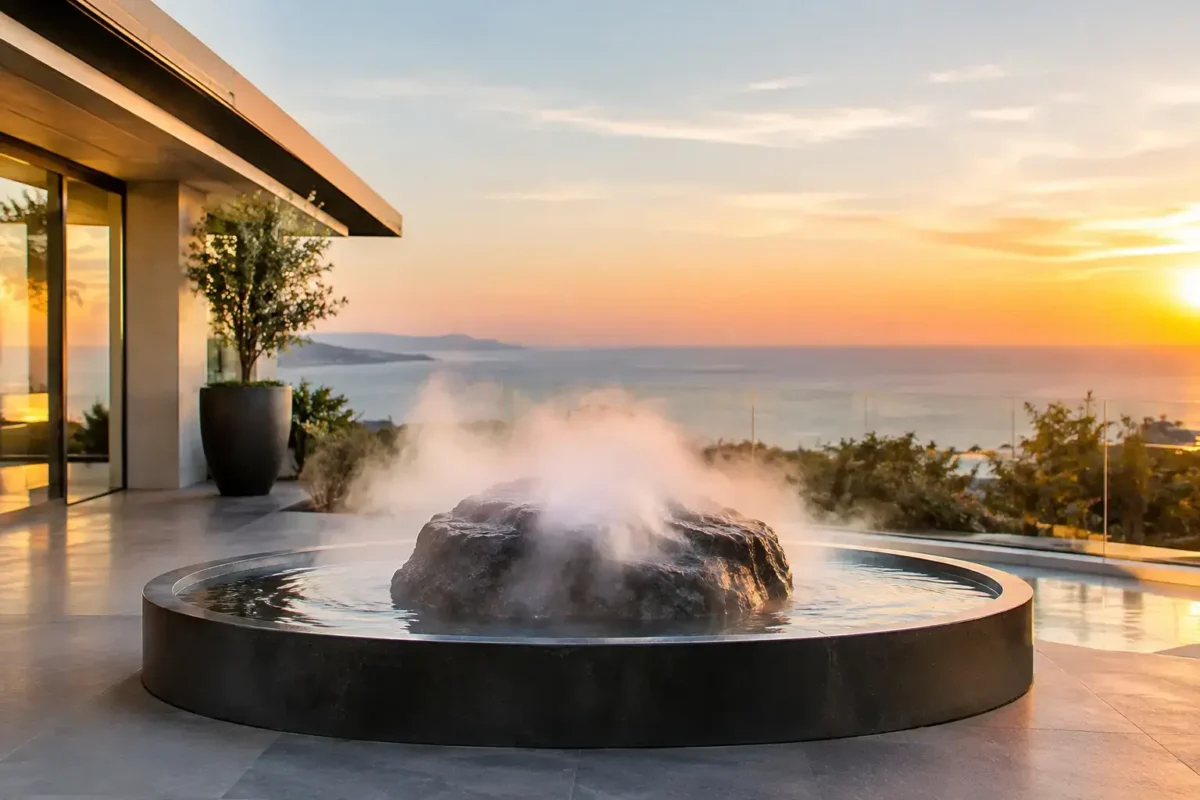
A still fountain can look elegant. Add a controlled layer of low-lying mist, and it becomes an experience. A fountain mist maker introduces a cool, atmospheric effect that gives water features greater depth, movement, and visual presence – particularly in luxury villas, hotel entrances, retail settings, and landscaped commercial properties.
For premium projects in Dubai and across the UAE, the effect is only part of the decision. The right misting system must suit the fountain design, water conditions, operating schedule, lighting plan, and maintenance capability. Selecting equipment on appearance alone often leads to weak mist output, visible cabling, premature component wear, or an installation that is difficult to service.
What a Fountain Mist Maker Does
A fountain mist maker uses ultrasonic vibration to break water into exceptionally fine droplets. Rather than producing a visible spray like a nozzle, it creates a soft cloud that settles close to the water surface. This makes it particularly effective for reflecting pools, indoor fountains, decorative bowls, wall fountains, and focal-point water features where a calm, premium atmosphere is the goal.
The mist is generated by ultrasonic discs, often called transducers, that operate beneath the water. When configured correctly, the result is a dense, even layer of mist that enhances the water feature without overpowering its architectural design. Integrated LED lighting can further transform the effect after dark, adding color, drama, and a strong sense of arrival to a property.
Mist makers are not a substitute for pumps, filtration, or circulation equipment. They are decorative components that perform best when integrated into a complete fountain system. The basin still requires proper water movement, filtration where appropriate, drainage planning, safe electrical connections, and access for regular cleaning.
Where Mist Effects Create the Greatest Value
In luxury residential settings, a mist maker can give a courtyard fountain, entrance feature, or garden pond a more distinctive identity. The effect is especially compelling when paired with natural stone, architectural lighting, and still water. It adds visual interest without requiring a large water jet or high pump output, which helps preserve the quiet character many villa owners want around outdoor living areas.
For hotels, restaurants, and commercial developments, mist creates a memorable visual layer in high-visibility areas. A fountain at a lobby entrance or landscaped drop-off zone has only seconds to make an impression. Mist can give the installation a more polished, high-end appearance while making lighting effects more visible in the evening.
Indoor applications require additional care. While mist is appealing in reception areas, spas, and retail spaces, the surrounding finishes, ventilation, and humidity levels must be reviewed. An oversized unit in a confined indoor space may create unwanted moisture on nearby surfaces. A properly specified system balances visual density with the practical conditions of the site.
Selecting the Right Fountain Mist Maker
The first consideration is the size and shape of the water feature. A compact decorative bowl may need a single-disc unit, while a wide reflecting basin may require multiple units positioned strategically to avoid gaps in the mist field. More transducers generally produce denser mist, but capacity should be based on the intended visual effect rather than simply choosing the largest option available.
Water depth is equally important. Ultrasonic units operate within a specific depth range, usually maintained by a float ring or dedicated mounting arrangement. If the water level falls too low, the unit may stop producing mist or operate inefficiently. If it sits too deeply, output can also be reduced. Reliable water-level control is therefore a key part of a professional installation.
Consider the placement of the unit within the basin. A mist maker positioned directly beside a strong fountain jet may struggle to create a uniform effect because splashing and turbulence disrupt the fine droplets. In some designs, separating the misting zone from high-energy water movement produces a cleaner, more consistent result. Concealed chambers, recessed trays, and carefully designed water channels can help maintain the correct operating conditions while keeping equipment out of sight.
Lighting should be specified as part of the full design. White light creates a clean, architectural appearance, while RGB lighting allows a water feature to support seasonal themes, hospitality events, and branded environments. The best result comes from lighting that complements the mist rather than shining directly into the viewer’s eyes or exposing cables and fittings.
Outdoor Heat, Water Quality, and Wind
Dubai’s climate makes technical selection particularly important. High ambient temperatures increase evaporation, while outdoor wind can disperse mist before it achieves the intended effect. In exposed locations, a mist maker may need to be placed within a protected basin area or paired with landscaping and architectural elements that reduce air movement.
Water quality directly affects performance and service life. Mineral buildup on ultrasonic discs can reduce mist output and accelerate wear. Decorative fountains should be maintained with suitable water treatment, periodic cleaning, and water chemistry monitoring appropriate to the installation. This is especially relevant where water is recirculated continuously or where the source water has elevated mineral content.
A professional supplier can recommend equipment and maintenance procedures suited to the fountain’s water volume, operating hours, and environmental exposure. This is a better approach than treating the mist maker as an isolated accessory added after the fountain is complete.
Installation Details That Protect Performance
Electrical safety is non-negotiable. Fountain mist makers operate with low-voltage components in and around water, but they still require correct transformers, protected cable routing, weather-appropriate enclosures, and installation by qualified technicians. All connections should remain accessible for inspection and replacement without requiring the fountain to be dismantled.
The water feature should also have practical service access. Ultrasonic discs are consumable components and will eventually need replacement. If the unit is installed beneath fixed stonework or behind permanently sealed features, a routine service task can become expensive and disruptive. A removable grille, access panel, or concealed service hatch protects both the installation and the owner’s long-term investment.
Automation can make a major difference for commercial properties and busy homeowners. Timers, level sensors, and coordinated lighting controls help ensure the mist feature runs when the area is occupied and switches off during scheduled maintenance or low-water conditions. In hospitality and mixed-use environments, this control supports a consistent guest experience while avoiding unnecessary operating time.
Maintenance Is Part of a Premium Result
Mist makers require attention, but their maintenance needs are straightforward when planned correctly. The basin should be kept free from leaves, algae, sediment, and debris that can interfere with the transducers. Water levels need monitoring, especially during hot periods, and the discs should be inspected for mineral deposits or signs of reduced output.
For a residential fountain used periodically, routine checks may be sufficient. For a hotel, residential tower, or commercial development where the water feature operates daily, a scheduled service program is the smarter choice. Regular inspection protects visual quality, reduces unexpected downtime, and identifies issues with pumps, filtration, lighting, or water treatment before they affect the complete installation.
Aquatic Pools and Fountains supports fountain projects with premium equipment, technical guidance, installation expertise, and ongoing maintenance support. For new builds, renovation work, or a feature upgrade, the most effective approach is to assess the fountain as a complete system rather than purchase individual components without a performance plan.
A well-designed mist effect should feel effortless to everyone who sees it. Behind that calm, luxurious atmosphere should be the right equipment, stable water conditions, professional installation, and a maintenance plan that keeps the feature performing at its best.