A pool can look impressive from a distance and still be developing problems below the surface. Cloudy water, scale on the tile line, clogged filters, and poor sanitizer balance rarely happen all at once. More often, they build gradually until the water loses clarity, equipment works harder, and the overall finish no longer matches the standard of the property. That is why pool cleaning is not a cosmetic task. It is a core part of protecting performance, appearance, and long-term asset value.
For villa owners, hospitality operators, and facility managers in the UAE, expectations are high. Water must remain clear, inviting, and safe in demanding heat, frequent use, and dusty outdoor conditions. A premium pool environment depends on more than occasional skimming. It requires a disciplined cleaning program, the right equipment, and technical oversight that keeps every part of the system working as it should.
Why pool cleaning matters beyond appearance
Clean water is the visible result, but the real value of pool cleaning is operational. When debris stays in the pool, it strains circulation. When filters are overloaded, pumps work harder than necessary. When chemistry drifts, surfaces stain, fittings deteriorate, and swimmer comfort declines. In commercial settings, these issues can affect guest satisfaction and maintenance budgets at the same time.
There is also a clear difference between a pool that is merely usable and one that reflects premium standards. High-end residential and commercial properties are judged by presentation. Water clarity, clean finishes, balanced circulation, and stain-free surfaces all contribute to that impression. If the pool is part of a luxury villa, residential tower, hotel, or clubhouse, maintenance quality becomes part of the property brand.
The core elements of effective pool cleaning
Professional cleaning is a combination of surface care, water treatment, and equipment management. Focusing on only one area creates gaps. Skimming leaves behind chemistry issues. Chemical dosing without brushing allows algae and scale to develop. Vacuuming without checking filtration only addresses symptoms.
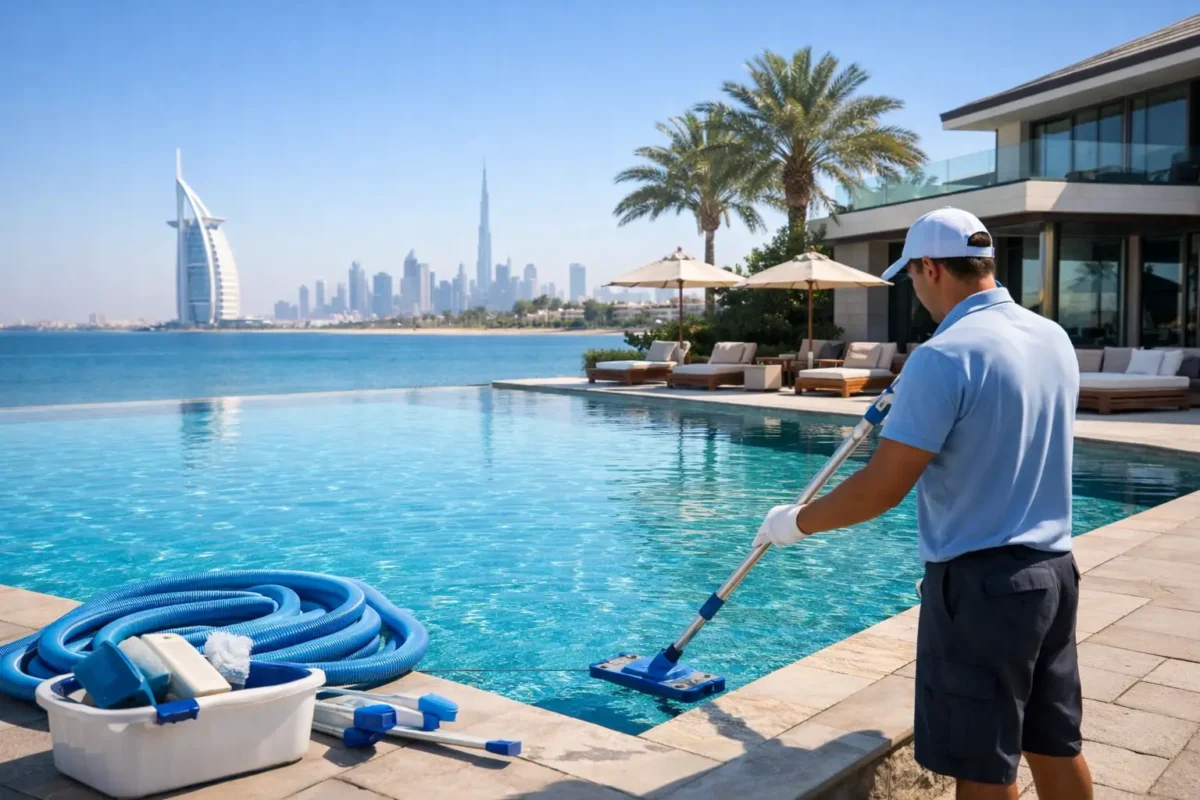
A complete approach usually starts with removal of floating debris, followed by brushing walls, steps, corners, and the waterline. Vacuuming or automated cleaning then removes settled particles from the floor. After that, basket clearing, filter inspection, circulation checks, and water testing confirm whether the system is supporting clean conditions or quietly working against them.
For premium installations, details matter. Overflow pools, decorative features, attached spas, water features, and custom lighting niches all introduce maintenance requirements that standard routines may miss. The right cleaning plan must match the design and usage of the pool, not just its size.
Water chemistry is part of pool cleaning
Many property owners think of cleaning as physical removal of dirt and leaves, but chemistry control is inseparable from the process. Water can appear acceptable and still be unbalanced. Poor pH control reduces sanitizer efficiency. High calcium levels contribute to scaling. Low sanitizer levels encourage algae and bacteria growth. Excess stabilizer or dissolved solids can also reduce water quality over time.
In the UAE climate, this becomes even more important. Heat, evaporation, dust, and heavy sunlight place constant pressure on balance. Pools that receive frequent top-ups or high bather loads need closer monitoring, especially in commercial and hospitality settings. Reliable testing and correct dosing protect both swimmers and equipment, while helping preserve tile, grout, metal components, and internal system parts.
Filtration and circulation decide the real result
A pool cannot stay clean if water is not moving properly. Circulation carries debris to baskets and filters, distributes chemicals, and prevents stagnant zones where algae can start. If return flow is weak, the pump is underperforming, or the filter is clogged, the pool may never achieve stable clarity no matter how often it is brushed.
This is where many maintenance problems become expensive. A neglected filter or blocked basket seems minor at first, but over time it can shorten pump life, reduce efficiency, and create repeat water quality issues. Strong pool cleaning programs always include filter care, basket cleaning, and inspection of pumps, valves, and other key components.
Common pool cleaning problems in UAE properties
The local environment creates specific challenges. Windblown dust and sand settle quickly and can make pool floors look dirty even after recent service. Intense sun accelerates sanitizer loss and increases water temperature, which can encourage algae if chemistry slips. Hard water conditions may lead to scale formation on tiles, fittings, and inside equipment.
There is also the issue of usage pattern. A private villa pool may face heavy weekend demand and quieter weekdays. A hotel or residential complex may have steady daily use and tighter appearance standards. These are not the same maintenance conditions, so they should not be treated with the same schedule.
Pools with water features, in-floor systems, heat-cool pumps, or advanced disinfection setups need cleaning teams that understand how these systems interact. Cleaning without technical awareness can lead to poor settings, wasted chemicals, or avoidable wear on expensive equipment.
How often should pool cleaning be done?
It depends on the pool type, surrounding environment, and service expectations. For many outdoor pools in the UAE, regular weekly service is the minimum for maintaining stable conditions. High-use commercial pools, hospitality environments, and heavily landscaped properties may require more frequent attention.
A luxury residential pool may look calm and simple, but if it is exposed to dust, direct sun, and warm temperatures, chemistry and debris can shift quickly. On the other hand, an indoor pool may collect less debris but still require close monitoring for water balance, filtration, and hygiene.
The right answer is not just frequency. It is consistency. A planned maintenance schedule with documented checks is far more effective than reactive cleaning after water quality has already declined.
Choosing the right equipment for better pool cleaning
Results depend heavily on the equipment behind the service. High-quality pumps, filters, testing systems, cleaning tools, and disinfection equipment make maintenance more accurate and more efficient. Inferior components often create recurring problems that get blamed on cleaning when the real issue is system performance.
For example, a well-matched filtration system improves clarity and reduces pressure on chemicals. Reliable water testing supports precise dosing rather than guesswork. Proper suction tools, brushes, and vacuum systems improve cleaning speed without damaging finishes. In larger commercial settings, equipment selection is even more important because downtime and inconsistency have immediate operational consequences.
This is why many property owners and facility teams prefer a partner that can supply products, provide technical guidance, and support ongoing maintenance in one place. When the service team understands the installed equipment, diagnosis is faster and standards are easier to maintain.
Professional pool cleaning vs in-house maintenance
There are cases where in-house teams can manage basic routines, especially for simple residential setups. Skimming, checking baskets, and monitoring obvious changes in water appearance are useful day-to-day actions. But premium pools and commercial installations usually require more than routine surface care.
Professional pool cleaning brings consistency, technical judgment, and access to the right materials and replacement parts. It also reduces the risk of overcorrecting chemistry, missing early equipment issues, or allowing hidden buildup to become a larger repair. For developers, hospitality operators, and high-end homeowners, that reliability matters. The goal is not just to keep the pool open. It is to keep it performing to a premium standard without interruption.
At Aquatic Pools and Fountains, this standard is built around quality equipment, skilled technical support, and maintenance practices suited to both luxury residential and demanding commercial environments.
What to expect from a premium pool cleaning partner
A strong service provider should do more than remove debris and leave. The real value comes from structured maintenance, accurate testing, equipment awareness, and the ability to recommend corrective action before issues become visible failures. That includes understanding pumps, filters, lighting, disinfection systems, fittings, and surface conditions as part of one operating environment.
Responsiveness also matters. Property managers and homeowners do not want delays when clarity drops, equipment performance changes, or a pool is being prepared for guests, tenants, or a handover. A capable partner combines stock availability, technical expertise, and service reliability so maintenance remains efficient and predictable.
In premium properties, pool cleaning is not a background task. It is part of protecting aesthetics, safety, and investment value. When the water is clear, surfaces are clean, and the system is running correctly, the entire space feels finished. That is the standard worth maintaining year-round.