Cloudy water, strong chemical odor, and inconsistent sanitizer levels usually point to the same issue – the wrong pool disinfection system for the pool’s size, usage, and operating conditions. In premium residential and commercial environments, disinfection is not a background detail. It directly affects water clarity, swimmer comfort, equipment life, and the standard your property presents every day.
A high-performing pool should look polished, feel balanced, and stay reliable under regular use. That only happens when the disinfection method is selected with the same care as the pumps, filters, lighting, and finishes. For villa pools, hospitality settings, residential towers, and commercial facilities, the right system is less about following trends and more about matching the technology to the project.
What a pool disinfection system actually does
A pool disinfection system controls bacteria, algae, and organic contaminants in the water. It works alongside circulation and filtration, not in place of them. Filtration removes suspended debris and particles, while disinfection manages the invisible contaminants that affect hygiene and water quality.
This distinction matters. Even a premium filter and strong hydraulic design cannot compensate for poor sanitizer control. If disinfection is inconsistent, water quality drops quickly, especially in warm climates and high-use pools. In regions like Dubai and the wider UAE, heat, sunlight, dust, and frequent bathing loads place extra pressure on every pool system, which makes accurate disinfection even more critical.
Main types of pool disinfection system options
There is no single best choice for every pool. The right answer depends on pool volume, user load, maintenance expectations, operating budget, and whether the project is residential or commercial.
Chlorine dosing systems
Chlorine remains the benchmark for pool sanitation because it is proven, effective, and suitable for a wide range of applications. Automated dosing systems improve results significantly by feeding sanitizer in controlled amounts rather than relying on manual addition.
For many residential pools, automatic chlorine dosing offers a practical balance of performance and control. For commercial pools, it is often the most dependable baseline because it supports compliance, handles heavier swimmer loads, and can be integrated with monitoring systems.
The trade-off is that chlorine levels must be managed carefully. Too little sanitizer leads to water quality problems. Too much can affect comfort, surfaces, and equipment over time. In premium projects, automation is what turns chlorine from a basic chemical solution into a reliable treatment strategy.
Salt chlorination systems
Salt chlorination systems generate chlorine from salt in the pool water, giving owners a more refined operating experience than manual chlorination. Many clients prefer this option because the water often feels gentler and day-to-day chemical handling is reduced.
For luxury villas and private pools, salt systems are a popular choice when owners want convenience and a more comfortable swimming environment. They can also reduce the peaks and dips associated with manual sanitizer dosing.
Still, salt systems are not maintenance-free. Cells require inspection and cleaning, water balance remains essential, and some materials need to be selected with corrosion resistance in mind. In coastal or exposed environments, that detail becomes even more important.
UV pool disinfection system setups
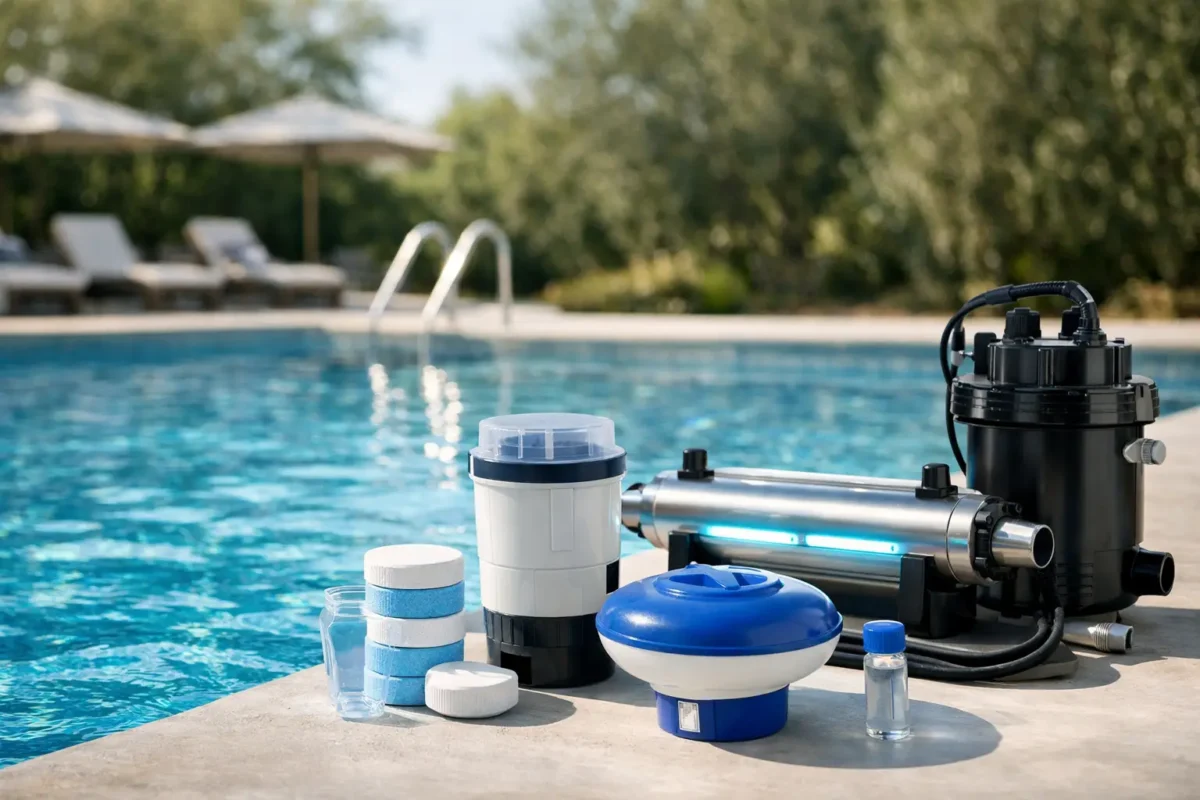
A UV pool disinfection system exposes circulating water to ultraviolet light, helping neutralize microorganisms and reduce chloramine formation. This can improve air quality and swimmer comfort, which is especially valuable in indoor pools or enclosed leisure areas.
UV is best understood as a secondary treatment rather than a complete replacement for residual sanitizer. It improves water quality, but most pools still need chlorine or another approved sanitizer in the water itself. For hospitality, wellness, and high-end residential projects where user experience matters, UV can be an excellent upgrade.
Ozone systems
Ozone is a powerful oxidizer that helps break down contaminants efficiently and can improve water clarity. It is often selected for premium installations where water appearance and reduced chemical byproducts are priorities.
Like UV, ozone is usually part of a broader treatment design rather than a standalone answer. It performs well when integrated correctly, but it requires proper engineering, compatible components, and a clear understanding of the operating environment. In the right project, it adds real value. In the wrong one, it adds complexity without proportional benefit.
How to choose the right pool disinfection system
The starting point is always the pool itself. A private villa pool used by one family has very different needs from a hotel pool, a residential tower amenity deck, or a commercial training facility. Water volume, bather load, operating hours, and exposure to sunlight all influence the correct specification.
Maintenance expectations matter just as much. Some owners are comfortable with routine checks and system care. Others want a setup that minimizes manual intervention and keeps performance steady with professional servicing. A sophisticated system can deliver excellent results, but only if it is supported correctly.
Material compatibility should not be overlooked. Disinfection choices affect pipework, fittings, heat exchangers, pool finishes, and surrounding equipment. A premium installation should be designed as one complete system, not as isolated products selected one by one.
Budget should be viewed in terms of lifecycle value, not only purchase price. A lower-cost system may appear attractive initially, but if it leads to unstable water chemistry, higher maintenance, faster wear, or guest complaints, it becomes expensive very quickly. The stronger investment is usually the one that supports lasting performance with fewer operational issues.
Why automation matters in modern pool disinfection system design
Manual testing and dosing can work in small pools, but consistency is difficult to maintain. Automated controllers monitor water parameters and adjust chemical feed with far greater accuracy. This protects water quality, reduces waste, and supports a more professional standard of operation.
For commercial facilities and high-value residential properties, automation is no longer a luxury feature. It is part of responsible pool management. Stable dosing helps preserve finishes, supports swimmer comfort, and reduces the risk of sudden water quality problems during peak use.
This is where technical guidance makes a measurable difference. The most effective setup is not simply a product from a leading brand. It is the correct controller, feeder, sensors, and support equipment configured for the exact demands of the pool.
Common mistakes that lead to poor disinfection performance
Many disinfection issues are not caused by the sanitizer itself. They come from undersized equipment, poor circulation, inaccurate dosing, neglected calibration, or a mismatch between system capacity and actual pool use. Even a high-end disinfection unit will struggle if the surrounding infrastructure is weak.
Another common mistake is choosing based on trend rather than application. A homeowner may request UV because it sounds advanced, while the pool really needs better dosing control and stronger filtration. A commercial buyer may focus on low upfront cost and later face higher chemical consumption, more downtime, and repeated service calls.
Premium results depend on correct specification from the start. That includes hydraulic design, filtration efficiency, testing accuracy, and a maintenance plan that keeps the system performing as intended.
Pool disinfection system solutions for residential and commercial projects
Residential pools often benefit from clean, automated solutions that reduce manual work while protecting comfort and aesthetics. Salt chlorination, automated chemical dosing, and selected UV support can all perform well when tailored to the pool’s structure and usage pattern.
Commercial pools need a more rigorous approach. Hotels, residential communities, sports facilities, and corporate properties require systems that can sustain heavier demand, support compliance standards, and deliver dependable water quality every day. In these environments, durability, monitoring, and serviceability are just as important as disinfection strength.
That is why many clients prefer working with a full-scope technical partner rather than sourcing equipment in pieces. Product quality matters, but so do installation standards, compatibility checks, commissioning, and ongoing support. Aquatic Pools and Fountains delivers this level of coordination for projects that cannot afford compromise.
The value of expert specification
A well-chosen pool disinfection system protects far more than water. It protects the appearance of the pool, the comfort of the user, the reliability of the plant room, and the long-term value of the property. For premium developments and private residences alike, this is not an area for guesswork.
The right system should fit the project, not force the project to adapt to the equipment. When disinfection is selected with technical precision and supported by professional installation and maintenance, the result is simple – cleaner water, stronger performance, and a pool that reflects the standard the property was built to deliver.
If you are planning a new pool or upgrading an existing one, the smartest next step is to choose a solution that matches your water quality goals as closely as it matches your design ambitions.