
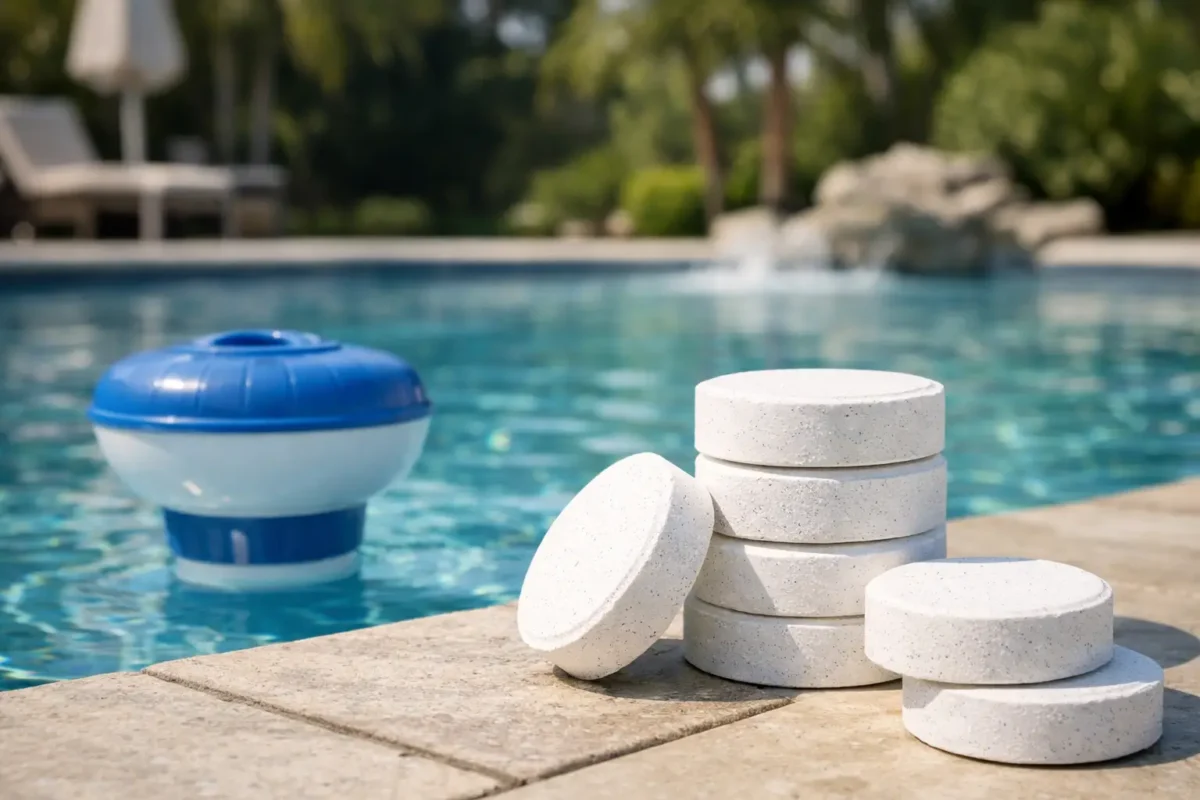
A pool can look perfectly clear at noon and still be under-protected by evening. In the UAE, intense sunlight, high water temperatures, frequent use, and airborne dust place constant pressure on sanitizer levels. Pool chlorine tablets provide a controlled, practical way to maintain residual chlorine between service visits, but only when they are matched to the pool’s size, equipment, and water chemistry.
For villa pools, hospitality properties, residential towers, and commercial facilities, tablet chlorination should be treated as part of a complete water-care program – not as a one-product solution. The right tablets, feeder, testing routine, and professional oversight protect water quality while helping preserve premium finishes, pumps, filters, and heating equipment.
Why Pool Chlorine Tablets Remain a Preferred Choice
Chlorine tablets are designed to dissolve gradually, releasing sanitizer over time rather than delivering all chlorine at once. This makes them especially useful for pools that require consistent day-to-day protection, including private pools occupied on weekends and commercial pools with regular swimmer loads.
Most tablets are made with trichloroisocyanuric acid, commonly called trichlor. This stabilized chlorine contains cyanuric acid, which helps protect free chlorine from being rapidly broken down by sunlight. That benefit matters greatly for outdoor pools exposed to strong UAE sun. Compared with unstabilized chlorine, properly used tablets can provide more dependable chlorine retention and reduce the frequency of manual dosing.
Their convenience should not be confused with a set-and-forget approach. Tablets lower pH over time and add stabilizer with every dose. Without regular testing and periodic water management, a pool may develop an excessive cyanuric acid level, making chlorine less effective even when test results appear acceptable. Premium pool care depends on control, not simply adding more product.
Choosing the Right Pool Chlorine Tablets
Tablet selection begins with the pool itself. A compact residential pool has different demand patterns from a hotel pool, a community pool, or a decorative water feature with its own treatment requirements. The tablet size, dissolution rate, packaging quality, and compatible dosing equipment all influence results.
Three-Inch Tablets for Sustained Dosing
Three-inch tablets are the standard choice for many residential and commercial swimming pools. Their larger surface area and slower dissolution make them suitable for automatic chlorinators and floating dispensers. When installed in a correctly sized inline or offline feeder, they can provide a consistent chlorine supply with less daily intervention.
For larger pools or sites with continuous bather activity, a feeder system offers greater control than placing tablets in a floating dispenser. A technician can adjust the feed rate according to water temperature, pool volume, usage, and test results. This creates a more reliable operating routine for facility managers and service teams.
One-Inch Tablets for Smaller Applications
One-inch tablets dissolve faster and are generally better suited to spas, small water bodies, and compact tablet feeders. They may be practical where a large tablet would release chlorine too slowly, but their use still requires accurate calculation. Faster dissolution can lead to rapid changes in chlorine concentration, particularly in small volumes of water.
Quality Matters More Than the Lowest Purchase Price
Low-grade tablets can crumble, dissolve unpredictably, or leave unnecessary residue in feeders. For a luxury villa or high-visibility commercial property, inconsistent chemical performance creates avoidable service calls and can affect guest confidence. High-quality, tightly compressed tablets from established manufacturers deliver more consistent dosing and are easier on properly maintained equipment.
The correct choice also depends on whether the pool uses chlorine as its primary disinfection method or works alongside salt chlorination, UV, ozone, or another supplementary system. Secondary systems can reduce chlorine demand, but they do not eliminate the need for a measured sanitizer residual in most pool environments.
Correct Dosing Is Based on Testing, Not Guesswork
There is no universal number of tablets that suits every pool. Adding tablets based only on pool size overlooks factors such as water temperature, sunlight, swimmer load, filtration hours, rainfall, and the existing level of cyanuric acid. A heavily used pool in peak summer may consume chlorine substantially faster than the same pool during a quieter period.
The practical target is to maintain free chlorine within the range recommended for the specific pool and local operating requirements. For many traditionally chlorinated pools, that commonly means maintaining an appropriate measurable residual while keeping pH, total alkalinity, and stabilizer in balance. The exact target should reflect the pool’s design, usage, and treatment system.
Test free chlorine and pH frequently, especially after parties, high occupancy periods, dust events, or maintenance work. Commercial and hospitality operators may require more frequent documented checks. If chlorine is low, do not assume that increasing tablet quantity is the only answer. Inspect circulation, filter condition, feeder settings, stabilizer level, and bather load before changing the treatment plan.
Where to Place Chlorine Tablets Safely
Chlorine tablets should be used in an automatic chlorinator, dedicated chemical feeder, or suitable floating dispenser. These options keep concentrated chlorine away from sensitive surfaces and allow the product to dissolve in a controlled manner.
Do not place tablets directly in the pool, on the floor, or against tile, vinyl, plaster, or coping. Concentrated chlorine can bleach surfaces, stain finishes, and damage materials. Tablets should also not be placed directly in a skimmer unless the pool equipment manufacturer and treatment design specifically permit it. When circulation stops, highly chlorinated water can remain in the plumbing and may contribute to corrosion or equipment damage.
A professionally selected feeder is especially valuable for premium installations. It should be compatible with the pool’s flow rate, positioned correctly within the hydraulic system, and adjusted during routine service. This protects the chemical balance while preserving the life of pumps, heaters, valves, and other essential equipment.
The Stabilizer Trade-Off Every Owner Should Understand
The same stabilizer that protects chlorine from sunlight can become a limitation if it accumulates excessively. Cyanuric acid does not evaporate or get consumed at the same rate as chlorine. Over time, repeated tablet use can raise it to a level where chlorine responds more slowly and sanitation becomes harder to manage.
The usual remedy is not simply to add stronger chemicals. It may require partially draining and refilling the pool, then rebalancing the water carefully. This is why regular professional testing is valuable. It identifies the trend before the pool begins demanding excessive chlorine or experiencing recurring clarity issues.
A balanced strategy may include tablets for routine sanitation, a non-stabilized chlorine product when an immediate adjustment is needed, and periodic review of cyanuric acid levels. The best approach depends on the pool’s exposure, water source, occupancy, and maintenance schedule.
Protecting Equipment and Water Quality Together
Chlorine tablets cannot compensate for inadequate circulation or neglected filtration. If a filter is dirty, a pump is undersized, or return flow is poorly distributed, sanitizer will not reach every area of the pool effectively. Dead spots can encourage algae growth and make water care appear more difficult than it should be.
For dependable results, chemical treatment should work alongside correctly sized pumps, filters, automatic controls, and water testing equipment. Pool owners should also keep the feeder clean, store tablets in a cool, dry, ventilated location, and never mix chlorine products with other chemicals. Moisture, contamination, and improper storage can create serious safety risks.
Aquatic Pools and Fountains supports clients with premium chlorine tablets, dosing equipment, water-testing solutions, and technical guidance tailored to residential and commercial pool systems across the UAE. A properly specified treatment plan reduces reactive maintenance and helps keep the pool ready for use.
Clear water is only the visible result. The real standard is stable chemistry, protected equipment, and a dosing routine that performs reliably through heat, heavy use, and every season of operation.