
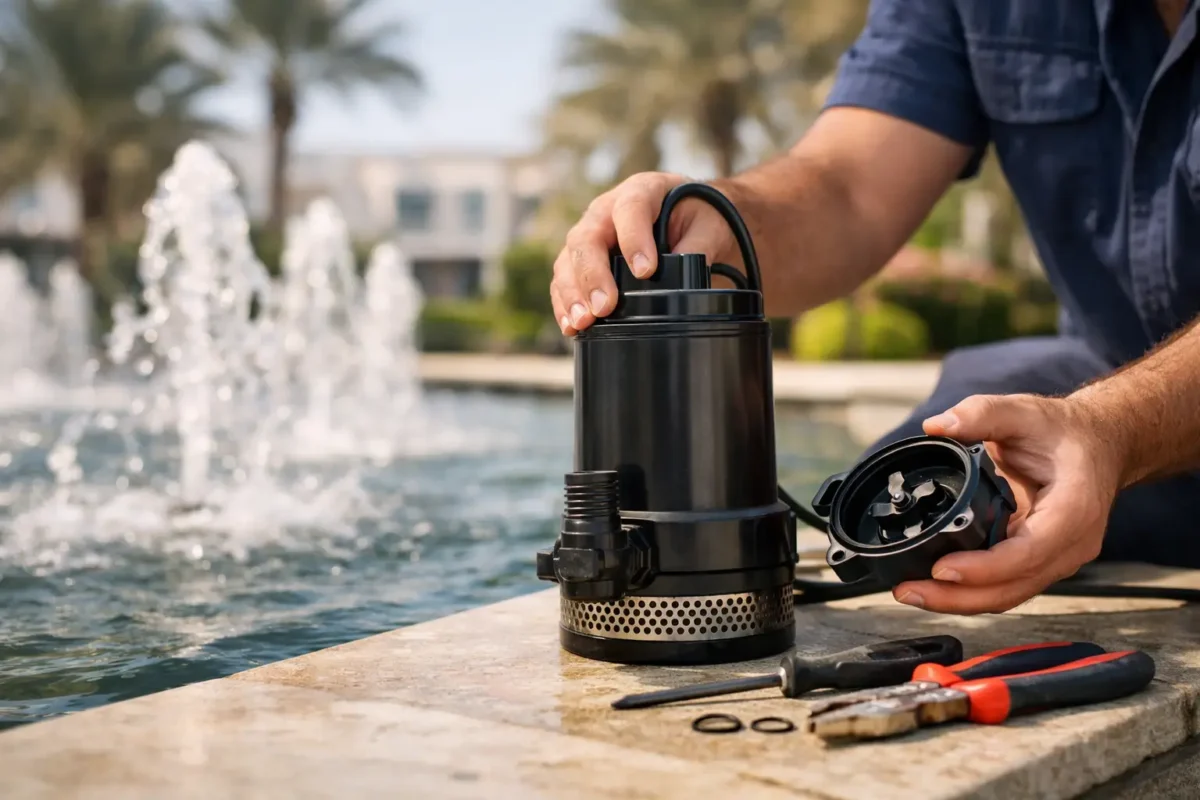
A fountain can look immaculate at sunrise and lose pressure by afternoon when sand, leaves, mineral scale, or a blocked intake begins restricting the pump. Knowing how to maintain fountain pumps is what keeps a premium water feature quiet, balanced, and visually impressive – particularly in the UAE, where heat, dust, evaporation, and high mineral content can place added strain on equipment.
A fountain pump is the working center of the installation. It circulates water through nozzles, creates the required jet height or flow pattern, and supports water quality by preventing stagnation. Regular care protects that performance while reducing the risk of costly failures, water loss, and unplanned disruption at a villa, hotel entrance, residential tower, or commercial landscape.
How to Maintain Fountain Pumps for Lasting Performance
Effective maintenance begins with a simple principle: keep the pump supplied with clean water at the correct level, and keep debris away from moving parts. The exact schedule depends on the fountain’s size, whether it is indoors or outdoors, the filtration design, operating hours, and the volume of airborne dust around the property. A small decorative feature may need light weekly attention, while a high-visibility commercial fountain should follow a planned inspection program.
Before handling any pump, switch off the electrical supply at the designated isolator. Pumps operate in water, so safe isolation is non-negotiable. Never rely on a timer setting or a wall switch alone when cleaning the intake, opening a pump housing, or inspecting electrical connections.
Keep the water level above the pump intake
Low water is one of the fastest ways to damage a fountain pump. As water evaporates in hot conditions, the level can fall below the intake and allow the pump to draw air. This can cause cavitation, excessive noise, overheating, and premature wear on internal components.
Check the water level several times each week during hot, dry periods. The ideal level is high enough to keep the intake fully submerged and allow smooth circulation without pulling air into the system. If a fountain requires frequent top-ups, inspect for splash loss, leaks in pipework, damaged basin seals, or an incorrectly adjusted jet height.
For larger installations, an automatic water-level controller can provide a more reliable solution. It reduces manual intervention and helps protect equipment in properties where fountain operation is continuous or where maintenance access is limited.
Remove debris before it reaches the impeller
Leaves, sand, insects, planting material, and decorative debris can collect around the intake screen. In outdoor fountains, this buildup is common after wind, landscaping activity, or dust storms. Even a partial blockage reduces water flow and makes the pump work harder to produce the same visual effect.
Inspect the intake screen and skimmer area weekly. Remove loose debris by hand or with a suitable vacuum, then rinse the screen with clean water. If the fountain includes a pre-filter, clean it at the same time. This small routine protects the impeller, which is the internal rotating part responsible for moving water through the system.
When flow has already weakened, do not assume the pump has failed. A dirty intake, clogged nozzle, or obstructed filter is often the real cause. Resolving the restriction early may restore normal operation without replacement parts.
Clean the pump and impeller on a planned schedule
A pump that runs continuously should receive a more thorough inspection every one to three months, depending on the quality of the water and the level of debris exposure. Turn off the power, close any relevant valves, and remove the pump according to the equipment manufacturer’s instructions.
Open the pump cover carefully and inspect the impeller chamber. Look for fine sand, hair, scale deposits, or fragments of leaves wrapped around the impeller. Clean the chamber using a soft brush and fresh water. Avoid sharp tools that can scratch seals, damage the housing, or alter the impeller blades.
If mineral deposits are present, use a pump-safe descaling method approved for the equipment and the fountain’s finish. Aggressive acids and unsuitable cleaning chemicals can damage plastic components, rubber seals, metal fittings, and nearby stonework. In premium installations, chemical compatibility matters as much as cleaning frequency.
After reassembly, confirm that the pump is seated correctly, the intake is unobstructed, and the seals are properly positioned. A loose cover or damaged O-ring can allow debris into the chamber or create leakage around the housing.
Maintain Water Quality, Not Just the Equipment
Pump maintenance and water management are closely connected. Dirty or poorly balanced water leaves deposits inside pipework, affects nozzle performance, and can shorten the life of mechanical seals. Clear water is not always clean water, especially in fountains with low turnover or irregular operating hours.
Test the water routinely for pH, sanitizer level where applicable, total dissolved solids, and hardness. The required treatment approach depends on whether the fountain is purely decorative, shared with a pool system, or designed for interactive use. A specialist should establish the correct chemical program for the specific installation rather than applying a pool treatment routine without adjustment.
Hard water is a particular concern because calcium scale can build up on nozzles and inside narrow passages. When spray patterns become uneven, or one jet is lower than the others, inspect the nozzle for scale before changing the pump settings. Cleaning or replacing a clogged nozzle may be all that is required to restore a consistent display.
Water should also be refreshed when it becomes excessively contaminated or when dissolved solids rise beyond the system’s acceptable range. Draining and refilling a fountain without addressing the source of contamination, however, only provides a short-term improvement. The filtration system, surrounding landscape, and make-up water quality should all be assessed.
Watch for Early Signs of Pump Trouble
A well-maintained fountain pump should operate with a stable flow and minimal mechanical noise. Changes in performance are valuable warning signs. Addressing them promptly can prevent a minor service call from becoming a full equipment replacement.
Pay attention to these four conditions:
- Reduced jet height or uneven water flow may indicate a blocked intake, dirty filter, scaled nozzle, air leak, or worn impeller.
- A humming, grinding, or rattling sound can point to trapped debris, bearing wear, cavitation, or a pump operating with insufficient water.
- Repeated tripping of the circuit breaker may signal an electrical fault, moisture intrusion, damaged cabling, or a failing motor.
- Water around the pump housing or a falling basin level may indicate a seal, pipe, fitting, or structural leak.
Do not continue operating a pump that is overheating, making unusual noise, or repeatedly tripping power protection. Running it under these conditions can damage the motor and create a larger safety issue. Professional diagnosis is the right course when electrical components, mechanical seals, or concealed pipework are involved.
Check filters, pipes, and valves as one system
The pump cannot perform correctly if the rest of the circulation system is restricted. Clean or backwash filters according to the equipment design and actual pressure readings. A filter that is left dirty for too long can starve the pump of water and reduce fountain output.
Inspect visible pipework and fittings for drips, corrosion, loose unions, and vibration. Check that isolation valves are fully open during normal operation. Partially closed valves are sometimes left behind after servicing and can create low flow that appears to be a pump problem.
For complex commercial fountains, record normal operating pressure, water level, and pump run time. These baseline readings make it easier for facility teams to identify gradual changes before guests or residents notice an issue with the display.
Adjust Maintenance for UAE Weather and Operating Demands
Dubai’s climate calls for a more proactive approach than a mild-weather maintenance schedule. High temperatures increase evaporation, while wind and airborne dust load filters and intake screens more quickly. Outdoor fountains near construction zones, roads, beaches, or landscaped areas may require cleaning more often than sheltered installations.
During the hottest months, inspect water level and visible debris at least twice a week. Where the feature runs for long hours, check the pump room or equipment enclosure for ventilation, excessive heat, and signs of moisture. Motors and control systems need adequate airflow, particularly when installed in compact service spaces.
Seasonal adjustments also matter for properties that reduce operating hours during quieter periods. If a fountain is switched off for an extended time, clean the pump, filter, and basin before shutdown. Leaving contaminated water and debris in the system can cause staining, odor, scale, and difficult recommissioning later.
When Professional Fountain Pump Service Is Worth It
Routine cleaning can be handled by trained property staff or homeowners, but specialist service provides a deeper level of protection. This is especially valuable for large fountains, synchronized water features, installations with underwater lighting, and systems serving hotels, towers, or prominent commercial sites.
A professional inspection can evaluate electrical safety, motor condition, pump output, filtration efficiency, pipework integrity, control settings, water chemistry, and the compatibility of replacement parts. It also gives owners a clear maintenance record, which is useful for facilities management planning and protecting high-value equipment.
Aquatic Pools and Fountains supports premium residential and commercial clients with fountain equipment, technical guidance, replacement components, and planned maintenance tailored to the installation. The right service program should reflect actual operating conditions rather than follow a generic calendar.
A fountain earns its place through consistent movement, clean water, and a polished visual finish. Give the pump regular attention before performance drops, and the feature will continue to deliver the elegance and reliability the property deserves.