
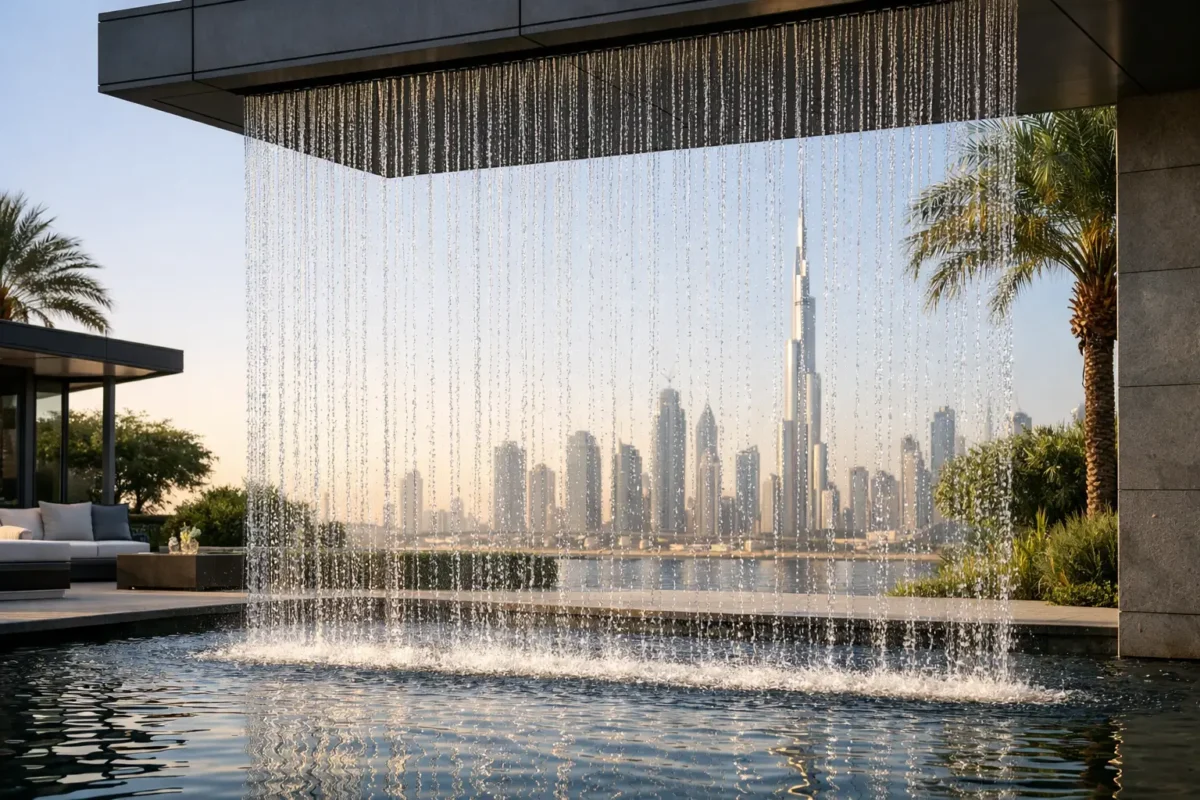
A well-designed rain curtain water feature does more than add moving water to a property. It creates a controlled visual focal point: a precise line of falling droplets that can define an entrance, soften a double-height lobby, frame a pool deck, or give a restaurant terrace a more memorable atmosphere. For luxury villas, hotels, residential developments, and commercial spaces in Dubai, the difference between a refined installation and a disappointing one comes down to engineering as much as appearance.
The water should fall evenly, the collection system must remain clean and quiet, and every component needs to suit the heat, operating hours, and maintenance expectations of the site. A rain curtain is a premium architectural feature, not simply a decorative fountain accessory.
What Makes a Rain Curtain Water Feature Different?
Unlike a conventional fountain jet, a rain curtain produces a straight, continuous curtain of individual water drops. Water is delivered through a purpose-built header or spillway with evenly spaced outlets, then falls into a concealed basin, channel, pool, or drainage collection point below. The effect can be delicate and minimal or dramatic and theatrical, depending on the height, width, lighting, and surrounding finishes.
This format works particularly well where designers want movement without the heavy splash and visual density of large fountain jets. It can be installed as a freestanding feature, integrated into a feature wall, suspended within an atrium, or positioned at the edge of a swimming pool environment. In hospitality and high-end residential projects, it often becomes the element guests photograph because it gives the space depth, sound, and a clear sense of arrival.
The visual simplicity is deceptive. A consistent curtain requires balanced water distribution, correct pressure, stable mounting, reliable filtration, and a properly sized return system. If any of these are overlooked, the water stream may break unevenly, drift in the wind, create excess noise, or leave visible mineral deposits on nearby surfaces.
Design the Feature Around the Space
The best location is not always the most obvious one. A rain curtain should be planned around viewing angles, foot traffic, wind exposure, available service access, and the intended atmosphere. A feature that looks spectacular from a lobby entrance may be unsuitable beside outdoor seating if spray reaches furniture or guests. Similarly, an outdoor curtain that performs well during calm weather may require wind management in an exposed landscape setting.
Height changes the experience significantly. Shorter falls can feel calm and intimate, making them well suited to courtyards, spa areas, and villa terraces. A taller installation creates a stronger visual statement and can be highly effective in hotel atriums, show villas, corporate receptions, and double-height entrances. However, taller falls demand more attention to splash containment, pump sizing, and the depth of the receiving basin.
Material selection also matters. Stainless steel components are commonly selected for their clean appearance and durability, while the surrounding stone, porcelain, glass, or metal finish should be chosen with water marks in mind. Dark surfaces can make the individual droplets more visible. Light or highly polished surfaces may show mineral residue sooner if water treatment is inadequate.
For a poolside installation, the feature should complement the pool architecture rather than compete with it. It may serve as a subtle dividing element between lounging and swimming zones, or provide a backdrop to a seating area. In a commercial property, the design should also account for how the feature will be viewed during daytime, after dark, and from upper levels.
Hydraulics Determine the Quality of the Water Curtain
A rain curtain water feature depends on precise hydraulic design. The objective is to deliver water evenly across the full width of the header so every outlet produces a uniform drop pattern. Uneven flow is one of the most common reasons these features lose their premium appearance.
The pump must be selected for the feature’s total flow requirement, vertical lift, pipe length, fittings, filters, valves, and any connected treatment equipment. Choosing a pump based only on the height of the fall can leave the installation underpowered. Oversizing can be equally problematic, producing unnecessary splash, energy consumption, and noise.
A dedicated circulation system is usually the preferred approach for a standalone water feature. This gives technicians better control over flow, filtration, treatment, and maintenance without affecting the swimming pool’s primary circulation equipment. Where the feature is connected to a pool system, the design must ensure that pool water levels, operating schedules, and filtration capacity can support it.
The receiving basin is just as important as the header. It must capture the falling water without excessive splash, provide enough operating volume, and allow safe access to suction points, strainers, drains, and level controls. Automatic make-up water and low-water protection are valuable additions, particularly for outdoor installations where evaporation is significant.
Lighting Turns Water Into an Evening Feature
Without lighting, a rain curtain can disappear after sunset. With the right lighting design, it becomes a distinct nighttime centerpiece. LED fixtures placed in the lower basin can illuminate the falling drops from below, while side lighting can emphasize texture and depth. White lighting is often selected for a restrained, architectural look. Programmable color lighting may suit resorts, entertainment venues, or event-focused commercial spaces, but it should be used with purpose rather than as a default.
The position of the fixtures matters. Lighting aimed directly toward seating or entry routes can create glare, while poorly placed fittings may reveal plumbing or structural elements that should remain concealed. Premium installations use lighting to showcase the water pattern, not the equipment behind it.
All electrical components must be selected and installed for wet-area conditions. Proper transformers, cable routing, junction protection, and control systems are essential for safe, dependable operation. Timers and automated controls can also reduce unnecessary operating hours while ensuring the feature is active when residents, visitors, or guests are most likely to enjoy it.
Water Quality and Drainage Cannot Be Afterthoughts
Clear water is fundamental to the appearance of a rain curtain. Fine outlets can become blocked by debris, scale, or biological buildup, causing irregular streams and visible gaps in the curtain. Filtration, disinfection, and appropriate water balancing protect both the visual result and the long-term condition of the equipment.
Dubai’s climate makes evaporation and mineral buildup practical concerns. Water chemistry should be monitored to reduce scale formation on nozzles, headers, basin finishes, and glass surfaces. The correct treatment approach depends on whether the feature is indoor or outdoor, integrated with a pool or operating independently, and exposed to significant dust or landscaping debris.
Drainage should be considered before finishes are finalized. The basin overflow, equipment-room drain, access for cleaning, and emergency water management need to be planned into the construction scope. Retrofitting drainage after a feature is complete can be expensive and disruptive, especially in finished lobbies and landscaped areas.
Installation and Maintenance Protect the Investment
A beautiful design can fail quickly if equipment access is ignored. Pumps, filters, control panels, valves, and treatment systems should be accessible without dismantling architectural finishes. This is particularly important for hotel and commercial properties, where downtime and visible maintenance activity can affect guest experience.
Routine service typically includes cleaning strainers and filters, inspecting the water header, checking pump performance, testing lighting, monitoring water levels, and balancing water chemistry. Outdoor features may require more frequent attention after dust events or high-use periods. A maintenance plan should reflect the actual operating environment rather than follow a generic schedule.
Aquatic Pools and Fountains supports premium water-feature projects with specialist equipment selection, technical guidance, installation capability, and ongoing maintenance support. For villa owners and property teams, working with one experienced partner helps align the visible design with the less visible systems that keep it performing reliably.
Choosing the Right Scope for Your Project
A rain curtain can be a modest architectural accent or a large-scale signature installation. The right scope depends on the space, the desired level of impact, operating budget, and the maintenance resources available after handover. There is no advantage in specifying a wide, high curtain with complex lighting if the project does not have adequate equipment access or a realistic service plan.
Start with the experience you want people to have when they encounter the feature. Then build the hydraulic, electrical, drainage, and treatment systems around that goal. When those details are specified with precision from the beginning, falling water remains what it should be: an elegant, dependable statement of quality for the property every day and every evening.