
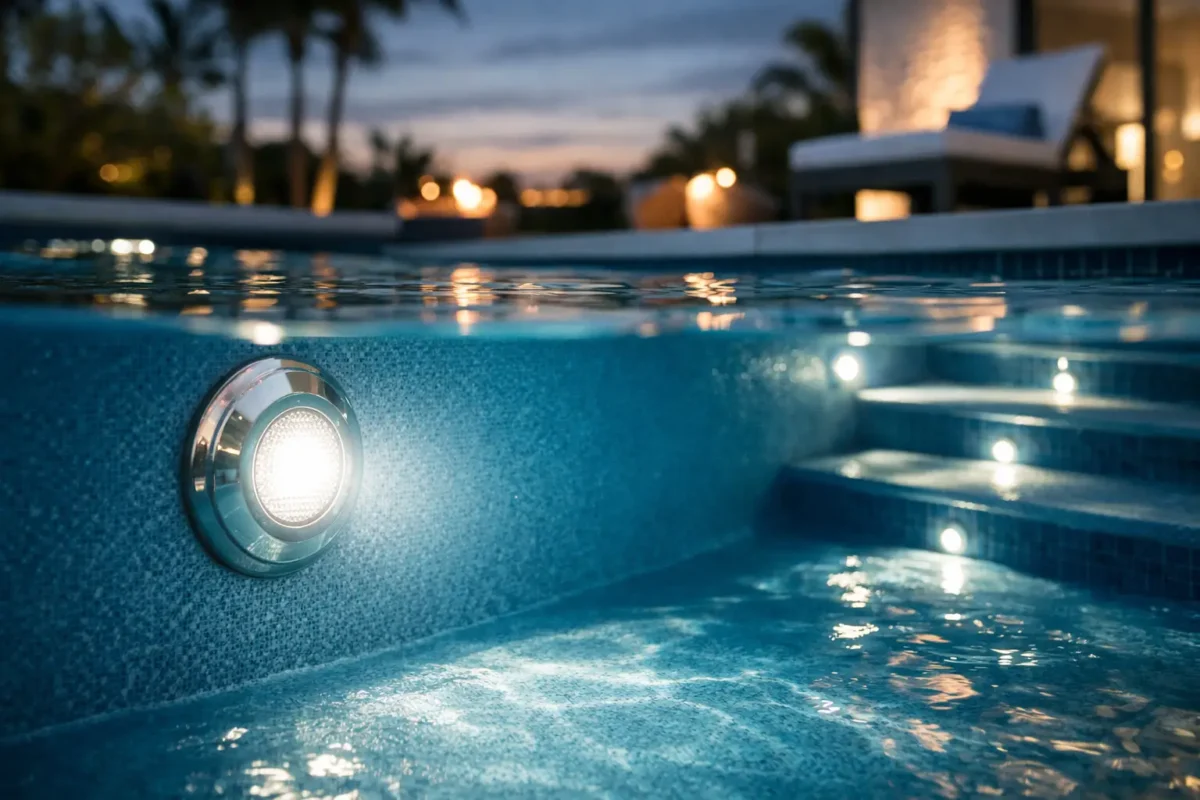
A beautifully finished pool can lose its impact the moment the sun sets if its lighting is poorly planned. The right pool lights underwater do more than make a pool visible after dark. They reveal tile texture, define water movement, improve safety around steps and ledges, and give villas, hotels, and commercial properties a more polished evening presence.
For premium projects, underwater lighting should never be treated as a final accessory. Fixture selection, beam placement, electrical design, and maintenance access all affect the finished result. A low-cost light may produce acceptable illumination on day one, but color inconsistency, water ingress, glare, or difficult servicing can quickly compromise a high-value installation.
Why Pool Lights Underwater Matter to the Design
Water changes the behavior of light. A fixture that appears powerful in open air can look modest once installed behind a pool wall, while a poorly directed beam can create uncomfortable glare for swimmers and guests. This is why lighting design must account for pool depth, finish color, fixture position, and the views from terraces, seating areas, and adjacent rooms.
White underwater lighting gives a classic, refined appearance and works especially well with pale porcelain, glass mosaic, and natural stone finishes. It keeps the water looking clean and architectural. RGB and RGBW LED systems add another layer of flexibility, allowing a property to shift from calm white light for daily use to carefully programmed color scenes for entertaining, hospitality events, or branded commercial environments.
The best choice depends on the property. A private villa may prioritize soft ambience and simple control, while a hotel, residential tower, or leisure facility may need consistent illumination, zoned scenes, and lighting equipment designed for frequent operation. In both cases, the goal is the same: a reliable installation that looks intentional from every angle.
LED or Halogen: The Practical Difference
LED lighting is now the preferred solution for most new pools and renovation projects. It uses far less energy than traditional halogen fixtures, produces less heat, and generally offers a much longer operating life. Quality LED units also provide stronger color stability and a broader selection of white temperatures and programmable color options.
Halogen lighting may still be found in older pools and can sometimes be replaced during a like-for-like maintenance project. However, replacing aging halogen equipment with LED fixtures is often the more sensible long-term investment. Lower power consumption can be significant where a pool is illuminated every evening, and fewer lamp changes reduce disruption for homeowners and facility teams.
Not all LED products perform at the same standard. Premium fixtures use properly engineered optics, high-grade housings, durable seals, and dependable drivers. These details matter in warm climates and heavily used pools, where heat, chemical exposure, and continuous operation can expose weaknesses in low-quality equipment.
White Light, RGB, and RGBW Systems
A warm white light can make stone coping and landscaped areas feel more inviting, while a cool white option can create a crisp, contemporary look. The correct color temperature should complement the pool finish rather than compete with it. Blue tiles can become overly cold under certain white LEDs, for example, while beige or sand-colored finishes often benefit from warmer illumination.
RGB fixtures combine red, green, and blue LEDs to create a wide range of colors. They are well suited to social spaces and decorative installations, but the quality of the white setting varies between products. RGBW fittings include a dedicated white LED, giving owners both vibrant color scenes and a stronger, more natural everyday white light. For luxury residential and hospitality projects, RGBW is often the more versatile specification.
Choosing the Right Fixture for the Pool Structure
The pool shell and finish determine which lighting format is appropriate. Concrete pools commonly use recessed niche lights, where the fixture is fitted into a purpose-designed housing within the wall. This creates a clean, integrated finish and makes future servicing more manageable when installed correctly.
Vinyl-lined and fiberglass pools require compatible fittings with the correct gaskets, face rings, and mounting arrangements. Using a fixture that is not designed for the pool structure can create sealing issues and lead to costly remedial work. For renovations, compact surface-mounted LED lights can be an effective option when creating new niches is impractical.
Fixture size also affects the visual result. Larger pools may require multiple lights to achieve even coverage, particularly where there are deep ends, wide steps, tanning ledges, or irregular shapes. One powerful light is not always better. Several well-positioned fixtures can reduce shadows and make the water feel more balanced.
Placement Is as Important as Brightness
Underwater lights are usually installed to shine away from the primary viewing area. This helps prevent direct glare for people sitting on a terrace or looking toward the pool from inside the property. In rectangular pools, fixtures are often positioned along one long wall, aiming across the water. The exact layout should be confirmed alongside the pool geometry, access points, and surrounding architecture.
Steps, benches, shallow shelves, and swim-out areas deserve special attention. These features can become visually lost at night without dedicated lighting. Small low-voltage lights may be used to define them, improving safety without overwhelming the overall design.
Avoid treating wattage as the only measure of performance. Beam angle, lens design, fixture depth, water clarity, and surface finish all influence the apparent brightness. Dark interior finishes absorb more light and may require a different layout than light mosaic or white plaster. A professional lighting plan considers these variables before construction begins, not after the pool is filled.
Electrical Safety and Installation Standards
Underwater pool lighting is a specialized electrical installation. It must use suitable low-voltage equipment, correctly rated transformers or power supplies, protected cabling, and secure connections designed for wet environments. The electrical system should be planned with the circulation equipment and control system, ensuring that components remain accessible for inspection and service.
A reputable installation also considers bonding, grounding, circuit protection, cable routing, junction boxes, and local electrical requirements. These are not areas for shortcuts. Water, electricity, and chemical environments demand precise workmanship and equipment selected for its intended purpose.
For commercial pools, maintenance access is particularly important. Facility managers should be able to replace or service components without unnecessary drainage, invasive tile work, or extended closure periods. A well-designed niche and cable arrangement can make this process far more efficient over the life of the pool.
Control Systems That Fit the Property
The simplest systems use an on-off switch and a fixed white light output. This remains a strong choice for owners who value clarity, reliability, and minimal controls. More advanced installations can use remote controls, wall-mounted keypads, smartphone apps, or integrated automation systems to adjust colors, brightness, zones, and schedules.
For villas, preset scenes can make operation effortless. A “quiet evening” setting may use warm white lighting at reduced brightness, while an “entertainment” setting can activate color effects across the pool, spa, and nearby fountain. Hotels and commercial properties may benefit from scheduled scenes that align with operating hours, seasonal events, or different public areas.
Control compatibility should be checked before purchasing fixtures. Mixing drivers, controllers, and lights from unrelated systems can limit functionality or create service complications. Selecting a coordinated lighting package from established global brands is usually the more dependable approach.
Maintenance Protects the Investment
Quality underwater lights are built for long service, but they still require sensible maintenance. Balanced pool water protects seals, housings, lenses, and internal components from premature deterioration. Excessive chemical concentrations, poor water balance, or prolonged exposure to unsuitable cleaning chemicals can damage even premium equipment.
During routine pool service, technicians should check for moisture inside lenses, fading output, loose fittings, damaged cables, and controller errors. If a fixture fails, the cause may not be the lamp itself. It could relate to the transformer, driver, wiring, seal, or control connection. Accurate diagnosis prevents repeated replacements and protects the wider electrical system.
Aquatic Pools and Fountains supports premium residential and commercial projects with quality lighting equipment, technical guidance, professional installation, and dependable maintenance support across Dubai and the UAE.
Specify Lighting Before the Pool Is Finished
The most successful pool lighting is planned early, when fixture niches, conduits, control locations, and viewing angles can be coordinated with the pool design. This protects the finish, avoids unnecessary modifications, and delivers a cleaner result once the property is complete.
Whether the project calls for understated white LEDs or a fully controlled RGBW display, choose equipment for its performance after years of use, not only its appearance in a showroom. The right lighting will make the pool feel safer, more elegant, and ready to enjoy long after daylight has gone.